

Boris Johnson, King Charles reportedly clashed over Rwanda deportation policy

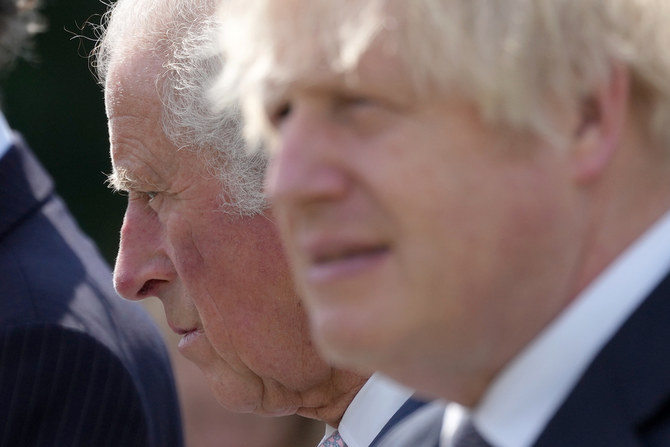
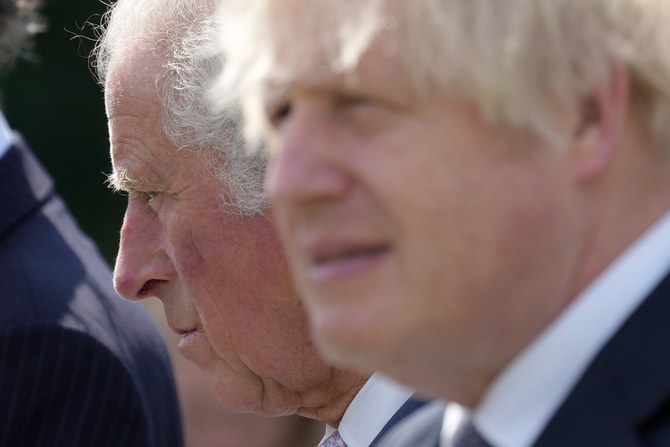
The clash between UK Prime Minister Boris Johnson and Prince Charles reportedly took place in Rwanda in June last year amid a summit of the Commonwealth countries. (AFP)
Short Url
Updated 09 May 2023
Follow

Boris Johnson, King Charles reportedly clashed over Rwanda deportation policy

  • Future king was ‘appalled’ at scheme to deport migrants to African country

LONDON: Former UK Prime Minister Boris Johnson reportedly clashed with Prince Charles last year over the government’s Rwanda deportation policy, MailOnline reported.

Charles, who was crowned king last week, was said to have been “appalled” at the scheme, which involves the removal of migrants who cross the English Channel in small vessels to the African country.

The 15-minute clash reportedly took place in Rwanda in June amid a summit of the Commonwealth countries.

Johnson is said to have warned Charles to avoid interfering in national politics as well as to cancel a plan to deliver a speech on slavery over fears that it could catalyze demands for reparations.

However, the government denied the reports of a row at the time, while associates of Johnson described them as “inaccurate.”

But Guto Harri, former director of communications for Downing Street, claimed on the “Unprecedented” podcast that the former PM “went in quite hard” on Charles over the Rwanda matter.

Harri also wrote in the Mail: “Boris briefed that the two had ‘a good old chinwag’ and had ‘covered a lot of ground.’

“What actually happened was less amicable. ‘I went in quite hard,’ he told me at the time, essentially squaring up to the prince and confronting him about what he — as unelected royalty — had said about the actions of a democratically elected government.

“Prince Charles was busted. He had obviously expressed some criticism, and though he tried to play it down, Boris pointed out the obvious, (saying): “If you didn’t say it, we both know your people could ring the newspapers and kill the story. The fact they haven’t done that says it all’.”

The former communications director added that Johnson’s relationship with the prince had been strained for years as a result of the former London mayor showing up late for a meeting.

But the Rwanda argument proved to be the final straw, Harri said, adding: “Relations never fully recovered and Charles will be relieved that Boris had left No. 10 before he ascended to the throne.”

Charles had long faced controversy over accusations that he was actively interfering in government affairs.

His comments on the Rwanda policy reportedly left government ministers “infuriated,” the Mail reported.

Sources close to Johnson also told the newspaper that Harri’s account of the conversation with Charles was inaccurate: “This account is simply inaccurate and does not reflect the conversation that took place.

“Boris Johnson has had nothing to do with this podcast, had no knowledge of it and deplores any attempt to report such conversations in public.”


Russian pensioners turn to soup kitchen as war economy stutters

Updated 7 sec ago
Follow

Russian pensioners turn to soup kitchen as war economy stutters

SAINT PETERSBURG: Dishes clatter, steam bursts from large cooking pots and music is seeping through the bustling chatter of Russian pensioners, hunched over bowls of free meals in a Saint Petersburg soup kitchen.
The general mood is upbeat but the place, at full capacity, is a testament to financial hardships plaguing an ever-increasing number of Russia’s elderly people, struggling to make ends meet as the country’s war economy stutters.
Nina, a 77-year-old retired engineer, said she could no longer go to the supermarket, getting her lunch and dinner from the soup kitchen instead, as she was not able to afford her own groceries.
“I haven’t been to a shop for three years because I don’t have the money. There’s simply no point in going,” she told AFP, her voice resolute but eyes glistening.
“Should I just go, look around and leave?,” she asked.
The cost of living in Russia — particularly in large cities — has skyrocketed in the four years since Moscow launched its full-scale offensive in Ukraine.
Huge spending on the military helped Russia buck predictions of economic collapse, but has pushed up inflation — a headache for the Kremlin which has aimed to shield citizens from the fallout of its war.
Prices have surged by a combined 45 percent since Russia launched its offensive, according to official data.
And though President Vladimir Putin recently hailed a cooling of inflation amid high interest rates, pensioners in the Saint Petersburg soup kitchen say their situation is still dire.

- ‘Poor boys’ -

On a bright winter day, AFP met former accountants, doctors and engineers turning to the free bowls of soup and pasta on offer.
Zinaida, a 77-year-old former paediatrician, told AFP her pension was 26,400 rubles ($345) a month.
“Over the last two to three years, we have seen food prices rise,” Zinaida said, attributing the surge to raising taxes.
In order to plug holes in Russia’s stretched public finances, the Kremlin has tapped the pockets of its citizens, raising the nationwide sales tax from 20 to 22 percent, starting this year.
For many pensioners like Zinaida, juggling monthly expenses has become increasingly tricky.
“By our age, everyone has a whole load of illnesses,” she said, and the medications were “very expensive.”
“You work just to pay for the utilities and the pharmacy. There is almost nothing left for anything else.”
That sentiment is shared by Anna, 66, who, despite a career as a surgeon, said she struggled to pay her bills in retirement.
“When you go to the pharmacy, you start to wonder if you’ll be able to buy anything for lunch.”
The Central Bank, which has hiked borrowing costs in a bid to tame price rises, expects annual inflation to ease to Moscow’s four-percent target only in 2027.
That is just one of the Russian economy’s worsening indicators as the war in Ukraine drags into its fifth year.
Growth slowed dramatically to one percent in 2025, Putin said earlier this week — down from 4.3 a year prior.
But for Tatyana, a former accountant, “it’s only fair that things should get more expensive.”
“We have this war going, with our poor boys there. May God grant them all good health.”