

Pakistanis living in Saudi Arabia ‘our asset,’ foreign minister tells ambassador designate

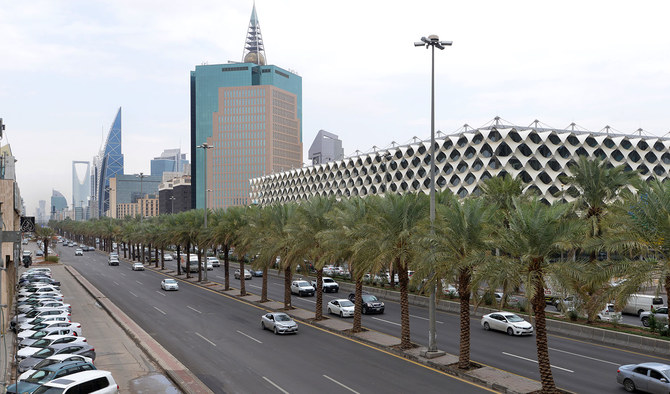
A general view taken on November 18, 2019, shows the King Fahad main street in the Saudi capital Riyadh. (AFP/File)
Short Url
Updated 08 May 2023
Follow

Pakistanis living in Saudi Arabia ‘our asset,’ foreign minister tells ambassador designate

  • Bhutto Zardari says Pakistan attaches ‘great importance’ to relations with Saudi Arabia
  • Directs ambassador to resolve problems of Pakistanis in Saudi Arabia on ‘priority basis’

ISLAMABAD: Foreign Minister Bilawal Bhutto-Zardari on Monday directed Pakistan's ambassador designate to Riyadh, Ahmed Farooq, to resolve the problems of Pakistani expats in Saudi Arabia on a “priority basis.”

Saudi Arabia is home to over two million Pakistanis and the largest contributor of remittance inflows to the South Asian nation.

Saudi authorities have also helped Pakistan deal with an ongoing economic crisis by offering a deferred oil payment facility and depositing about $3 billion in the central bank to help shore up forex reserves.

“Pakistanis living all over the world, including Saudi Arabia, are our asset,” the foreign ministry said in a statement quoting Bhutto-Zardari as saying in a meeting with Farooq as he directed him to resolve the problems of Pakistani expats in Saudi Arabia on a “priority basis.”

“The Foreign Minister expressed his best wishes to Ahmed Farooq regarding his new responsibilities,” the statement said.

Last week, in a meeting with Farooq, Pakistani commerce minister Syed Naveed Qamar advised him to use “aggressive marketing” in the fields of agriculture and technology to help expand Pakistani exports to Saudi Arabia.

Pakistani exports to the kingdom mainly comprise food products, textiles, and engineering goods. According to the United Nations COMTRADE database on international trade, Pakistan’s exports to Saudi Arabia stood at $402.81 million in 2021. 

Exports to Saudi Arabia have seen a consistent increase from $336.9 million in 2017 to $342.08 million in 2019 and $446.18 million in 2020.


Pakistan PM directs ministries to fast-track foreign investment recommendations

Updated 8 sec ago
Follow

Pakistan PM directs ministries to fast-track foreign investment recommendations

  • Pakistan’s foreign direct investment fell by over 25 percent during July-November period, official data states
  • Premier directs ministries to provide support via embassies worldwide to facilitate foreign investors

ISLAMABAD: Prime Minister Shehbaz Sharif on Thursday directed all ministries to prepare recommendations for domestic, foreign investment and development projects related to their sectors, state media reported as Islamabad eyes sustainable economic growth. 

The premier’s directives came while he chaired a meeting of the federal ministries on the implementation of economic governance reforms, state broadcaster Radio Pakistan reported. 

Foreign direct investment inflows in Pakistan fell by more than 25 percent to $927 million during the July-November period, as per data from the central bank. Pakistan’s FDI inflows have never surged beyond $3 billion in nearly 20 years, worrying Islamabad as it seeks to escape a prolonged macroeconomic crisis. 

“Prime Minister Shehbaz Sharif has directed all ministries to promptly prepare recommendations for domestic and foreign investment and development projects related to their respective sectors,” Radio Pakistan reported. 
 
Sharif said it was his government’s top priority to provide institutional and administrative facilitation to investors.

The prime minister instructed federal ministries to provide “special importance” to proposals that promote exports.

“The prime minister directed the concerned ministries to provide effective support through Pakistani embassies worldwide to facilitate foreign investors,” the state media said. 

Sharif stressed that equal attention be provided to industrial production, agriculture, and other key sectors to increase investment.

Pakistan’s government has said it is eyeing sustainable economic growth, driven by exports and foreign investment. 

The South Asian country has recently signed agreements worth billions of dollars with regional allies such as Gulf nations, China and Central Asian nations to enhance cooperation in trade, investment, tourism, livestock, mines and minerals, and other sectors.