RIYADH: With Saudi Arabia’s travel and tourism sector buzzing with activities offering immense investment opportunities, a top official of the Radisson Hotel Group has revealed that the company is planning to expand its presence in the Kingdom with a total of 100 properties in the next five years.
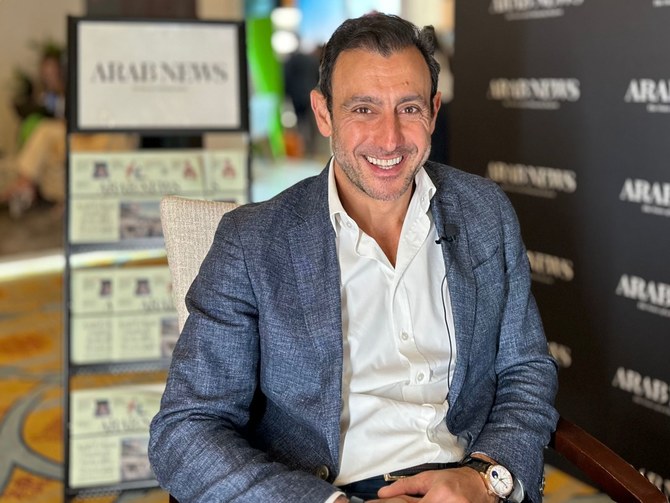
Talking to Arab News on the sidelines of the Future Hospitality Summit in Riyadh on Monday, Elie Younes, executive vice president, and global chief development officer at Radisson Hotel Group, said the planned expansion will help create more job opportunities in Saudi Arabia.
“Currently we have around 50 hotels almost actually in Saudi Arabia; 25 hotels open and 25 hotels under construction as we speak. Our plan for the next five years is to double that. And that means to have almost 100 hotels across Saudi Arabia,” Younes said.
The top executive said if every hotel has 200 rooms, each property “will employ 150 people, more or less. And if you are opening another 50 hotels, you can imagine the multiplying effect this will have on the economy and on job creation.”
Younes said the hotel group wishes to become part of the Kingdom’s hospitality sector’s expansion story.
“We have big plans in Saudi (Arabia), and the reason being Saudi (Arabia) has big plans for itself. Saudi (Arabia) is going through a transformation, for its economy, for its people, and for the whole country. And given the transformation that Saudi Arabia will go through, we will transform ourselves with and in Saudi (Arabia),” he said.
The official said the group would not only focus on key cities in Saudi Arabia to open its hotels but will also concentrate on the upcoming “secondary and economic cities” in the Kingdom.
Talking about the group’s global plans, Younes said it currently has 1,500 hotels globally, and the plan is to expand the number of properties to 3,000 within the next five to seven years.
“If you look at the region (Middle East), we currently have around 75 (hotels). And the plan is to double that in the next five years to become hopefully 150 hotels. So, today, we have about 1,500 hotels globally, and the idea is to double that in the next five years and make it around 3,000 hotels,” said Younes.
Lauding the Saudi government’s regulatory reforms in the private sector, Younes said these reforms should evolve daily.
“This is an evolving evolution. Let us put it that way, where both the private and public sectors continue putting efforts in order to achieve the goals. So, policy and investment in infrastructure, and providing subsidies to investors and enabling operations are all integral elements for the future of Saudi Arabia,” added Younes.
According to the official, Radisson Hotel Group is not planning to open an additional 50 exclusively luxury hotels in Saudi Arabia over the next five years. Instead, the company will explore investment opportunities in 50 midscale lifestyle hotels in the Kingdom.
“Will we do 50 luxury hotels in Saudi Arabia over the next five years? I don’t think we will do that. But will there be investment opportunities for midscale lifestyle (hotels) across the Kingdom in the next five years for 50 hotels? I certainly would bet on that,” he said.


![]()

Radisson Hotel Group plans 100 hotels in Saudi Arabia, says top official
Short Url
https://arab.news/44ufj
Radisson Hotel Group plans 100 hotels in Saudi Arabia, says top official

Latest updates



Recommended


© 2026 SAUDI RESEARCH & PUBLISHING COMPANY, All Rights Reserved And subject to Terms of Use Agreement.