DHAKA: Rohingya refugees in Bangladesh expressed concern and fear on Saturday over plans for them to return to neighboring Myanmar.
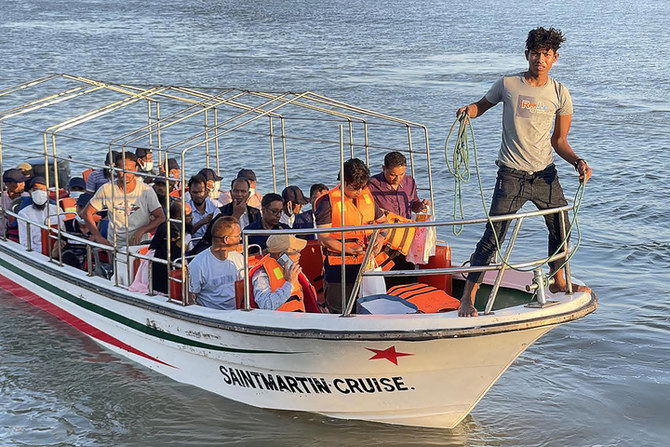
Leaders of the refugees, along with Bangladeshi officials, visited Myanmar on Friday to assess the possibility of repatriating the estimated 1.2 million Rohingya refugees currently in Bangladesh.
The 27-member delegation visited Myanmar’s Rakhine State, the area from which the majority of the Rohingya fled due to a military crackdown that began in October 2016.
The repatriation of Rohingya refugees has been on the United Nations’ agenda for years, but no practical progress has been made, despite pressure from Bangladesh.
The team which visited Rakhine State took part in a pilot Bangladesh-Myanmar project mediated by China. On their return, some Rohingya members of the delegation told the media that they would refuse to go back to Myanmar because, under the current proposal, they would not be granted citizenship.
Bangladeshi Refugee Relief and Repatriation Commissioner Mizanur Rahman, who led the delegation, told Arab News that Myanmar authorities were proposing a National Verification Card scheme for returning refugees. While such alternative identification was widely criticized by rights groups when the idea was first floated by Myanmar in 2019, Rahman said it was still better than what the refugees were being offered in Bangladesh.
“It is better to have a life with some civil rights than a life without any civil rights,” he said. “It’s their own country. Here in the camps, Bangladesh has not even given them refugee status.”
Although it has been hosting the Rohingya for years, Bangladesh is not a signatory of the 1951 UN Refugee Convention.
The violence the Rohingya community endured in Myanmar — which international observers have referred to as genocide or ethnic cleansing — understandably makes many reluctant to go back to their official homeland.
“What is the guarantee that we wouldn’t be tortured again by the military junta once we return?” Mohammed Rezuwan Khan, a Rohingya activist in Bangladesh, said. “We don’t want anything except our rights, so that we don’t turn into refugees again, not even after 100 years — our next generations must not turn into refugees. We want to solve this crisis, and the only solution is to ensure equal rights and provide citizenship rights to the Rohingya people.
“We just need citizenship, even if we are not given any other things,” he continued. “If we get citizenship, we can do the rest on our own; we will be able to earn money, study… we can do whatever is necessary for our community.”
If a peacekeeping mission could guarantee their protection in Myanmar, then the refugees would likely choose to return, he added.
“This process should involve the international community,” he said. “The US and other important countries should stand beside us.”
The UN High Commissioner for Refugees has so far distanced itself from the current proposal, citing unsustainable conditions in military junta-ruled Myanmar.
For Mohammad Nur Khan, a Bangladeshi rights activist and migration expert, it is no surprise that the refugees are skeptical about what awaits them should they return to Myanmar.
“The Rohingya have been deceived for a long time. They were the subject of torture and atrocities. The team that visited (Myanmar) on Friday did not gain confidence from that visit,” he said.
Meeting the Rohingya community’s most fundamental demands — such as the issue of citizenship — is of utmost importance in building trust, Khan told Arab News.
“There will be no chance to reach a compromise through bypassing their main demands,” he said. “Without the involvement of all stakeholders and international aid agencies, I think it’s not possible to come to (an agreement).”


![]()

Rohingya reluctant to return to Myanmar with citizenship not guaranteed
Short Url
https://arab.news/ctfvq
Rohingya reluctant to return to Myanmar with citizenship not guaranteed
- Delegation including Rohingya leaders visited Myanmar on Friday
- China is mediating Rohingya repatriation project


Latest updates





Recommended


© 2026 SAUDI RESEARCH & PUBLISHING COMPANY, All Rights Reserved And subject to Terms of Use Agreement.