South of Bethlehem, Palestinian Territories: Dozens gathered in the occupied West Bank to break the fast during the Muslim holy month of Ramadan, but the food is kosher and Israelis are honoring a Palestinian guest.
At a Palestinian property near the Gush Etzion bloc of settlements, in the southern West Bank, an unlikely collection of guests shared a meal organized by the “Roots” initiative.
The iftar meal is a rare attempt at cross-community dialogue amid a spike in violence in the Palestinian territory, which has been occupied by Israel since the 1967 Six-Day War.
“(We’re a) group of people that wants to end the situation of violence and the hatred between members of the two populations,” said Khaled Abu Awad, the Palestinian partner in the initiative.
He has had two brothers killed in the conflict while numerous family members have been jailed by Israel.
Among around 50 guests were some Israeli settlers.
Alaa, a Palestinian from Jerusalem who requested his surname not be published for security reasons, said he was attending for the first time and did not feel “very comfortable with the people here.”
But the 25-year-old called it a “big mistake” not to talk to Israelis, saying that building a “relationship” may help Palestinians achieve some of their goals.
Around three million Palestinians live in the West Bank alongside hundreds of thousands of Israelis residing in settlements considered illegal under international law.
The “Roots” initiative, known by its Hebrew name “Shorashim” or “Judur” in Arabic, was founded in 2014 to foster dialogue between the two sides of the Israeli-Palestinian conflict.
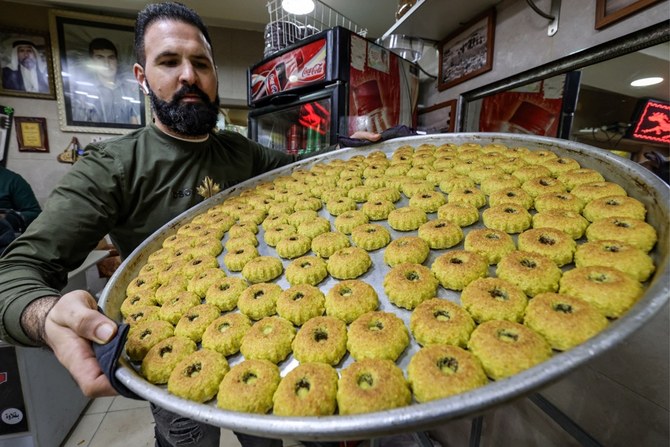
The traditional Palestinian dishes have been prepared under rabbinical supervision, so that observant Jews who keep kosher dietary rules can enjoy the food.
Being honored at the iftar is Mohammed, a 33-year-old from a nearby village who works in construction in Israel.
He recently rescued an Israeli couple in the West Bank when a group of Palestinians surrounded their car and pelted them with stones.
“I spoke with them in Hebrew, I told them to enter here (my house), I told them: ‘You’re safe and nobody can harm you’,” he said, not giving his surname for security reasons.
Yaakov, a medic and the father of the man he helped, said he was attending a “Roots” event for the first time in order to thank the person who saved his son, who is a soldier.
“(I) think that meetings of this kind can contribute to changing the situation,” said Yaacov, who gave only his first name to protect his son.
Shaul Judelman, one of the initiative’s co-directors, recognizes there is a large degree of “resistance” to such events which can be seen as a “betrayal.”
Judelman called for a “new discourse on the conflict,” adding that “most Palestinians are not attacking us.”


![]()

Israelis, Palestinians share West Bank iftar ‘to end hatred’
Short Url
https://arab.news/be47x
Israelis, Palestinians share West Bank iftar ‘to end hatred’


Latest updates


© 2026 SAUDI RESEARCH & PUBLISHING COMPANY, All Rights Reserved And subject to Terms of Use Agreement.