CAIRO: ProTenders, UAE’s business-to-business construction tech platform, plans to enter Saudi Arabia after witnessing a $1.1 trillion booming industry.
A B2B platform, ProTenders connects the construction supply chain ecosystem making it more transparent and streamlining bidding processes.
In an interview with Arab News, Karim Helal, co-founder and CEO at ProTenders, said that the company is planning to expand to Saudi Arabia this quarter after seeing massive developments thanks to Vision 2030.
“Vision 2030 clearly outlines an economy-wide transformation that has given rise to numerous major projects across the Kingdom. However, much of the construction industry follows legacy processes and this is where we believe ProTenders will add significant value for stakeholders across the construction ecosystem,” he said.
Helal further added that the Kingdom currently has over $1.1 trillion worth of projects aligned with Vision 2030’s diversification strategy which presents a huge opportunity for ProTenders to enter the market.
“As we prepare to formally enter Saudi Arabia, we are in talks with some of the largest family offices, construction stakeholders and ecosystem enablers across the Kingdom in order to launch ProTenders. We’ll be ready to announce something within the second quarter of this year,” he stated.

Helal explained that the construction sector is full of miscommunication and lack of proper data-driven solutions which, according to one estimate, cost around $70 billion in losses in the region every year.
“We are focused on our market entry into Saudi Arabia. We continue to engage with stakeholders to support their vision for development in the Kingdom through our technology. ProTenders will not only drive enhanced operations in the sector but will also create cost savings, efficiencies and transparency,” he said.
The company expects to onboard around 9,000 companies on its platform in the next two years from the Kingdom alone which, Helal stated, represents 40 percent of construction companies operating in Saudi Arabia.
“More than just an expansion, we intend to fully relocate ProTenders’ headquarters to Saudi Arabia, and will thus hire across every function in Riyadh and across every major city in the Kingdom,” Helal added.
The company also plans to expand beyond the Kingdom to the rest of the Middle East region but Helal explained that these plans are set for 2024 after the company has cemented its position in Saudi Arabia.
“We will be scaling up our overall team to over 100 in the next 24 months to support our expansion in Saudi Arabia and across the region, as well as build up the platform,” he said.
FASTFACT
ProTenders is also working on its product development by building on its eTendering feature, creating a marketplace for suppliers, developing targeted ads, expanding its customer relationship management feature and incorporating artificial intelligence into the platform.
ProTenders is also working on its product development by building on its eTendering feature, creating a marketplace for suppliers, developing targeted ads, expanding its customer relationship management feature and incorporating artificial intelligence into the platform.
Helal explained that the company managed $52 billion in bids across more than 2,500 projects on its platform and has over 30,000 companies with 70,000 projects across the region.
He further explained that Saudi Arabia will catapult the company’s growth metrics as Helal anticipates doubling these numbers within 12 to 16 months of expanding into the Kingdom.
“Saudi Arabia’s economy has shown great resilience and will be amongst the fastest growing of 2023. This stability has helped fund major property projects and also build confidence in the sector,” he added.
“For us at ProTenders, our technology will enable the leadership’s vision for the construction industry and drive more efficiencies, savings and transparency that will ultimately benefit Saudi Arabia,” he stated.
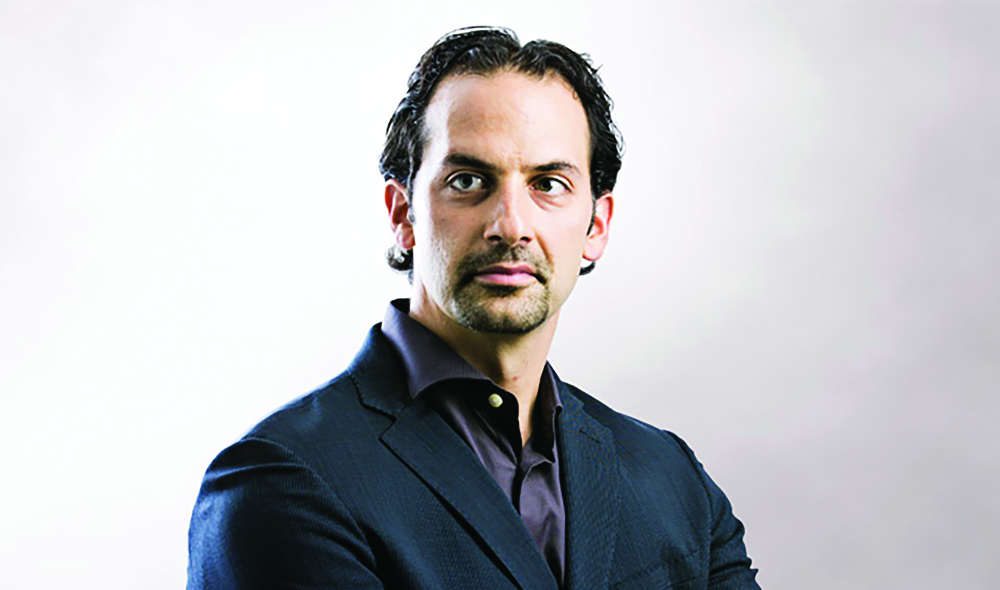
Karim Helal, ProTenders co-founder and CEO
ProTenders is a self-funded startup with over $7 million injected into the business by the owners and one angel investor. However, the company is currently working on closing a $10 million series A funding round that will support the aforementioned plans.
The company offers developers and consultants a platform to manage their tendering processes saving up to 90 percent of the time and money it usually takes, Helal explained.
On the other hand, contractors and suppliers use ProTenders to expand their reach by up to eight to 10 times more than normal.
ProTenders offers a subscription-based service for specific modules with other modules being free to start.
The company is still not profitable but Helal explained that ProTenders aims “to be profitable within the next 24 months as we scale across the Kingdom and the rest of the region.”
Helal started working in the sector in 2006 by inheriting his father’s construction business to extend his legacy. He realized a massive gap which he explained as “inefficient, opaque and risky” and decided to start working on a solution to streamline the construction industry.
“ProTenders was the outcome of this realization and hundreds of conversations and dealings with other construction professionals,” he added.
“Real estate is the world’s largest asset class. However, it remains fragmented, with too many players and no consolidated approach to identifying partners for a project. Technology solves these challenges which are global in nature. We want to use our platform to solve these problems in the region first before expanding beyond,” Helal concluded.