ISLAMABAD: The United Arab Emirates has confirmed financial support of $1 billion to Pakistan, the South Asian nation’s finance minister said on Friday, removing a key hurdle to securing a much-awaited bailout tranche from the International Monetary Fund (IMF).
The commitment is one of the IMF’s last requirements before approving a staff-level pact to release a tranche of $1.1 billion, delayed for months, that is crucial for Pakistan to resolve an acute balance of payments crisis.
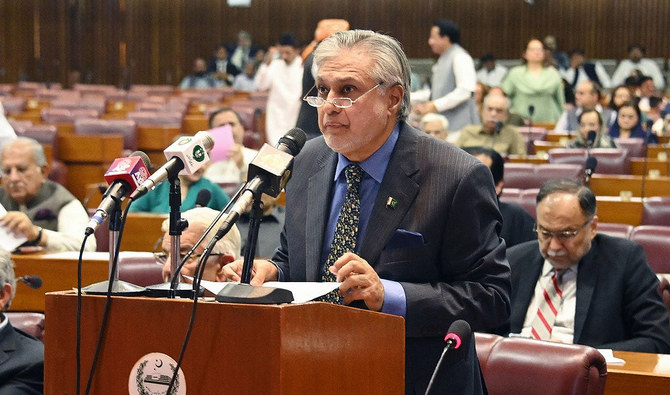
“The State Bank of Pakistan is now engaged for needful documentation for taking the said deposit from UAE authorities,” Finance Minister Ishaq Dar said on Twitter, referring to the central bank.
The pledge makes the UAE the third country, after Saudi Arabia and longtime ally China, to come to Pakistan’s assistance, as external financing is needed to fully fund the balance of payments gap for the fiscal year that ends in June.
“The UAE deal should be helpful because the IMF has been saying Pakistan should secure financing from ‘friendly’ nations,” said Seaport Global EM credit analyst Himanshu Porwal.
“It is still far from over though. The IMF is saying that they (Pakistan) are in breach of certain targets. The fiscal deficit for example is seen peaking at around 8.3 percent (of GDP), so almost double what they were expecting,” he added.
Pakistan’s bonds, which have slumped nearly 70 percent over the last year as the country’s troubles have mounted, climbed for a second day running on the confirmation. The rise was almost 5 percent for its bond with closest payment date – April 15 next year – taking it to almost 50 cents in the dollar, compared to 46 cents a few days ago.
On Thursday, the IMF’s managing director, Kristalina Georgieva, said the fund was also in talks with nations friendly to Pakistan to secure financial assurances vital for the program.
Last week, Saudi Arabia also told the IMF it would provide financing of $2 billion to Pakistan.
Pakistan’s foreign exchange reserves have fallen to cover barely a month of imports after the IMF funding stalled in November, hit by snags over fiscal policy adjustments after officials of the lender visited Islamabad in February for talks.
They formed part of a ninth review exercise on a bailout package of $6.5 billion agreed in 2019 whose resumption is critical for Pakistan to avoid risking default on external payment obligations.
POLICY AND FISCAL MEASURES
Pakistan had to complete actions demanded by the IMF, such as reversing subsidies in its power, export and farming sectors, hikes in the prices of energy and fuel, and a permanent power surcharge, among other measures.
These steps included jacking up its key policy rate to an all-time high of 21 percent, a market-based exchange rate, arranging for the external financing, and raising more than 170 billion rupees ($613 million) in new taxes.
The fiscal adjustments have already fueled Pakistan’s highest inflation ever, which climbed in March to more than 35 percent on the year.
A final issue to be resolved is a fuel pricing scheme meant to bring relief to Pakistan’s lower middle class and poor from crippling inflation. The IMF has asked how it will be funded.
The IMF program will disburse another tranche of $1.4 billion to Pakistan before it concludes in June.
Funds from the lender will also unlock other bilateral and multilateral financing for the cash-strapped country.
Neighboring China has rolled over $2 billion and refinanced another $1.3 billion in recent weeks.
On Friday, Pakistan’s central bank is set to receive a third and final disbursement of $300 million from the refinancing by the Industrial and Commercial Bank of China, Dar added.
Program loans from other multilateral agencies await completion of the IMF review, central bank governor Jameel Ahmad told investors in Washington at the spring meetings of the lender and the World Bank.
Measures such as a hike of 1,400 basis points in interest rates over the last 18 months have put the nation of 220 million on a path to macroeconomic stability, added Ahmad, who hoped for inflation to start decelerating over the next few months.
The government is pursuing a contractionary fiscal policy, with the primary balance in surplus so far compared to a deficit last year, he added.


![]()

Pakistan gets closer to IMF deal after UAE pledges $1 billion
Short Url
https://arab.news/bjxhh
Pakistan gets closer to IMF deal after UAE pledges $1 billion
- The country’s dollar-denominated government bonds firm after the cash pledge by the Arab country
- Last week, Saudi Arabia also told the global lender it would provide $2 billion in financing to Pakistan
Latest updates


© 2026 SAUDI RESEARCH & PUBLISHING COMPANY, All Rights Reserved And subject to Terms of Use Agreement.