US broadcaster NPR quits Twitter after 'state-affiliated' row

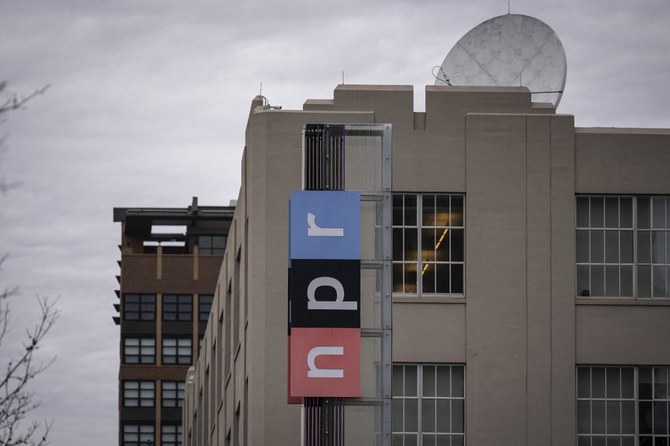
NPR said initial designation was the same as given to state media in authoritarian countries. (AFP/File)
Short Url
Updated 12 April 2023
Follow

US broadcaster NPR quits Twitter after 'state-affiliated' row

  • NPR accused the social platform of undermining its credibility by labelling it 'state-affiliated media'
  • After pushback, Twitter modified its label for NPR to 'government-funded media'

WASHINGTON: US radio broadcaster NPR on Wednesday said it would "no longer remain active" on Twitter, accusing the platform owned by Elon Musk of undermining its credibility and sowing doubt over its editorial independence.
National Public Radio's clean break from Twitter comes after the highly respected news broadcaster had already suspended tweets from its main account when it received a label on the platform that said it was "state-affiliated media."
That designation is the same as given to state media in authoritarian countries such as Russia and China, and after some pushback Twitter modified its label for NPR to "government-funded media," which it applied to Britain's BBC as well.
In a short statement, NPR said all its organizational accounts "will no longer be active on Twitter because the platform is taking actions that undermine our credibility by falsely implying that we are not editorially independent."
It added that "there are plenty of ways to stay connected and keep up with NPR's news, music, and cultural content," urging users to other platforms.
Musk has expressed deep disdain for news media for years and recently installed an automatic response of a poop emoji to emailed inquiries from journalists.
The tycoon indicated in a BBC interview on Tuesday that the label decision was a mistake and that he would consider changing it to "publicly-funded."
He also addressed Twitter's controversial move to strip the New York Times of its blue verified check mark after the company refused to pay to keep it.
From April 20, any legacy verified accounts on Twitter -- which were verified as authentic under the company's old ownership -- will have to pay to subscribe to Twitter Blue.
One of the reasons for this, Musk said, was that he does not want Twitter to boost "some anointed class of journalists" who determine what constitutes news.


Paris exhibition marks 200 years of Le Figaro and the enduring power of the press

Updated 17 January 2026
Follow

Paris exhibition marks 200 years of Le Figaro and the enduring power of the press

  • The exhibition celebrated the bicentennial of Le Figaro, offering visitors a rare opportunity to step inside the newspaper’s vast historical archive

PARIS: One of France’s most influential newspapers marked a major milestone this month with a landmark exhibition beneath the soaring glass nave of the Grand Palais, tracing two centuries of journalism, literature and political debate.
Titled 1826–2026: 200 years of freedom, the exhibition celebrated the bicentennial of Le Figaro, offering visitors a rare opportunity to step inside the newspaper’s vast historical archive. Held over three days in mid-January, the free exhibition drew large crowds eager to explore how the title has both chronicled and shaped modern French history.
More than 300 original items were displayed, including historic front pages, photographs, illustrations and handwritten manuscripts. Together, they charted Le Figaro’s evolution from a 19th-century satirical publication into a leading national daily, reflecting eras of revolution, war, cultural change and technological disruption.
The exhibition unfolded across a series of thematic spaces, guiding visitors through defining moments in the paper’s past — from its literary golden age to its role in political debate and its transition into the digital era. Particular attention was paid to the newspaper’s long association with prominent writers and intellectuals, underscoring the close relationship between journalism and cultural life in France.
Beyond the displays, the program extended into live journalism. Public editorial meetings, panel discussions and film screenings invited audiences to engage directly with editors, writers and media figures, turning the exhibition into a forum for debate about the future of the press and freedom of expression.
Hosted at the Grand Palais, the setting itself reinforced the exhibition’s ambition: to place journalism firmly within the country’s cultural heritage. While the exhibition has now concluded, the bicentennial celebrations continue through special publications and broadcasts, reaffirming Le Figaro’s place in France’s public life — and the enduring relevance of a free and questioning press in an age of rapid change.