

Ramadan visitors to historic Saudi site learn secrets to coffee making

1 / 8
A Saudi man grinds coffee beans with a Mahmas, a traditional tool used for making coffee. (AN Photo/Huda Bashatah)
2 / 8
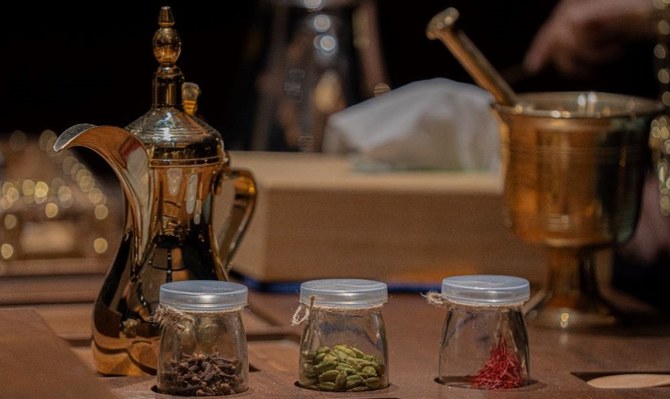
The special ingredients used for making the coffee at the workshop (AN Photo/Huda Bashatah)
3 / 8
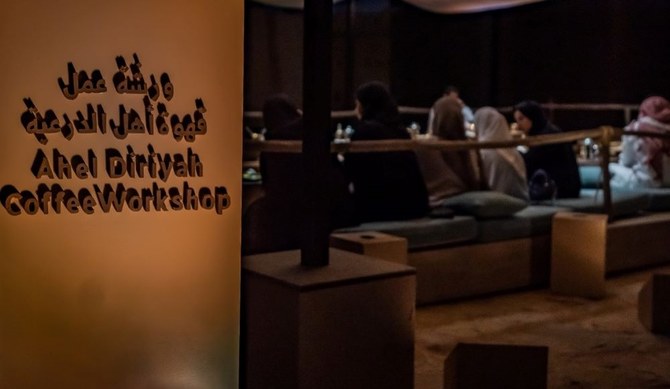
Ahel Diriyah coffee workshop is open from Thursday to Saturday during the Ramadan. (AN Photo/Huda Bashatah)
4 / 8
The last step to making Saudi coffee is adding roasted and ground coffee to boiling water (AN Photo/Huda Bashatah)
5 / 8
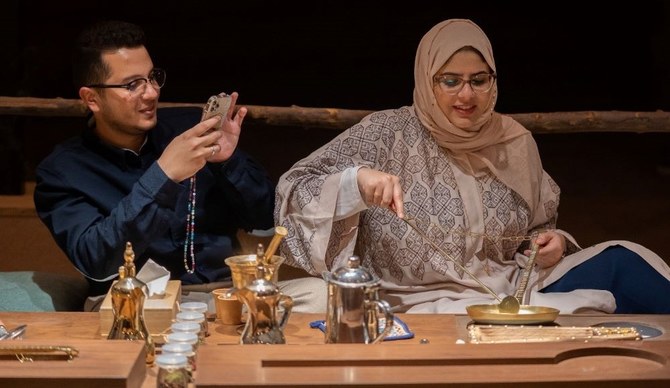
A couple starting their coffee making journey at Ahel Diriyah coffee workshop. (AN Photo/Huda Bashatah)
6 / 8
Enjoying a cup of coffee after the one-hour coffee workshop. (AN Photo/Huda Bashatah)
7 / 8
An expat learning how to make a traditional Saudi coffee at Ahel Diriyah coffee workshop. (AN Photo/Huda Bashatah)
8 / 8
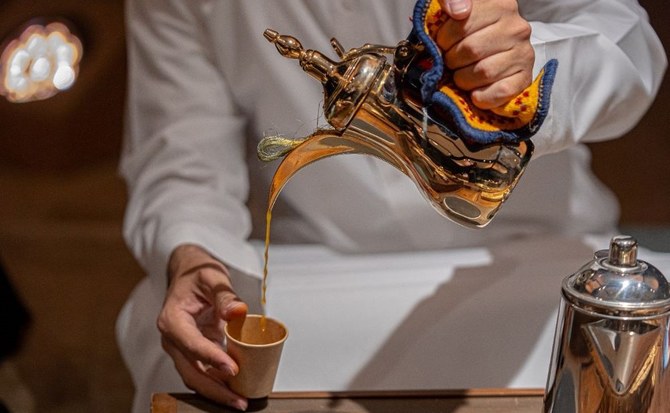
Visitors are welcomed with a cup of Saudi coffee before making their own coffee in the workshop. (AN Photo/Huda Bashatah)
Short Url
Updated 12 April 2023
Follow

Ramadan visitors to historic Saudi site learn secrets to coffee making

  • The Diriyah Gate Development Authority is running coffee workshops at the At-Turaif UNESCO World Heritage Site in Riyadh
  • The sessions, being held weekly from Thursday to Saturday, show participants the art of producing traditional Saudi coffee

RIYADH: Ramadan visitors to a historic Saudi landmark are being offered the chance to learn the secrets to making the perfect cup of coffee.

The Diriyah Gate Development Authority is running coffee workshops at the At-Turaif UNESCO World Heritage Site in Riyadh throughout the holy month of fasting.

The sessions, being held weekly from Thursday to Saturday, show participants the art of producing traditional Saudi coffee.

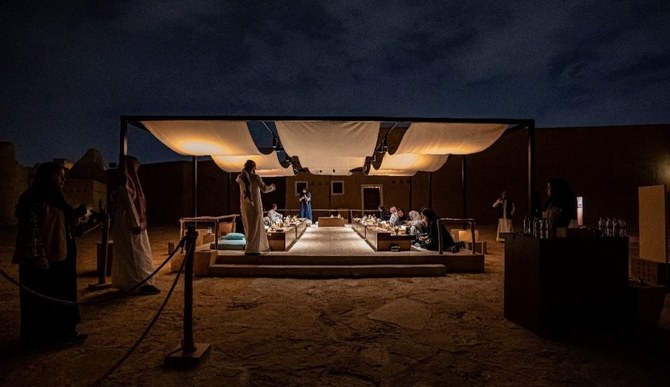
An optional part of a walking tour of the At-Turaif district, visitors to the tented workshop — that overlooks At-Turaif and Bujairi Terrace — are greeted with a cup of Najdi coffee before the session starts.

Abdulrahman Al-Shahri, a Saudi coffee expert from the Ministry of Culture, described the coffee of Najd people as “uniquely characterized by the color of roasted coffee, with the addition of two to three types of species, including saffron, cardamon, and cloves.”

The workshops guide visitors through the steps for making authentic Saudi coffee, from the initial roasting of the beans to serving, a process that takes around one hour. Once the beans have been roasted and cooled, they are ground using a traditional tool.

Al-Shahri said: “The workshops aim to highlight the heritage of Saudi coffee and give visitors a view of how it is made. Saudi coffee is internationally recognized and is now accredited by the (EU) Council of Ministers.

“We are providing this workshop because many young visitors and expats do not know how Saudi coffee is made, and we are trying to distinguish it by the way it is made, and the special spices added to the coffee.”

The Ministry of Culture designated 2022 as The Year of Saudi Coffee.


Lebanese filmmaker turns archival footage into a love letter to Beirut

Updated 55 min 37 sec ago
Follow

Lebanese filmmaker turns archival footage into a love letter to Beirut

LONDON: Lebanese filmmaker Lana Daher’s debut feature “Do You Love Me” is a love letter of sorts to Beirut, composed entirely of archival material spanning seven decades across film, television, home videos and photography.

The film premiered at the 82nd Venice International Film Festival in September and has since traveled to several regional and international festivals.

Pink Smoke (2020) by Ben Hubbard. (Supplied)

With minimal dialogue, the film relies heavily on image and sound to reconstruct Lebanon’s fragmented history.

“By resisting voiceover and autobiography, I feel like I had to trust the image and the shared emotional landscape of these archives to carry the meaning,” Daher said.

A Suspended Life (Ghazal el-Banat) (1985) by Jocelyne Saab. (Supplied)

She explained that in a city like Beirut “where trauma is rarely private,” the socio-political context becomes the atmosphere of the film, with personal memory expanding into a collective experience — “a shared terrain of emotional history.”

Daher said: “By using the accumulated visual representations of Beirut, I was, in a way, rewriting my own representation of home through images that already existed."

Whispers (1980) by Maroun Bagdadi. (Supplied)

Daher, with editor Qutaiba Barhamji, steered clear of long sequences, preferring individual shots that allowed them to “reassemble meaning” while maintaining the integrity of their own work and respecting the original material, she explained.

The film does not feature a voice-over, an intentional decision that influenced the use of sound, music, and silence.

The Boombox (1995) by Fouad Elkoury. (Supplied)

“By resisting the urge to fill every space with dialogue or score, we created room for discomfort,” Daher said, adding that silence allows the audience to sit with the image and enter its emotional space rather than being guided too explicitly.

 The film was a labor of love, challenging Daher personally and professionally.

“When you draw from personal memory, you’re not just directing scenes, you’re revisiting parts of yourself and your childhood,” she said. “There’s vulnerability in that.”