

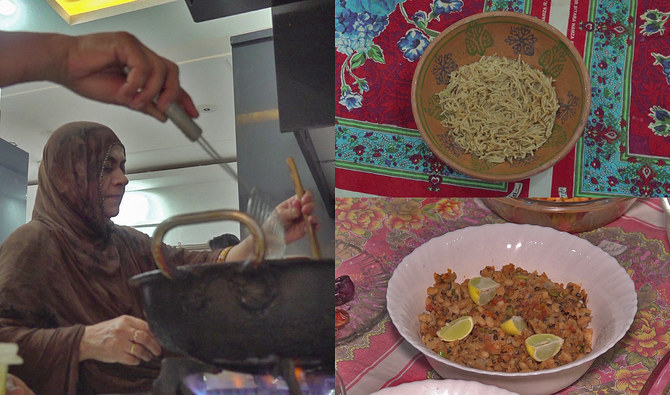

KARACHI: Sindhi women residing in Pakistan’s southern Karachi port city have been trying to relive the memory of the sunset iftar meal as it was served in the 1970s, saying that the original recipes contained mild spices and were unlike the food consumed during Ramadan these days.
The Sindhi community constitutes one of the largest ethnic groups in Pakistan’s third biggest province in the southeast. The cuisine originating in the region is popular in many countries across the world, including India, where a sizable number of Hindus belonging to the area migrated following independence in 1947.
Sindhi food is heavily influenced by Arabs, Mughals, and Turks who ruled the region for significantly long periods of time.
The native cuisine of the Sindhi community is very traditional and unique in taste, though Sindh shares similar culinary traditions with India’s Gujarat, Rajasthan, and Bombay, according to the Sindh Tourism Development Corporation.
“I witnessed the special traditions of iftar when I came to Karachi,” Tasneem Nizamani, 57, who is a retired Sindhi teacher, told Arab News. “When we were young [in the 1970s] in our village, our grandmother did not add a lot of spices [to the food]. When she would make chicken, which we call Sindhi Murghi, it only contained onions.”
She said that her family used desi ghee prepared at home.
“My grandmother would either add a bit of black pepper or red pepper, but we never saw so many spices [being added to food] in our village, which we see today in Karachi,” she continued.
Nizamani hails from a humble household in Malhan located in District Badin. When she was in her early teens, her family used to have very simple iftars with dates and a traditional drink called Thaadal that contained a variety of crushed nuts, herbs, and black pepper.
“When I was young, my father used to make Thaadal,” she said. “He would grind white cumin seeds, black pepper, almonds, and green cardamom in kundo, a special thick earthen container with a rough surface and a heavy wooden pestle. It used to be a staple drink in iftar when we were young.”
Thaadal is a refreshing drink that originated in Nawabshah, a small town in Sindh. It is easily available in the market today in fancy packaging.
Some of the famous Sindhi cuisines at the time, said Nizamani, included a special type of spinach called “lulur ka saag.” It was not sowed but rather grew automatically when it rained. Gajar palak (carrot and spinach gravy) and mooli (radish gravy) were also unique vegetable dishes made in the Sindhi households and were not common in other communities.
“When Ramadan is around the corner, we especially prepare handmade sawaiyan [vermicelli] and consume it in sahoor [morning meal before fasting],” she said. “We strain whole wheat flour on a piece of cloth and then knead it. We fix a machine in a charpoy and then two women make small doughs and put them in the machine. The machine is run with hands.”
It is then left to dry under the sun before being mixed with oil and sugar.
Speaking of unique twists to iftar staples popular across Karachi, Nizamani shared a few recipes, which she said were common to Sindhi households. As opposed to sweet dahi baray (lentil dumplings soaked in yogurt sauce), they make savory ones by adding green chilli paste to the batter as well as the yogurt.
Lobia (kidney beans) chaat is a regular dish in the iftar platters of Sindh, according to Nizamani. Boiled beans are added to a mixture of sautéed onions and tomatoes and sprinkled with light spices.
“Chana [chickpea] is heavy. We fast and have empty stomachs all day long, so when we consume something heavy, it makes us sick,” Nizamani said, adding that kidney beans were lighter and easier to digest.
“If anyone falls sick in our home, this is the first food we serve to them,” she added. “Boiled beans with black pepper and salt.”
Yasmeen Akhund, 54, who works as the headmistress in a government school, said members of the Sindhi community had unique ways of preparing their food.
“We used to have simple salan [gravy] that didn’t have a lot of spices but tasted really good,” she told Arab News.
“We didn’t have packaged spices back in the days when I was young,” she continued. “Even today, we make food the same way. The main ingredient we use in our cuisines is onion. We do not use a lot of ginger and garlic in our food. It was never a part of our meals in the past.”
Famous Sindhi cuisine made in Sindhi households, according to Akhund, includes alu bhindi fry (fried potato and okra), Sindhi biryani, damra fish (Labeo rohita) that is served dry or with gravy along with rice.
“There is a very famous Sindhi breakfast dish called kutti. It’s made of crumbled whole wheat flour roti [flatbread], tempered with pure ghee, and sweetened with sugar,” Akhund said.


