

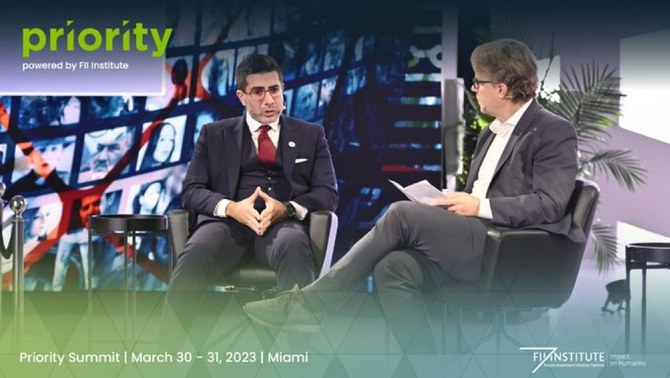

MIAMI: Trust in news has fallen in almost half of 46 countries surveyed by the Reuters Institute. Other studies show that only 8 percent of people in the US trust what they read, see and hear.
These numbers do not surprise Faisal Abbas, the editor-in-chief of Arab News. Speaking at the FII Priority conference, he said: “We’re living in an era where we are bombarded by information left, right and center so for people to distrust the information that they are receiving is not unusual.”
Abbas said there was a silver lining in this situation, which is the increase in subscriptions.
“People, for the first time since the expansion of the internet, are willing to actually pay money for professional, quality journalism.”
There was a median increase of nearly 58 percent in active subscribers between 2019 and 2020, according to data from analytics firm Piano.
Given anyone now has the “ability to disseminate and receive information unfiltered instantly,” professional quality journalism is more important than ever.
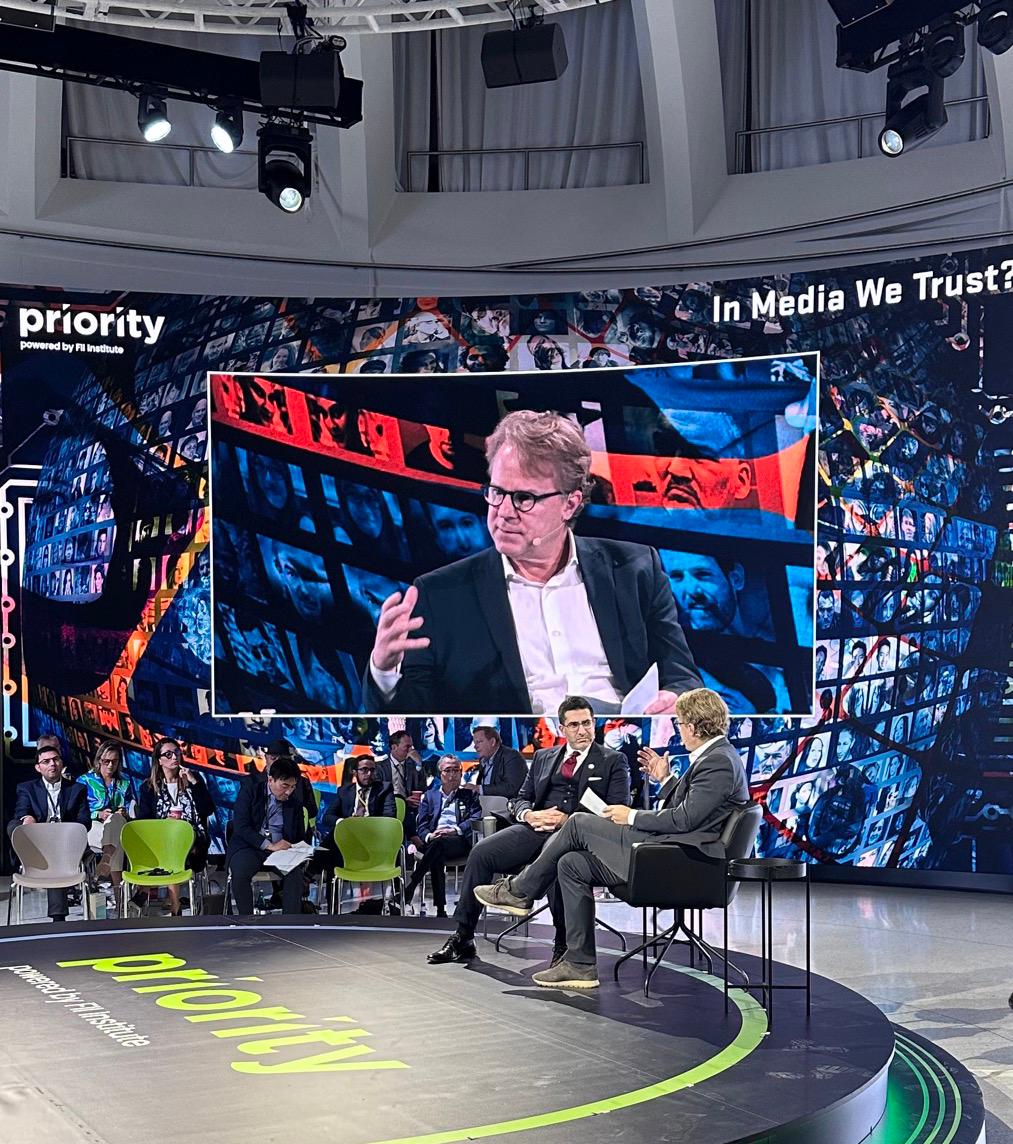
Justin Smith, former CEO of Bloomberg Media and current CEO and co-founder of global news platform, Semafor, who moderated the panel, said that Semafor believes the best way of “attacking trust is to rethink the actual format”.
Semafor’s articles are therefore broken down into sections featuring the news, analysis, different perspectives on the topic, and other articles on the topic.
In the Middle East, unlike America, there isn’t a first amendment that protects the free speech of the press and people. However, and particularly in Saudi Arabia, “we’re living in a positive climate of reforms,” said Abbas.
While he acknowledged “we’re not there yet,” he added that since “the whole vision is focused on setting targets, KPIs, and transparency for government officials and bodies, it is unthinkable that we will not get there in the end.”
Arab News itself has seen 500 percent growth in traffic and audience and a large rise in newsletter subscriptions, so “we must be doing something right,” he added.

Moreover, when it comes to quality journalism, Saudi media continues to dominate the media scene, Abbas said.
This is, in part at least, due to the diligence and responsibility of media outlets to maintain editorial integrity, which “can’t be promised or pledged, it has to be proven with every story.
“Reputation arrives on foot and leaves on horseback, so it only takes one mistake. It’s not a responsibility we take lightly and neither does our management.”
Abbas pressed on how social media is impacting the truth and discussed the recent pressure social media companies are facing from governments and regulators.
He likened social media platforms to someone entering their teenage years — “whatever they did before was cute,” or “they were too young to know what they’re doing,” Abbas said.
But now, regulation is catching up and platforms are being held accountable, and treated as publishers who are liable for the content on their sites, he added.
Beyond news dissemination, Abbas drew attention to the problem of commercialization.
“We’re a victim of a situation whereby you are penalized to do professional journalism, and rewarded if you do lazy fake news.”
News media organizations incur multiple costs from commissioning a story, to legal reviews, to copyediting. They then end up sharing revenue with social platforms or Google, which is unfair, Abbas said.
Often, fake news stories go viral on social media platforms garnering millions of clicks, “and that is just a classic model of how easy it is and how social media will reward you if you are publishing fake news.”
It is important to remember that “big tech companies weren’t founded by journalists or publishers; they were founded by engineers who didn’t quite understand the impact that fake news has,” Abbas said.
Ultimately, he concluded, “it’s up to us, only journalism can save journalism.”


