
OSLO: The global number of operational atomic warheads increased in 2022, driven largely by Russia and China, a new report out Wednesday said as nuclear tensions have risen since the war in Ukraine.
The nine official and unofficial nuclear powers held 9,576 ready-to-use warheads in 2023 -- up from 9,440 the previous year, according to the Nuclear Weapons Ban Monitor published by the NGO Norwegian People's Aid.
Those weapons have a "collective destructive power" equal to "more than 135,000 Hiroshima bombs," the report said.
Conducted in collaboration with the Federation of American Scientists, the study is published as Moscow has repeatedly raised the nuclear threat in connection to its invasion of Ukraine and Western military aid for the Eastern European country.
On Saturday, Russian President Vladimir Putin announced that he had agreed with Minsk to deploy "tactical" nuclear weapons in Belarus, a country on the EU's doorstep.
"The United States has been doing this for decades. They have long placed their tactical nuclear weapons on the territory of their allies," Putin said in a televised interview.
According to estimates by various independent observers, the United States has deployed about 100 so-called "tactical" nuclear weapons -- referring to their shorter range or lesser power -- in Belgium, Germany, Italy, the Netherlands and Turkey over the years.
Russia's announcement was roundly criticised by Ukraine and its Western allies, with NATO denouncing it as "dangerous and irresponsible" and the EU threatening Minsk with further sanctions if the deployment went ahead.
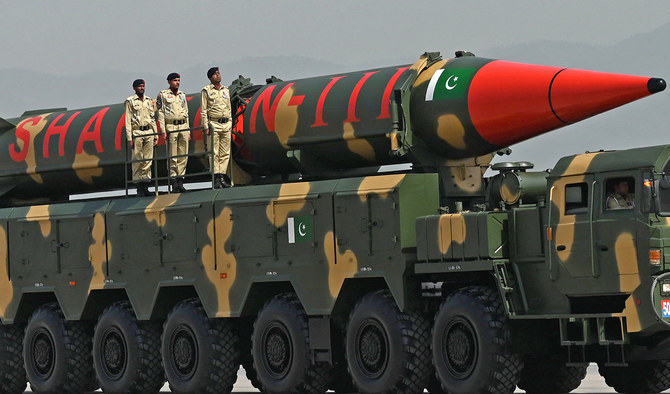
The additional 136 warheads on the ready-to-use global nuclear stockpile last year were attributed to Russia, which has the world's largest arsenal with 5,889 operational warheads, as well as China, India, North Korea and Pakistan.
"This increase is worrying, and continues a trend that started in 2017," said Grethe Lauglo Ostern, editor of the Nuclear Weapons Ban Monitor.
Away from the spotlight of the conflict in Ukraine, North Korea has been conducting tests with ballistic missiles, which could increase its capacity to carry out nuclear strikes.
In the highly tense geopolitical situation, fears that these devastating weapons will be used are now at their highest levels since the end of the Cold War, according to opinion polls in several countries.
At the same time, the total stockpile of nuclear weapons, which also includes those removed from service, continues to decline.
In 2022, the overall number of nuclear weapons fell from 12,705 to 12,512.
"This is only still true because Russia and the United States each year dismantle a small number of their older nuclear warheads that have been retired from service," said Hans M. Kristensen, director of the Nuclear Information Project at the Federation of American Scientists.
Ostern warned that if the trend of new warheads being added does not stop, "the total number of nuclear weapons in the world will also soon increase again for the first time since the Cold War."
At the peak in 1986, there were over 70,000 nuclear weapons in the world, according to the Stockholm International Peace Research Institute.
The eight official nuclear powers are the United States, Russia, Britain, China, France, India, North Korea and Pakistan, while Israel is known to have nuclear weapons unofficially.