

IMF official says Pakistan must explain fuel-pricing scheme before any loan deal 

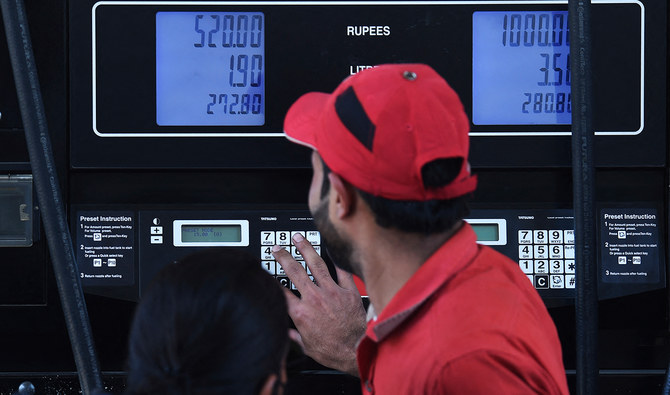
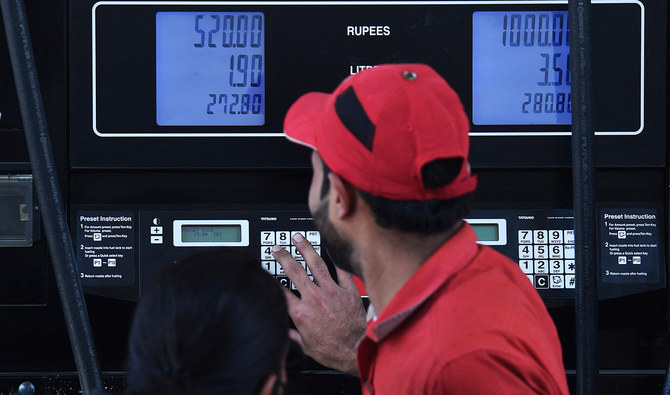
An employee of a petrol station fills the tank of a customer in Karachi on February 16, 2023, after a hike in prices of petroleum products by the government. (AFP/File)
Short Url
Updated 25 March 2023
Follow

IMF official says Pakistan must explain fuel-pricing scheme before any loan deal 

  • Pakistan, IMF have been negotiating an agreement that would release $1.1 billion to the cash-strapped nation 
  • Latest issue is plan to charge affluent consumers more for fuel, with money raised to subsidise prices for poor 

ISLAMABAD: A long-awaited loan agreement between Pakistan and the International Monetary Fund (IMF) will be signed once a few remaining points, including a proposed fuel pricing scheme, are settled, an IMF official said on Friday. 

Pakistan and the IMF have been negotiating since early February on an agreement that would release $1.1 billion to the cash-strapped, nuclear-armed country of 220 million people. 

The latest issue is a plan, announced by Prime Minister Shehbaz Sharif last week, to charge affluent consumers more for fuel, with the money raised used to subsidise prices for the poor, who have been hit hard by inflation. In February it was running at its highest in 50 years. 

The plan involves a difference of around 100 rupees (35 US cents) a liter between the prices paid by the rich and poor, according to the petroleum ministry. 

Petroleum Minister Musadik Malik told Reuters on Friday that his ministry was working out details. It was not a subsidy but a relief program, he said. 

“People with larger cars will pay more than people with smaller cars. Smaller cars are more fuel efficient, so people will move toward more fuel-efficient cars,” Malik said. 

IMF needs explanation 

But the IMF’s resident representative in Pakistan, Esther Perez Ruiz, said the government had not consulted the fund about the scheme. 

Ruiz, in a message to Reuters, confirmed a media report that a staff-level agreement would be signed once a few remaining points, including the fuel scheme, were settled. 

She has said that the IMF would ask the government for more details, including how it would be implemented and what protections would be put in place to prevent abuse. 

The minister said the scheme wouldn’t cost the government anything extra. 

“We can explain all this to the IMF when they ask,” he said, adding that the lender was in touch with the finance ministry not his. 

The finance ministry did not immediately respond to a request for a comment. 

With $4.6 billion in foreign exchange reserves held by Pakistan’s central bank in the week ending Match 17, enough to cover only about four weeks of necessary imports, Pakistan is desperate for the IMF agreement to disperse a $1.1 billion tranche from a $6.5 billion bailout agreed in 2019. 

Islamabad has implemented several measures, including devaluing the rupee, lifting subsidies and raising energy prices, as preconditions for the agreement, which the finance minister said this month was “very close.” 


IMF hails Pakistan privatization drive, calls PIA sale a ‘milestone’

Updated 10 January 2026
Follow

IMF hails Pakistan privatization drive, calls PIA sale a ‘milestone’

  • Fund backs sale of national airline as key step in divesting loss-making state firms
  • IMF has long urged Islamabad to reduce fiscal burden posed by state-owned entities

KARACHI: The International Monetary Fund (IMF) on Saturday welcomed Pakistan’s privatization efforts, describing the sale of the country’s national airline to a private consortium last month as a milestone that could help advance the divestment of loss-making state-owned enterprises (SOEs).

The comments follow the government’s sale of a 75 percent stake in Pakistan International Airlines (PIA) to a consortium led by the Arif Habib Group for Rs 135 billion ($486 million) after several rounds of bidding in a competitive process, marking Islamabad’s second attempt to privatize the carrier after a failed effort a year earlier.

Between the two privatization attempts, PIA resumed flight operations to several international destinations after aviation authorities in the European Union and Britain lifted restrictions nearly five years after the airline was grounded following a deadly Airbus A320 crash in Karachi in 2020 that killed 97 people.

“We welcome the authorities’ privatization efforts and the completion of the PIA privatization process, which was a commitment under the EFF,” Mahir Binici, the IMF’s resident representative in Pakistan, said in response to an Arab News query, referring to the $7 billion Extended Fund Facility.

“This privatization represents a milestone within the authorities’ reform agenda, aimed at decreasing governmental involvement in commercial sectors and attracting investments to promote economic growth in Pakistan,” he added.

The IMF has long urged Islamabad to reduce the fiscal burden posed by loss-making state firms, which have weighed public finances for years and required repeated government bailouts. Beyond PIA, the government has signaled plans to restructure or sell stakes in additional SOEs as part of broader reforms under the IMF program.

Privatization also remains politically sensitive in Pakistan, with critics warning of job losses and concerns over national assets, while supporters argue private sector management could improve efficiency and service delivery in chronically underperforming entities.

Pakistan’s Cabinet Committee on State-Owned Enterprises said on Friday that SOEs recorded a net loss of Rs 122.9 billion ($442 million) in the 2024–25 fiscal year, compared with a net loss of Rs 30.6 billion ($110 million) in the previous year.