

IMF official says Pakistan must explain fuel-pricing scheme before any loan deal 

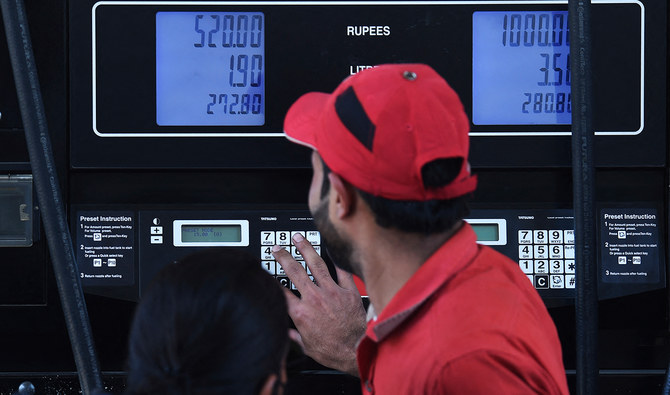
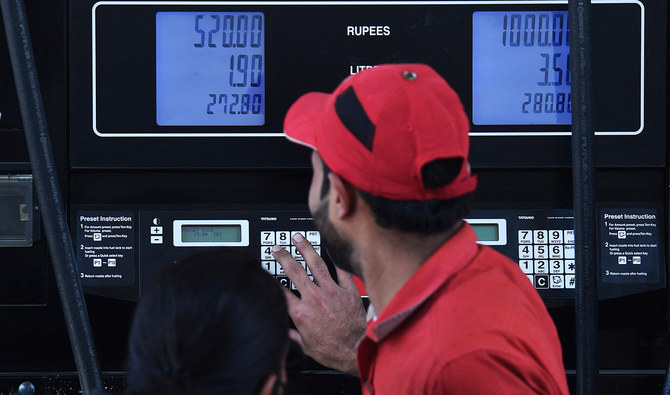
An employee of a petrol station fills the tank of a customer in Karachi on February 16, 2023, after a hike in prices of petroleum products by the government. (AFP/File)
Short Url
Updated 25 March 2023
Follow

IMF official says Pakistan must explain fuel-pricing scheme before any loan deal 

  • Pakistan, IMF have been negotiating an agreement that would release $1.1 billion to the cash-strapped nation 
  • Latest issue is plan to charge affluent consumers more for fuel, with money raised to subsidise prices for poor 

ISLAMABAD: A long-awaited loan agreement between Pakistan and the International Monetary Fund (IMF) will be signed once a few remaining points, including a proposed fuel pricing scheme, are settled, an IMF official said on Friday. 

Pakistan and the IMF have been negotiating since early February on an agreement that would release $1.1 billion to the cash-strapped, nuclear-armed country of 220 million people. 

The latest issue is a plan, announced by Prime Minister Shehbaz Sharif last week, to charge affluent consumers more for fuel, with the money raised used to subsidise prices for the poor, who have been hit hard by inflation. In February it was running at its highest in 50 years. 

The plan involves a difference of around 100 rupees (35 US cents) a liter between the prices paid by the rich and poor, according to the petroleum ministry. 

Petroleum Minister Musadik Malik told Reuters on Friday that his ministry was working out details. It was not a subsidy but a relief program, he said. 

“People with larger cars will pay more than people with smaller cars. Smaller cars are more fuel efficient, so people will move toward more fuel-efficient cars,” Malik said. 

IMF needs explanation 

But the IMF’s resident representative in Pakistan, Esther Perez Ruiz, said the government had not consulted the fund about the scheme. 

Ruiz, in a message to Reuters, confirmed a media report that a staff-level agreement would be signed once a few remaining points, including the fuel scheme, were settled. 

She has said that the IMF would ask the government for more details, including how it would be implemented and what protections would be put in place to prevent abuse. 

The minister said the scheme wouldn’t cost the government anything extra. 

“We can explain all this to the IMF when they ask,” he said, adding that the lender was in touch with the finance ministry not his. 

The finance ministry did not immediately respond to a request for a comment. 

With $4.6 billion in foreign exchange reserves held by Pakistan’s central bank in the week ending Match 17, enough to cover only about four weeks of necessary imports, Pakistan is desperate for the IMF agreement to disperse a $1.1 billion tranche from a $6.5 billion bailout agreed in 2019. 

Islamabad has implemented several measures, including devaluing the rupee, lifting subsidies and raising energy prices, as preconditions for the agreement, which the finance minister said this month was “very close.” 


Sri Lanka seal gritty T20 win over Pakistan to level series

Updated 11 January 2026
Follow

Sri Lanka seal gritty T20 win over Pakistan to level series

  • In a contest trimmed to 12 overs a side, Sri Lanka scored 160 runs before choking Pakistan to 146-8
  • The series saw the visitors clinch the opener by six wickets before rain washed out the second game

Dambulla: Sri Lanka eked out a hard fought 14-run victory over Pakistan in the third T20 at rain-hit Dambulla on Sunday, easing their batting jitters and squaring the three-match series 1-1.

The series, a warm-up for the T20 World Cup with Pakistan set to play all their matches in Sri Lanka due to political tensions with nuclear-armed neighbors India, saw the visitors clinch the opener by six wickets before rain washed out the second game.

“We were a bit worried about our batting and I’m glad we addressed that today,” said Wanindu Hasaranga, who walked away with both Player of the Match and Player of the Series honors.

“The bowlers did a good job too. The ball was wet and it wasn’t easy. We tried to bowl wide and slow and asked them to take risks.”

Hasaranga took four wickets in the game and in the process completed 150 wickets in T20Is.

In a contest trimmed to 12 overs a side, Sri Lanka muscled their way to a competitive 160 before choking Pakistan to 146-8.

Having been bowled out inside 20 overs in the series opener, Sri Lanka needed a statement with the bat and duly ticked every box after being put in.

The top order laid the platform and the middle order applied the finishing touches.

Wicket-keeper Kusal Mendis made hay under the Power Play, blasting 30 off 16 balls while Dhananjaya de Silva (22 off 15) and Charith Asalanka (21 off 13) kept the scoreboard ticking.

Skipper Dasun Shanaka then swung the momentum decisively, clubbing 34 off just nine deliveries, peppered with five towering sixes.

The sixth-wicket stand between Shanaka and Janith Liyanage produced 52 runs in just 15 balls and proved the turning point, shifting the game firmly Sri Lanka’s way.

Pakistan came out swinging in reply, racing to 50 in just 19 balls with captain Salman Agha hammering 45 off 12 balls, including five fours and three sixes.

But once the field spread, Sri Lanka tightened the screws, applied the choke and forced the asking rate to spiral.

“It was a good game of cricket,” Agha said.

“We conceded too many runs, but our batting effort was good. Unfortunately, we fell short. We know we are going to play all our World Cup games in Sri Lanka and it’s important that we played in similar conditions,” he added.