

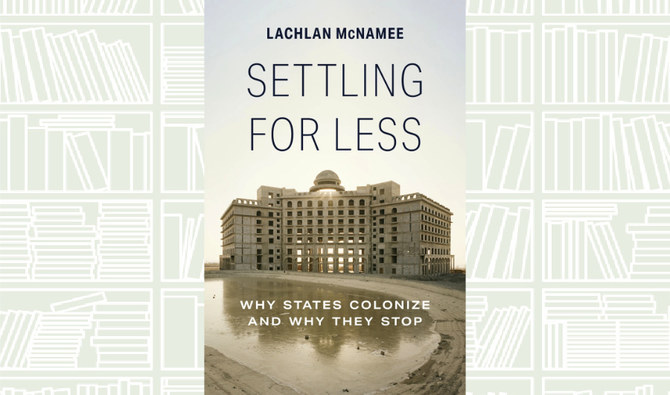
What We Are Reading Today: Settling for Less

Short Url
Updated 20 March 2023
Follow

What We Are Reading Today: Settling for Less

Author: Lachlan McNamee

Over the past few centuries, vast areas of the world have been violently colonized by settlers. But why did states like Australia and the United States stop settling frontier lands during the twentieth century? At the same time, why did states loudly committed to decolonization like Indonesia and China start settling the lands of such minorities as the West Papuans and Uyghurs?
Settling for Less traces this bewildering historical reversal, explaining when and why indigenous peoples suffer displacement at the hands of settlers.


What We Are Reading Today: Worldly Afterlives by Julia Stephens

Updated 24 December 2025
Follow

What We Are Reading Today: Worldly Afterlives by Julia Stephens

Indian migrants provided the labor that enabled the British Empire to gain control over a quarter of the world’s population and territory. In the mid-1800s, the British government began building an elaborate bureaucracy to govern its mobile subjects, issuing photo IDs, lists of kin, and wills. It amassed records of workers’ belongings such as handwritten IOUs, crumpled newspaper clippings, and copper bangles. 

“Worldly Afterlives” uses this trove of artifacts to recover the stories of the hidden subjects of empire. Navigating the remains of imperial bureaucracy — in archives scattered across Asia, Africa, the Middle East, and the Americas — Julia Stephens follows migrant families as they traverse the Indian Ocean and the British Empire. She draws on in-depth interviews to show how the histories of empire reverberate in the present.