


MAKKAH: Al-Baida Park in Madinah is embracing technology in a bid to track the movement of its wildlife.
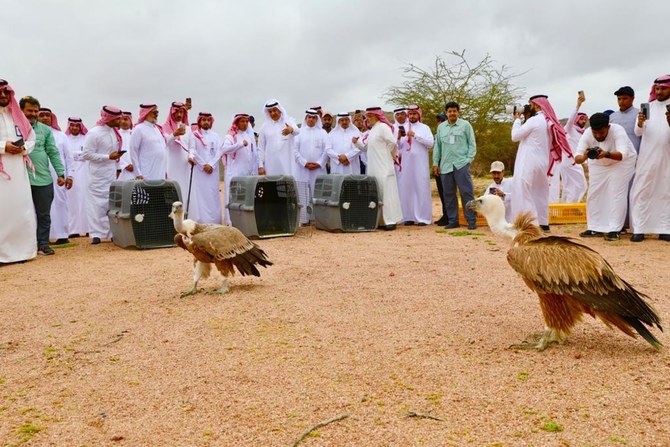
Abdulrahman Al-Fadli, the Saudi minister of environment, water and agriculture, recently presided over the release of some 92 wild animals into the park to help enrich biodiversity, and restore environmental balance and aid sustainability.
And Dr. Ahmed Al-Bouq, director general of wildlife conservation at the National Center for Wildlife Development, supports the concept of using technology to help the well-being of the creatures at the location.
He told Arab News that the evaluation process is the first step in any release operation. This includes focusing on the release area and noting whether it will aid protection and if it contains the vegetation density to help the species.
He said: “During the first release, we dealt with 10 species, including the Alpine ibex, mountain gazelles, vultures, eagles, crowned sandgrouses, European turtle doves, crested larks and Namaqua doves.
“The pre-evaluation process is of utmost importance as it will provide us with sufficient information on how to set appropriate conditions to ensure the safety and integration of all animals.”
Al-Bouq said that this is followed by the installation of satellite tracking devices to target the released animals and track their movements.
He added: “What we are aiming to achieve is to bring people closer to wildlife, while giving them the chance to become familiar with animals that are endangered, so they no longer find them strange or feel a cultural dimension keeping both worlds apart. The release operation is a bridge linking people and wildlife.”

Al-Bouq said that the center is working hard on helping people understand the link between man and nature, in the hope of helping to enrich the environment in the process.
He added: “We are adding to the diversity in parks and raising the visitors’ environmental awareness level, while enhancing the readiness of concerned parks to invest in the wildlife sector in general.
“We are also looking to improve the level and quality of life of the animals, given that natural parks are way more important than industrial parks, especially in the outskirts of cities, such as Al-Baida wild natural park.”
The Verreaux’s eagle was released in Al-Baida Park. It is a breeding resident of the Kingdom that can only be found in the western highlands in mountainous areas. Pairs can be seen throughout the year near nesting sites in rocky cliffs.
The greater hoopoe is a bird that was also released during the operation, along with the Tristram’s starling.
The steppe eagle was also released into the park. This is a migrant bird that visits the Kingdom during the winter season, from November until the end of March.
It can be found in deserts, mountains, plains, and near the beach, as well as in garbage dumps.
The bird breeds in central and northern Kazakhstan, and feeds on rodents and dead animals.
The nubian ibex is a herbivore goat species with a stout brown body, and it too was released into the park. It traditionally lives in mountainous areas and on steep slopes.
It needs to be continuously hydrated so the animal gravitates to areas where surface water is available.
The mountain gazelle was also released. The King Khalid Wildlife Research Center is currently working on reintroducing the gazelle into the national center’s related reserves, as well as into the national parks in the Kingdom.


