NEW DELHI: For decades, stories from India’s Dalit community have remained largely untold even as millions of its people suffered widespread mistreatment and violence.
Previously known as “untouchable,” Dalits are the lowest stratum of India’s Hindu caste system. The group accounts for 300 million people, or about 20 percent of the Indian population.
Although some members of the community have managed to reach high ranks, most remain marginalized and are unable to escape the cycle of poverty they have been trapped in for centuries.
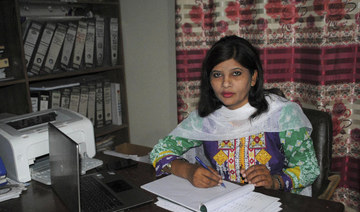
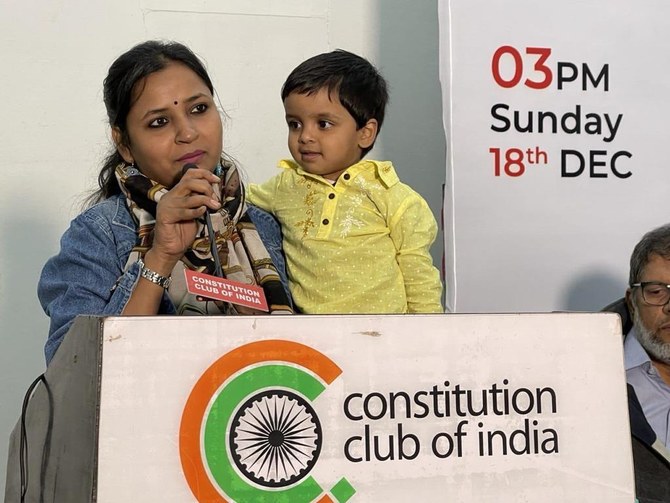
Hoping that telling their stories would help improve their lives made Meena Kotwal, a 33-year-old journalist brought up in the slums of New Delhi, start a news platform focused on the group.
The Mooknayak, or “leader of the voiceless,” was launched online two years ago.
“I started the paper in anger and launched the online edition in 2021…After working at the BBC for two years, from 2017 to 2019, I started looking for jobs in the Indian media, but I could not get any good offers. I tried some freelancing, but most of the stories I would pitch would get rejected,” Kotwal told Arab News.
“Being a woman and a Dalit with her own voice would not be appreciated by those places where I applied for jobs. Then I thought of The Mooknayak to tell not only my story but also stories that the mainstream media would not run.”
The publication is named after a biweekly newspaper founded over a century ago by Dr. Bhimrao Ambedkar, a social reformer who championed Dalit rights and was one of the main architects of the Indian Constitution, which enshrined a formal ban on caste discrimination.
Kotwal’s publication is not only an online newspaper but also a YouTube channel, with 50,000 subscribers.
“The idea behind starting The Mooknayak was to pay back to society whatever I have learned,” she said.
The platform is run through crowdfunding and employs Dalits and members of other marginalized groups. Even though it faces financial challenges, Kotwal vows to keep it going.
“I will not allow this website to close in my lifetime, no matter how much financial stress I have to go through. I have to keep the movement going that Ambedkar started,” she said.
“I want my little daughter to grow in a better environment and in a better society.”
The Mooknayak tells underreported stories, which eventually lead officials to intervene — to connect a Dalit village to the power grid, to address cases of violence, and so on.
Such stories are usually missed by the mainstream media.
“Mainstream media largely ignores Dalit concerns,” Rajat Kumar, a Dalit lawyer from the northern state of Haryana, told Arab News.
“Even after seven decades since India became a republic, discrimination against Dalits is rampant. The situation in some villages is as bad as it was 200 years ago.”
This is what The Mooknayak is trying to change, and its founder believes that will happen as stories of the marginalized are finally being told.
“History will change,” Kotwal said. “So far, history was written by only one kind of people, and now it is being written by those who themselves suffered in history.”

Dalit journalist takes aim at changing history with stories of India’s marginalized
https://arab.news/ztxbt
Dalit journalist takes aim at changing history with stories of India’s marginalized
- Stories from Dalit community are underreported by mainstream media
- The Mooknayak, or ‘leader of the voiceless,’ was launched online in 2021
US to cut roughly 200 NATO positions, sources say
- Trump famously threatened to withdraw from NATO during his first presidential term and said on the campaign trail that he would encourage Russia to attack NATO members that did not pay their fair share on defense
WASHINGTON: The United States plans to reduce the number of personnel it has stationed within several key NATO command centers, a move that could intensify concerns in Europe about Washington’s commitment to the alliance, three sources familiar with the matter said this week.
As part of the move, which the Trump administration has communicated to some European capitals, the US will eliminate roughly 200 positions from the NATO entities that oversee and plan the alliance’s military and intelligence operations, said the sources, who requested anonymity to discuss private diplomatic conversations.
Among the bodies that will be affected, said the sources, are the UK-based NATO Intelligence Fusion Center and the Allied Special Operations Forces Command in Brussels. Portugal-based STRIKFORNATO, which oversees some maritime operations, will also be cut, as will several other similar NATO entities, the sources said.
The sources did not specify why the US had decided to cut the number of staff dedicated to the NATO roles, but the moves broadly align with the Trump administration’s stated intention to shift more resources toward the Western Hemisphere.
The Washington Post first reported the decision.
TRUMP RE-POSTS MESSAGE IDENTIFYING NATO AS THREAT
The changes are small relative to the size of the US military force stationed in Europe and do not necessarily signal a broader US shift away from the continent. Around 80,000 military personnel are stationed in Europe, almost half of them in Germany. But the moves are nonetheless likely to stoke European anxiety about the future of the alliance, which is already running high given US President Donald Trump’s stepped-up campaign to wrest Greenland away from Denmark, raising the unprecedented prospect of territorial aggression within NATO.
On Tuesday morning, the US president, who is scheduled to fly to the World Economic Forum in Switzerland in the evening, shared another user’s post on social media that identified NATO as a threat to the United States. The post described China and Russia as merely “boogeymen.”
Asked for comment, a NATO official said changes to US staffing are not unusual and that the US presence in Europe is larger than it has been in years.
“NATO and US authorities are in close contact about our overall posture – to ensure NATO retains our robust capacity to deter and defend,” the NATO official said.
The White House and the Pentagon did not respond to requests for comment.
MILITARY IMPACT UNCLEAR, SYMBOLIC IMPACT OBVIOUS
Reuters could not obtain a full list of NATO entities that will be affected by the new policy. About 400 US personnel are stationed within the entities that will see cuts, one of the sources said, meaning the total number of Americans at the affected NATO bodies will be reduced by roughly half.
Rather than recalling servicemembers from their current posts, the US will for the most part decline to backfill them as they move on from their positions, the sources said.
The drawdown comes as the alliance traverses one of the most diplomatically fraught moments in its 77-year history. Trump famously threatened to withdraw from NATO during his first presidential term and said on the campaign trail that he would encourage Russian President Vladimir Putin to attack NATO members that did not pay their fair share on defense. But he appeared to warm to NATO over the first half of 2025, effusively praising NATO Secretary-General Mark Rutte and other European leaders after they agreed to boost defense spending at a June summit.
In recent weeks, however, his administration has again provoked alarm across Europe. In early December, Pentagon officials told diplomats that the US wants Europe to take over the majority of NATO’s conventional defense capabilities, from intelligence to missiles, by 2027, a deadline that struck European officials as unrealistic. A key US national security document released shortly after called for the US to dedicate more of its military resources to the Western Hemisphere, calling into question whether Europe will continue to be a priority theater for the US
In the first weeks of 2026, Trump has revived his longstanding campaign to acquire Greenland, an overseas territory of Denmark, enraging officials in Copenhagen and throughout Europe, many of whom believe any territorial aggression within the alliance would mark the end of NATO. Over the weekend, Trump said he would slap several NATO countries with tariffs starting February 1 due to their support for Denmark’s sovereignty over the island. That has caused European Union officials to mull retaliatory tariffs of their own.