

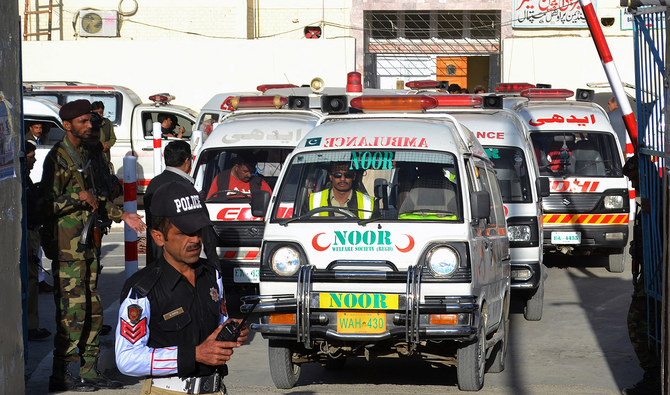

QUETTA: The deaths of six members of a family in an explosion linked to a gas leak at their home this Tuesday is the latest tragedy highlighting a longstanding problem in Balochistan, where 25 gas leakage-related deaths in and around the provincial capital of Quetta have been reported since December.
With bitter winters and few resources to deal with them - and no fixed gas outage or load-shedding timings and unpredictable gas pressure at odd hours of day or night - houses are sometimes flooded with gas, accidentally left on. Amid gas shortages and the uncertainty surrounding pressure, many families turn to using illegally assembled and unsafe Liquefied Petroleum Gas (LPG) cylinders to fulfil their cooking and heating needs.
Every year, residents of Pakistan’s impoverished Balochistan province hold protests against low gas pressure in a region when winter temperature routinely drop below 0 degrees. They blame the Sui Southern Gas Company (SSGC), a company that provides gas to the Sindh and Balochistan provinces, for not providing adequate gas pressure to its consumers or carrying out gas outages.
Arab News sent questions to SSCG officials regarding low gas pressure and unannounced outages but did not receive a reply. But officials at the province’s largest health facility, Civil Hospital Quetta, said at least 25 people had died in incidents relating to gas leak explosions since December, recording a 50 percent increase in such casualties compared to the previous three months.
“We have treated 190 patients with severe and minor burn injuries who were brought to the hospital after gas leakage blasts, with a majority of them being women and children,” a senior official who declined to be named as she was not authorized to speak to media told Arab News on Thursday.
“Most of them were admitted with more than 50 percent burn injuries [to their bodies].”
The severity of the issue was highlighted on March 7 when six members of the family of local religious cleric Molvi Abdul Aziz were killed when a woman in his house attempted to light a gas heater at around 4am, causing a powerful explosion as the room was filled with gas.
“It was completely dark due to the electricity load-shedding and we presumed that a powerful earthquake had hit Quetta city,” Ali Dost, who lives next to Molvi Abdul Aziz’s home in the Sirki Kalan area, told Arab News, saying he was the first to reach the house after hearing the explosion.
“There were nine people trapped under the debris, including six women, two of whom were killed and three received burn injuries and were later shifted to Civil Hospital for treatment,” he added.
He accused the SSGC of not providing a continuous supply of gas:
“The gas company didn’t announce any load-shedding schedule and they supply gas at their own will and at a very low pressure,” Dost said, adding that people of Quetta usually got up in the early hours of the day and used their gas appliances without knowing if gas was available or for how long it had accidentally been flooding their homes.
Pakistan discovered natural gas reserves in Balochistan’s Sui area in Dera Bugti district back in 1952 but the province only started receiving natural gas in 1970. Baloch nationalist parties and armed separatist groups accuse the Pakistani state of exploiting the natural resources of Balochistan, leaving locals deprived of their natural wealth. The state denies this.
The SSGC has more than 300,000 registered gas consumers in Quetta and has been providing 210 million cubic feet of gas to the population of Balochistan.
Secretary Information Balochistan Muhammad Hamza Shafqaat said he was aware of the concerns of gas leakage victims, saying provincial government representatives had raised the issue of low gas pressures with SSGC many times.
“The provincial government has been planning to start awareness campaigns in Quetta and other districts in order to inform the masses regarding the safety measures against this silent killer (gas leakage),” the provincial Secretary Information told Arab News.
“The SSGC officials say they are responsible for gas leakage outside the consumer’s house but if an incident takes place inside a room, how can someone hold the company responsible,” he added.
Sharaf-ud-Din, 50, who lost his four children to a separate gas leak explosion on January 15, said the blast occurred on the first floor of the building where a newly married couple were living.
“The newly-weds were living on the rooftop and they lit a gas heater inside their room, but an explosion perished everything in our lives,” Din told Arab News.
“I don’t know if it was a mistake of the couple or the gas company, but the low-gas pressure is still pestering the citizens in March.”


