

International conference in Riyadh to explore how justice can harness the power of digital transformation

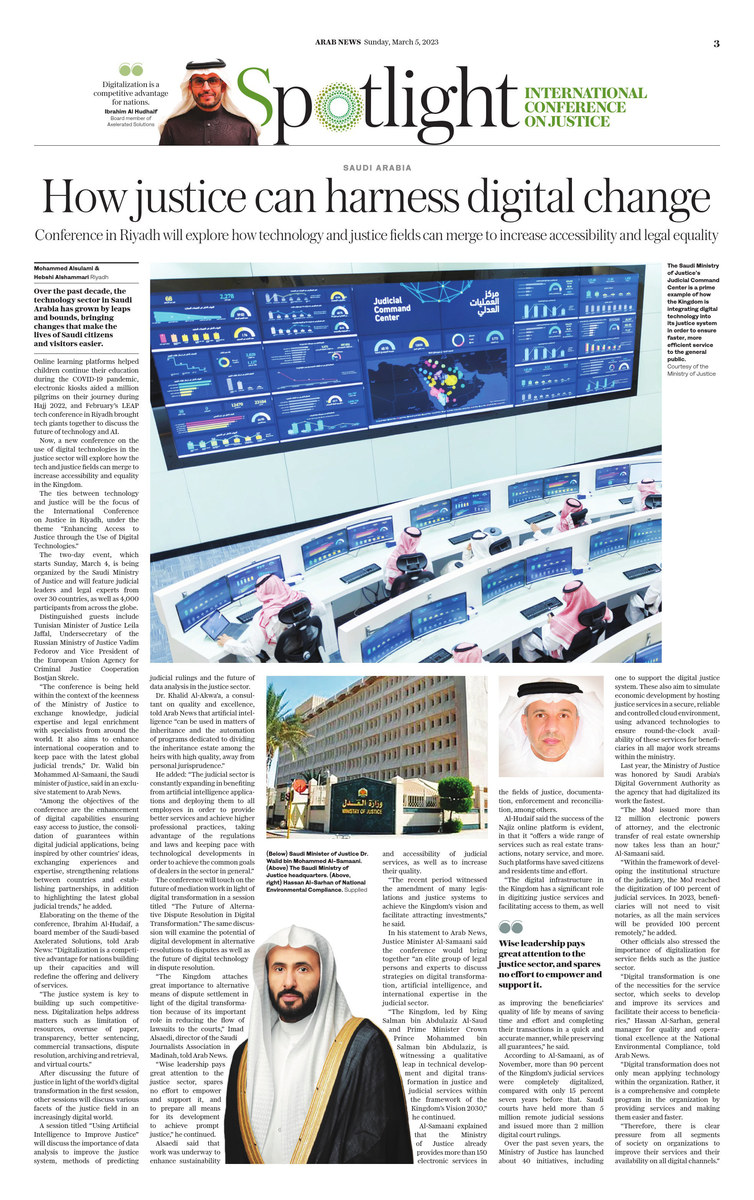
The Saudi Ministry of Justice’s Judicial Command Center is a prime example of how the Kingdom is integrating digital technology into its justice system in order to ensure faster, more efficient service to the general public. (Photo courtesy of the Ministry of Justice)
Short Url
Updated 05 March 2023
Follow

International conference in Riyadh to explore how justice can harness the power of digital transformation

  • Legal experts from around the world are meeting in the Saudi capital for the International Conference on Justice 
  • Saudi Arabia’s judicial services are undergoing digital transformation within the framework of Vision 2030

RIYADH: Over the past decade, the technology sector in the Kingdom of Saudi Arabia has grown by leaps and bounds, and with it brought changes that make the lives of Saudi citizens and visitors easier.

Online learning platforms helped children continue their education during the coronavirus pandemic, electronic kiosks aided a million pilgrims in their journey during Hajj 2022 and February’s LEAP tech conference in Riyadh brought tech giants together to discuss the future of technology and AI.

Now, a new conference on the use of digital technologies in the justice sector will explore how the tech and justice fields can merge to increase accessibility and equality in the Kingdom.


The Saudi Ministry of Justice headquarters in Riyadh. (MOJ photo)

The ties between technology and justice will be the focus of the International Conference on Justice in Riyadh, under the theme “Enhancing Access to Justice through the Use of Digital Technologies.”

The two-day event, which starts on Sunday, is being organized by the Saudi Ministry of Justice and will feature judicial leaders and legal experts from over 30 countries as well as 4,000 participants from across the globe.

Distinguished guests will include Tunisian Minister of Justice Leila Jaffal, Undersecretary of the Russian Ministry of Justice Vadim Fedorov and Vice President of the European Union Agency for Criminal Justice Cooperation Bostjan Skrelc.

“The conference is being held within the context of the keenness of the Ministry of Justice to exchange knowledge, judicial expertise and legal enrichment with specialists from around the world. It also aims to enhance international cooperation and to keep pace with the latest global judicial trends,” Dr. Walid bin Mohammed Al-Samaani, the Saudi minister of justice, said in an exclusive statement to Arab News.
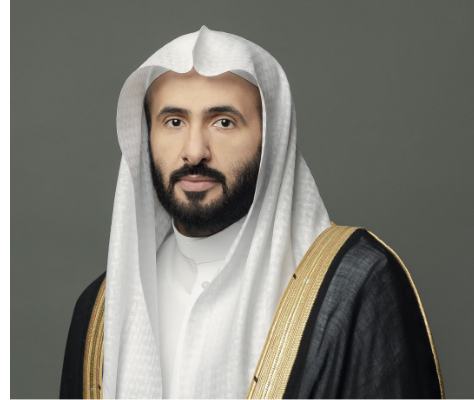


Saudi Justice Minister of Walid bin Mohammed Al-Samaani. (

“Among the objectives of the conference, we refer to the enhancement of digital capabilities ensuring easy access to justice, consolidation of guarantees within digital judicial applications, being inspired by other countries’ ideas, exchanging experiences and expertise, strengthening relations between countries and establishing partnerships, in addition to highlighting the latest global judicial trends,” he added.

Elaborating on the theme of the conference, Ibrahim Al-Hudaif, a board member of the Saudi-based Axelerated Solutions, told Arab News: “Digitalization is a competitive advantage for nations building up their capacities and will redefine the offering and delivery of services.

“The justice system is a key to building up such competitiveness. Digitalization helps address matters such as limitation of resources, overuse of paper, transparency, better sentencing, commercial transactions, dispute resolution, archiving and retrieval, and virtual courts.”

After discussing the future of justice in light of the world’s digital transformation in the first session, other sessions will discuss various facets of the justice field in an increasingly digital world.
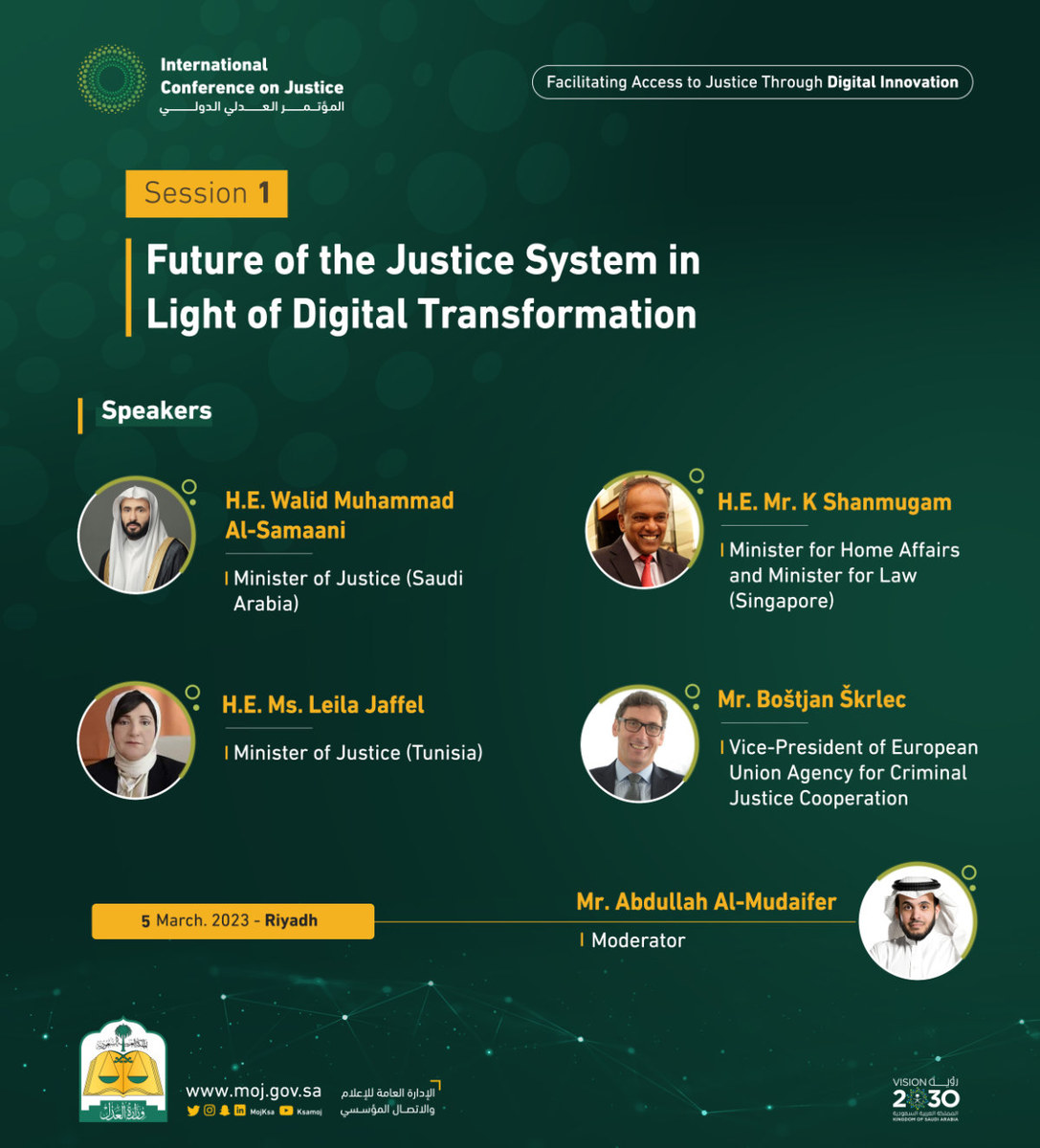
A session titled “Using Artificial Intelligence to Improve Justice” will discuss the importance of data analysis to improve justice, methods of predicting judicial rulings and the future of data analysis in the justice sector.

Dr. Khalid Al-Akwa’a, a consultant on quality and excellence, told Arab News that artificial intelligence “can be used in matters of inheritance and the ‎automation of programs dedicated to dividing the inheritance estate among the heirs with high quality, away from personal jurisprudence‎.”

He added: “The judicial sector is constantly expanding in benefiting from artificial intelligence ‎applications and deploying them to all employees in order to provide better ‎services and achieve higher professional practices, taking advantage of the regulations and laws keeping pace with technological developments in order to ‎achieve the common goals of dealers in the sector in general.”

The conference will touch on the future of mediation work in light of digital transformation in a session titled “The Future of Alternative Dispute Resolution in Digital Transformation.” The same discussion will examine the potential of digital development in alternative resolutions to disputes as well as the future of digital technology in dispute resolution.

“The Kingdom attaches great importance to alternative means of dispute settlement in light of the digital transformation because of its important role in ‎reducing the flow of ‎lawsuits to the courts‎,” Imad Alsaedi, director of the Saudi Journalists Association in Madinah, told Arab News.

“‎Wise leadership pays great attention to the justice sector, spares no effort to empower and support it, and to prepare all means for its development to ‎achieve ‎prompt justice‎,” he said.

Alsaedi said that work was underway to enhance sustainability and accessibility of judicial services, as well as to increase their quality.

“The ‎recent period witnessed the amendment of many legislations and ‎justice systems to ‎achieve the Kingdom’s vision and facilitate attracting ‎investments‎,” he said.

In his statement, Justice Minister Al-Samaani said the conference would bring together “an elite group of legal persons and experts to discuss strategies on digital transformation, artificial intelligence, and international expertise in the judicial sector.”

“The Kingdom, led by King Salman bin Abdulaziz Al-Saud and Prime Minister Crown Prince Mohammed bin Salman bin Abdulaziz, is witnessing a qualitative leap in technical development and digital transformation in justice and judicial services within the framework of the Kingdom’s Vision 2030.”

Al-Samaani explained that the Ministry of Justice already provides more than 150 electronic services in the fields of justice, documentation, enforcement and reconciliation, among others.

Al-Hudaif said the success of the Najiz online platform is evident in that it “offers a wide range of services such as real estate transactions, notary service, and more. Such platforms have saved citizens and residents time and effort.”
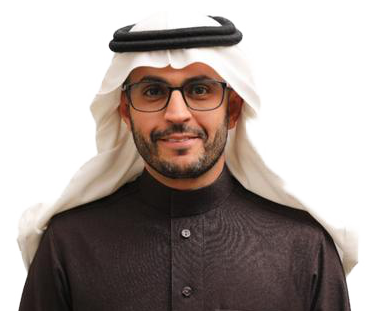


Ibrahim Al-Hudaif

“The digital infrastructure in the Kingdom has a significant role in digitizing justice services and facilitating access to them, as well as improving the beneficiaries’ quality of life by means of saving time and effort and completing their transactions in a quick and accurate manner, while preserving all guarantees,” he said.

According to Al-Samaani, as of November, more than 90 percent of the Kingdom’s judicial services were completely digitalized, compared with only 15 percent seven years before. Saudi courts have held more than 5 million remote judicial sessions and issued more than 2 million digital court rulings.

Over the past seven years, the Ministry of Justice has launched about 40 initiatives, including one to support the digital justice system. These also aim to simulate economic development by hosting justice services in a secure, reliable and controlled cloud environment, using advanced technologies to ensure round-the-clock availability of these services for beneficiaries in all major work streams within the ministry.

Last year, the Ministry of Justice was honored by Saudi Arabia’s Digital Government Authority as the fastest agency to digitalize its work.
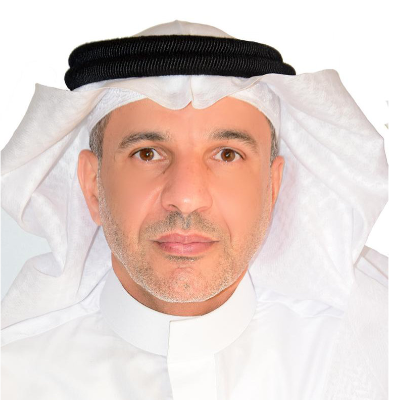


Hassan Al Sarhan

“‎The MoJ issued more than 12 million electronic powers of attorney, and the electronic transfer of real estate ownership now takes less than an hour‎,” Al-Samaani said.

“Within the framework of developing the institutional structure of the judiciary, the MoJ reached the digitization of 100 percent of judicial services. In 2023, beneficiaries will not need to visit notaries, as all the main services will be provided 100 percent remotely.”

Other officials stressed the importance of digitalization in service fields such as the justice sector.

“‎Digital transformation is one of the necessities for the service sector, which seeks to develop and improve its services and facilitate their access to beneficiaries,” Hassan Al-Sarhan, general manager for quality and operational excellence at the National Environmental Compliance, told Arab News.

“‎Digital transformation does not only mean applying technology within the organization. Rather, it is a comprehensive and complete program in the organization by providing services and making them easier and faster.

“Therefore, there is clear pressure from all segments of society on organizations to improve their services and their availability on all digital channels.”


Greening the rooftops: Can green roofs take root in Saudi Arabia’s cities?

Updated 45 min 30 sec ago
Follow

Greening the rooftops: Can green roofs take root in Saudi Arabia’s cities?

  • As giga-projects reshape the Kingdom, experts push for cooler, biodiverse cities

RIYADH: On Feb. 11, Riyadh marked a pivotal moment in Saudi Arabia’s sustainability journey with the official launch of the Saudi Green Building Alliance.

Announced during the Developers and Green Building Leaders Forum, the initiative signals a shift toward embedding environmental performance at the core of Saudi Arabia’s rapidly expanding built environment.

“SGBA is Saudi Arabia’s national green building council — an independent, nonprofit platform that brings together government, developers, investors, designers, contractors, and solution providers to accelerate sustainable, low-carbon, climate-resilient buildings and cities across the Kingdom,” said Mohammed Al-Surf, founder and CEO of SGBA.

“Our role is to align the market, support standards and best practice, build capacity, and help translate Vision 2030 and the Saudi Green Initiative into practical action in the built environment.”

The Saudi Green Building Forum participated in an international event in January 2026.  (Photo courtesy of Asharq Al-Awsat)

Saudi Arabia is in the midst of one of the largest urban development cycles globally. New districts are taking shape, giga-projects are redefining skylines, and cities such as Riyadh and Jeddah are expanding at unprecedented speed. According to Al-Surf, the defining question is whether this growth will lock in decades of inefficiency and emissions — or set a global benchmark for resilient, climate-smart cities aligned with Vision 2030 and the Saudi Green Initiative.

Across leading global cities, green rooftops are no longer seen as decorative luxuries but as functional infrastructure. In Saudi Arabia, they intersect directly with national priorities around livability, emissions reduction, and quality of life.

“Green rooftops are not just aesthetics — they are urban infrastructure. In a Vision 2030 context, they can support: Heat reduction and comfort in cities, Energy efficiency and peak load reduction, Healthier, more livable neighborhoods, Nature-based solutions that improve biodiversity and stormwater performance. They’re a practical way to bring climate resilience and quality of life into everyday buildings.” Al-Surf said.

DID YOU KNOW?

• Energy savings and asset value gains can offset upfront installation costs over time.

• Underused building tops represent one of the largest untapped spaces in urban Saudi Arabia.

• In arid climates, climate-fit design makes greening viable with non-potable water reuse.

“In Saudi cities, where roofs are a major source of heat gain, vegetated systems can significantly reduce surface temperatures, lower indoor cooling demand, and extend the lifespan of roofing membranes by protecting them from thermal stress.”

In Riyadh, where summer temperatures frequently exceed 45°C, urban heat is more than discomfort — it is a public health issue. Green rooftops can help mitigate the urban heat-island effect by cooling surrounding microclimates and reducing heat stress, particularly in dense neighborhoods. Their impact extends beyond temperature regulation, contributing to environmental resilience and community wellbeing.

Can green roofs work in the desert?

Skepticism persists about whether rooftop greening can truly succeed in arid, high-heat environments. The challenges are undeniable: Water scarcity, extreme summer temperatures, dust accumulation, intense ultraviolet exposure, and long-term maintenance demands all complicate rooftop planting in desert climates.

Yet technological and design advances are reshaping what is possible. Drought-tolerant native species, engineered lightweight soil substrates, drip irrigation systems, and smart water reuse technologies are making rooftop greening increasingly viable. Climate-responsive design remains essential.

Across global cities, green rooftops are increasingly viewed not as decorative extras but as functional components of urban infrastructure. In Saudi Arabia, they align with national priorities around livability, emissions reduction, and improved quality of life. (Photo courtesy of Unsplash)

Addressing misconceptions is equally important. Al-Surf said: “Three common misconceptions that green roofs are only for Europe. Not true — they just need Saudi-appropriate design. They require lots of water. (But ) not with xeriscape principles, smart irrigation, and non-potable reuse. They’re just decoration. (In reality) They’re thermal, social, and resilience infrastructure.”

One of the most persistent myths is that green roofs waste water. In practice, modern systems prioritize efficiency through xeriscaping principles, soil moisture sensors, weather-based irrigation controls, and the use of treated or non-potable water.

Olivia Jurado, an eco-holistic wellness practitioner who helped establish a regenerative rooftop garden in Dubai, points to regional examples as proof of concept.

“Many people believe it is not possible to grow green spaces in the desert,” she said. “But with the right planting methods and knowledge of what thrives locally, urban rooftop gardens can grow and flourish — and they don’t require excessive tending once mature.”

Opinion

This section contains relevant reference points, placed in (Opinion field)

She underscores the broader ecological and social dividends, from supporting pollinators such as bees and butterflies to creating small biodiversity corridors within cities and offering experiential learning spaces for schools and workplaces.

“Green rooftops provide so many benefits for the community and the environment. Including measurably reducing temperature, providing green spaces for wellbeing and connection to nature. They also help build community by providing a green space for connection, while tending to the space provides further learning opportunities. Rooftop and urban gardens also contribute to supporting and inviting pollinators, such as bees and butterflies, which are so important to our ecosystems.” Jurado said.

Many people believe that it is not possible to grow green spaces in the desert but it has been proven regionally that with the right planting methods and knowing the types of plants that thrive in the region (especially with regenerative gardening practices) urban rooftop gardens can and do indeed grow and thrive and they do not require much tending to once they are mature.

Cairo-based organization Schaduf helps city dwellers grow leafy greens in hydroponic rooftop gardens. (Photo courtesy of Schaduf)

“Every building and community should be encouraged and incentivized to grown their own gardens, it would not only beautify the urban spaces and help cool them, it would also provide a space of wellbeing for their respective communities.”

“It would be amazing to see urban rooftop gardens peeking from the tops of a majority of buildings by 2030.”

For developers, cost often becomes the deciding factor. Green roofs require upfront investment and are frequently cut during value engineering. However, when positioned as long-term performance infrastructure rather than aesthetic add-ons, the financial case becomes more compelling. Reduced cooling loads translate into energy savings; protected roofing membranes extend asset lifespan; premium amenities enhance property value; and stronger ESG credentials improve market positioning.

“The business case is strongest when you frame green roofs as: Energy and thermal risk management, Asset value and tenant premium, Lifecycle savings, Certification and market access,” Al-Surf explained. While upfront costs are real, returns improve when systems are climate-fit, scaled appropriately, and designed as functional amenities rather than symbolic gestures.

Looking ahead, the Saudi Green Building Alliance plans to develop national guidelines tailored to arid climates, establish demonstration rooftops across regions, and cultivate local expertise.

As Saudi Arabia’s skylines continue to rise, rooftops remain vast and largely untapped surfaces. By 2030, they could evolve into gardens, habitats, and cooling systems integrated into everyday urban life — proof that even in the desert, cities can grow greener from the top down.