QUETTA: In October last year, Pakistan’s national hockey and football player Shahida Raza got on a flight from Pakistan to Turkey, her first stop on a journey to Europe to find a better life for herself and her son.
After staying in Turkey for three months, Raza was among up to 200 migrants who got on an overcrowded wooden boat at Izmir in western Turkey on Feb. 22 and arrived near Italy after about four days of navigation. According to Italy's Guardia di Finanza Police, each of the migrants had paid traffickers about 8,000 euros ($8,540) to make the perilous sea journey.
But last Sunday, the boat crashed into rocks while trying to land in Crotone, a port city in southern Italy, breaking into pieces and sinking in rough seas. At least 67 people were killed. Pakistan’s foreign office said 17 Pakistanis had been rescued, two were missing and two had been killed. Raza was among the dead.
The 30-year-old woman's family knew she had gotten on the boat and heard about the shipwreck on media on Sunday.
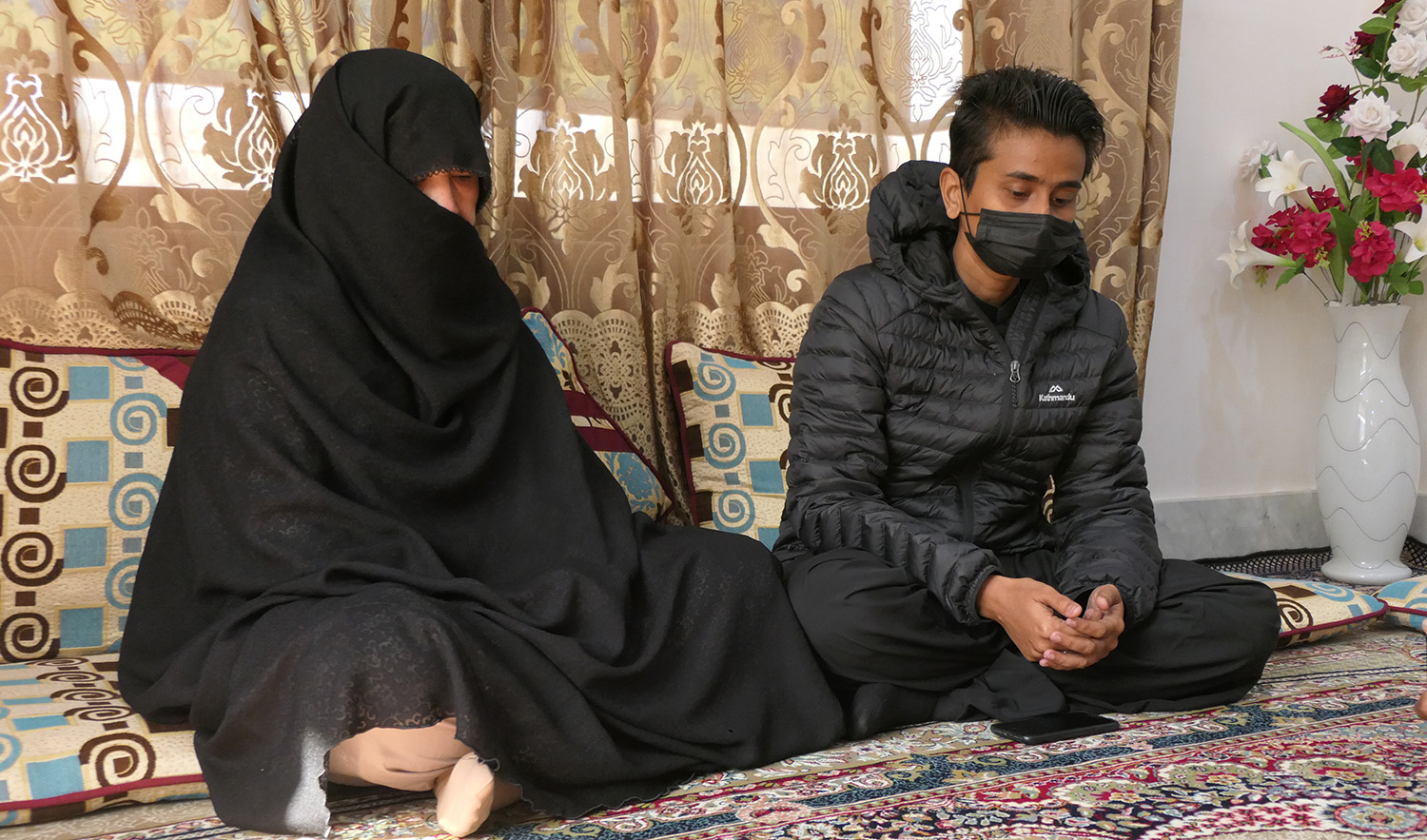
Gul Zewar, mother of Shahida Raza, left, sits with her late daughter's friend Sumaiya in Quetta, Pakistan on March 2, 2023. (AN photo)
Gul Zewar, Raza’s mother, said she last spoke to her daughter on Friday, two days before the accident.
“She phoned me and said, ‘Mother, I have reached,’” Zewar told Arab News at her home in Quetta.
“Her voice was so sweet, so sweet, don’t ask. She said, ‘Mother, I have reached, we will get off [the boat] soon, god willing.’ Then her mobile was shut. On Sunday, we got word that the boat sank.”
Raza, a member of Pakistan’s ethnic Shia Hazara community, had represented Pakistan in various national and international hockey and football events that took her to China, Malaysia, Iran, Qatar, and Sri Lanka as a member of Pakistan’s national squads.
But one reason for leaving Pakistan was that after two decades of playing for her country, the single mother was unable to find a job.
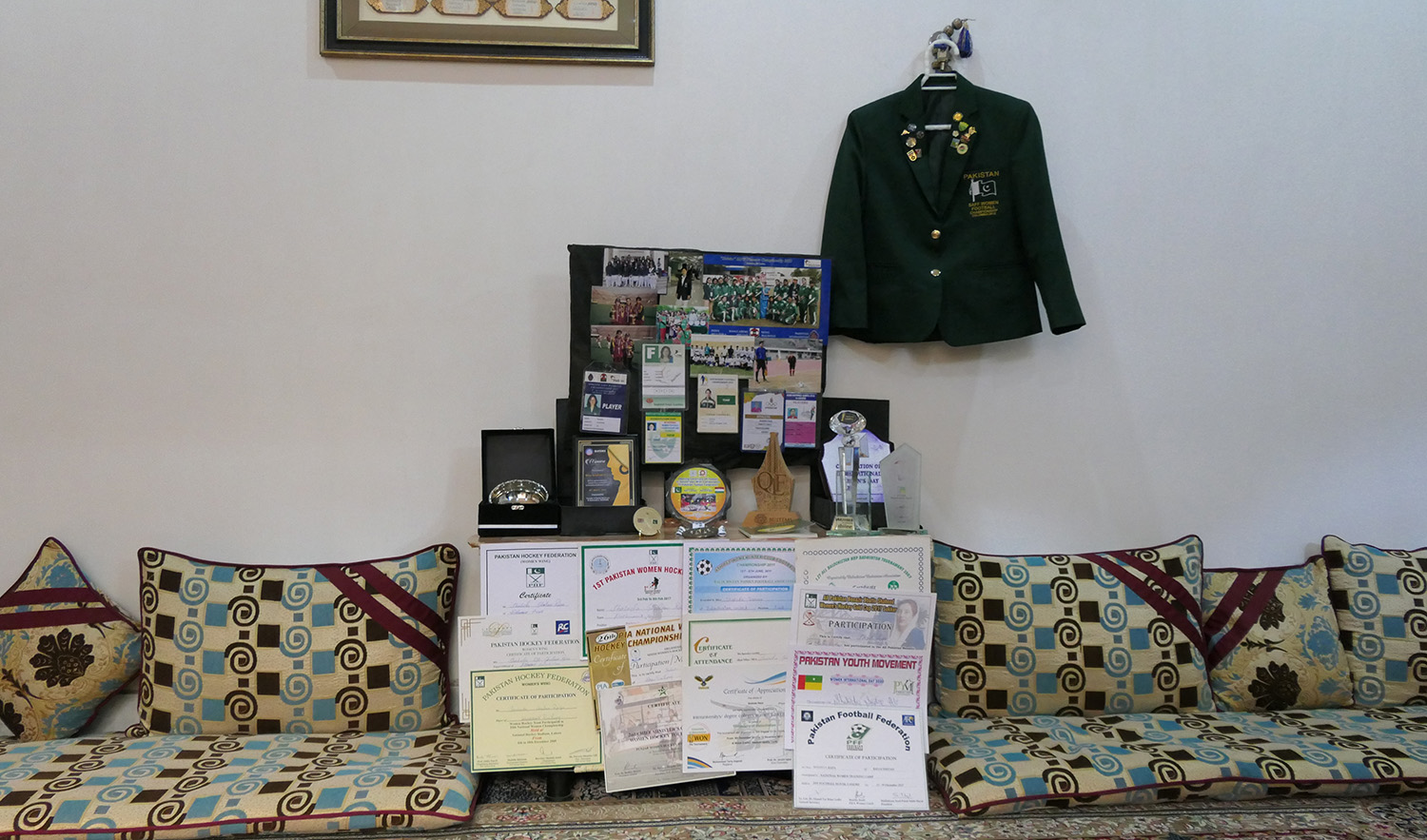
Shahida Raza's family displays her trophies and national sports uniform inside her room in Quetta, Pakistan on March 2, 2023. (AN Photo)
“She tried a lot to get a job, living in Balochistan, in her city Quetta, she really tried but she got no response,” Raza’s friend Sumiya Muhstaq told Arab News, standing next to a table lined with Raza’s medals, trophies and certificates.
“She took this decision [to get on an illegal migrant boat] out of a lot of desperation. No one takes this kind of decision happily.”
But the main reason Raza undertook the desperate journey was her disabled son, now living with his paternal grandmother in Quetta, her sister Sadia Raza said.
It was unclear who would care for him permanently in Raza's absence.
“She always used to pray that 'Oh god, for the sake of my child make my journey successful. Get me there for my son so that I can call him there, I can get his treatment done,'” Sadia told Arab News. “Over here doctors had lost all hope.”
Hazaras have for years faced persecution in Pakistan and hundreds have been killed over the last two decades in attacks, including bombings in schools and crowded markets and brazen ambushes of buses along Pakistani roads. In Balochistan, the community mostly lives inside sealed-off neighborhoods for their own safety.
“Being an international sportswoman, she requested many government officials for job opportunities because she was an independent mother. But despite many requests, the provincial government didn’t support her and forced her to take the risky step, which took her life,” Mushtaq said.
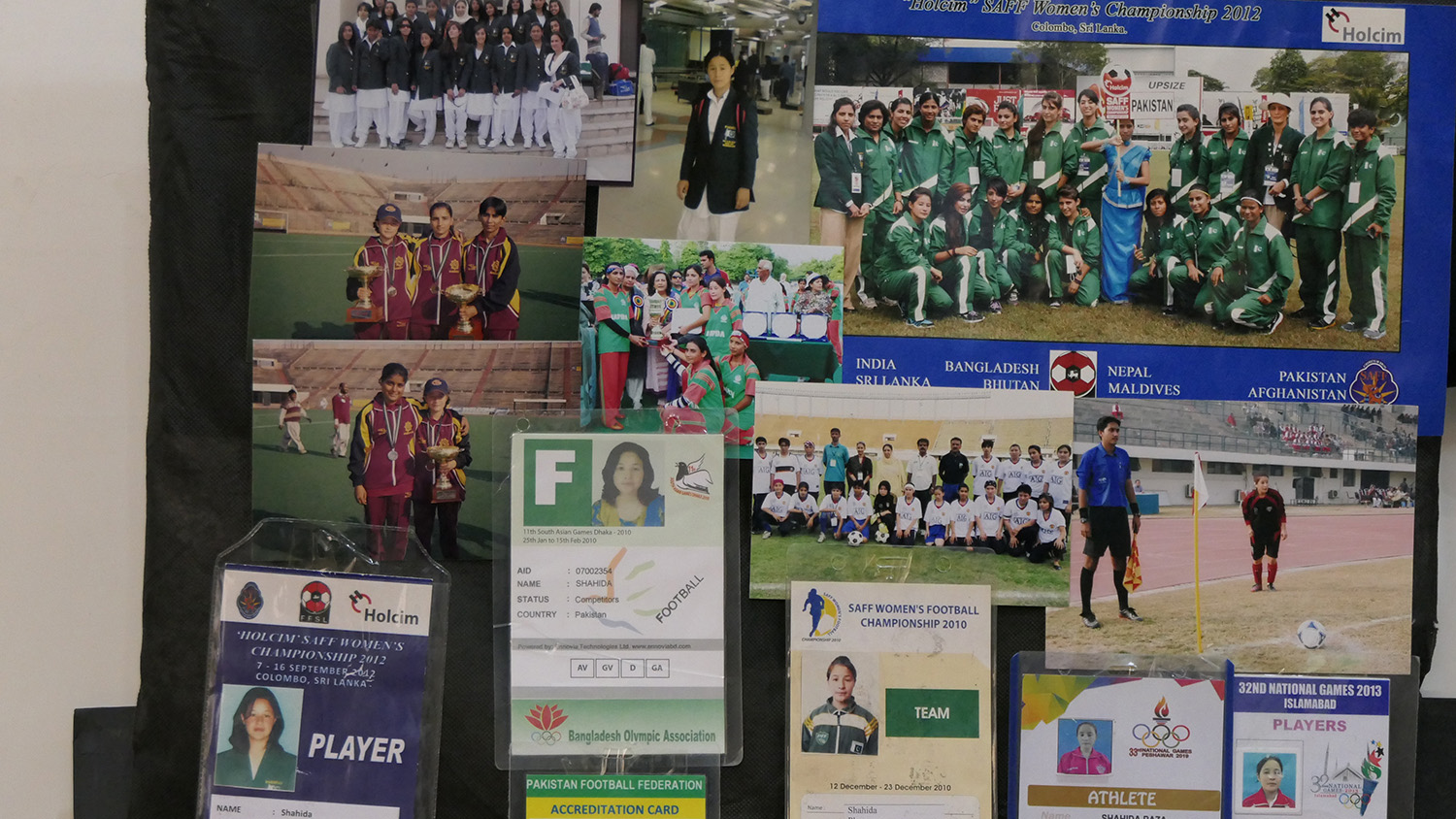
Shahida Raza's photos displayed inside her room in Quetta, Pakistan on March 2, 2023. (AN photo)
Gathered at Raza's mother's home on Thursday, her family and friends all remembered her as “very passionate about sports since childhood,” fighting family restrictions to become a sportswoman “because she wanted to play for Pakistan.”
The Pakistan Football Federation (PFF) expressed its condolences over Raza's death, saying the news had “shocked the entire football fraternity in Pakistan.”
“The news of the death of a former international football star player in an accident is extremely painful," Haroon Ahmed Malik, chairman of the FIFA Normalization Committee, said in a statement, adding that Raza was a part of the national women's football team for several years and had participated in numerous international events.
“The football family shall always remember her contribution to this beautiful game.”
Mushtaq, her friend, said there was “no match for Shahida.”
“She proved herself in every field, whether it was football or hockey,” she said.
Now all that Raza’s loved ones want is that the Pakistan embassy make “quick arrangements” to bring her body home.
“Our embassy in Rome [is] actively engaged with the Italian authorities for the welfare of the Pakistani survivors and the transportation of the mortal remains of the deceased,” Mumtaz Zahra Baloch, spokesperson for Pakistan’s foreign office in Islamabad, told reporters on Thursday.
“I request the Pakistani government to send my daughter’s body back to Pakistan for burial,” her mother said in a message to authorities.
“We want to see her face one last time and complete her rites as per Islamic customs,” her sister Sadia said as she covered her face with a black shawl and began to sob.
“We want to bury her with our hands.”