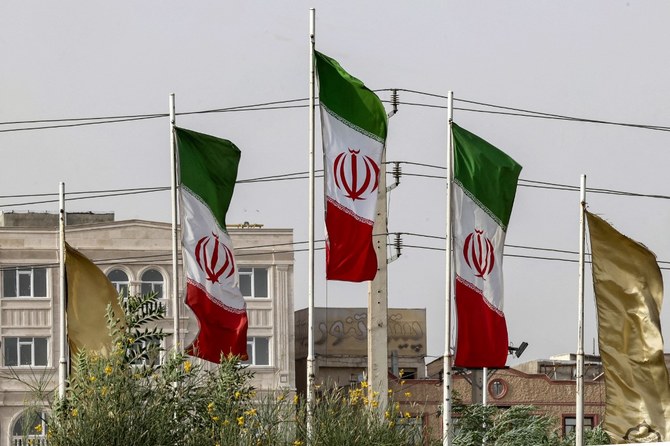
WASHINGTON: The United States imposed sanctions on Thursday on firms it said had transported or sold Iranian petroleum or petrochemical products in violation of US restrictions, including two companies based in China.
The sanctions are part of a Washington push to curb Iranian oil smuggling and come as efforts to revive Tehran’s 2015 nuclear deal have stalled in part due to increasingly strained ties between the Islamic Republic and the West.
In a statement, US Secretary of State Antony Blinken said the sanctions target 11 firms and 20 affiliated shipping vessels that had facilitated Iran’s petroleum and petrochemical trade.
“These designations underscore our continued efforts to enforce our sanctions against Iran,” Blinken said.
Iran’s mission to the United Nations in New York accused the Biden administration of “basically repeating the failed maximum pressure policy of the former US government,” referring to former President Donald Trump’s administration.
“Iran has gotten used to these sanctions, but if the US wants to return to JCPOA (the Iran nuclear deal) one day, it will be challenging for the US government to lift all of them,” Iran’s UN mission told Reuters.
Two of the sanctioned firms are based in China, according to the Treasury Department’s Office of Foreign Assets Control. The sanctions freeze the firms’ US assets and generally bar Americans from dealing with them.
The US issued the sanctions under a 2018 US executive order that restored sanctions targeting Iran’s oil, banking and transportation sectors.
Trump imposed the 2018 order after abandoning the 2015 nuclear deal, which reined in Iran’s nuclear program in return for relief from economic sanctions. President Joe Biden’s administration has tried but failed to revive the pact over the last two years.
On Thursday, the Treasury Department issued a general license authorizing limited transactions with the 20 sanctioned vessels under what it called a “wind-down” period through June 29, a document on its website showed.


![]()


New US sanctions target Iranian petroleum, petrochemical trade
Short Url
https://arab.news/ypmyp
New US sanctions target Iranian petroleum, petrochemical trade
- Blinken said the sanctions target 11 firms and 20 affiliated shipping vessels that had facilitated Iran’s petroleum and petrochemical trade


Gaza’s Nasser Hospital condemns move by MSF to suspend most services
- On Saturday, MSF said the security breaches, arrests and intimidation put staff and patients at serious risk
- Nasser Hospital rejects the claims, and says civilian police are inside to protect patients and staff
CAIRO: One of Gaza’s last functioning large hospitals condemned the move by an international organization to pull out of operations over concerns about armed men, claiming on Sunday that the hospital had installed civil police for security. The move comes as at least 10 Palestinians were killed in clashes with the Israeli military in Gaza.
Doctors Without Borders, also known by its acronym MSF, said in a statement Saturday that all its noncritical medical operations at Nasser Hospital were suspended due to security breaches that posed “serious” threats to its teams and patients. MSF said there had been an increase in patients and staff seeing armed men in parts of the compound since the US-brokered October ceasefire was reached.
Nasser Hospital said Sunday that the increase in armed men was due to a civilian police presence aimed at protecting patients and staff and said MSF’s “allegations are factually incorrect, irresponsible, and pose a serious risk to a protected civilian medical facility.”
Nasser Hospital one of few functioning hospitals left in Gaza
Nasser Hospital in Khan Younis is one of the territory’s few functioning hospitals. Hundreds of patients and war-wounded have been treated there daily, and the facility was a hub for Palestinian prisoners released by Israel in exchange for Israeli hostages as part of the current ceasefire deal.
“MSF teams have reported a pattern of unacceptable acts including the presence of armed men, intimidation, arbitrary arrests of patients and a recent situation of suspicion of movement of weapons,” the organization said. The suspension occurred in January but was only recently announced.
Nasser Hospital staff say that in recent months it has been repeatedly attacked by masked, armed men and militias, which is why the presence of an armed civilian police force is crucial. Hamas remains the dominant force in areas not under Israeli control, including in the area where Nasser Hospital is located. But other armed groups have mushroomed across Gaza as a result of the war, including groups backed by Israel’s army in the Israeli-controlled part of the strip.
Throughout the war, which began with the Hamas-led attack on Israel on Oct. 7, 2023, Israel has repeatedly struck hospitals, including Nasser, accusing the militant group of operating in or around them. Hamas security men often have been seen inside hospitals, blocking access to some areas.
Some hostages released from Gaza have said they spent time during captivity in a hospital, including Nasser Hospital.
Ten Palestinians killed in strikes across Gaza
At least 10 Palestinians were killed Sunday by Israeli fire in the Gaza Strip, hospital authorities said.
The dead include five men, all in their 20s, who were killed in an Israeli strike in the eastern part of Khan Younis city, according to the Nasser Hospital, which received the bodies. The strike hit a group of people in an area close to the Yellow Line which separates Israeli-controlled areas from the rest of Gaza, it said.
The Israeli military did not comment on the strike but has said in the past it will attack militants if its troops are threatened, especially near the Yellow Line.
Rami Shaqra said his son, Al-Baraa, was among the militants who were securing the area from potential attacks by the Israeli forces or Israeli-backed armed groups, when they were hit by the Israeli military. He said that they were killed by an airstrike.
Associated Press footage from the morgue showed at least two of the men had headbands denoting membership in the Qassam Brigades, the militant arm of Hamas. In northern Gaza, a drone strike hit a group of people in the Falluja area of Jabaliya refugee camp, killing five people, according to the Shifa Hospital.
The Israeli military said it was striking northern Gaza in response to several ceasefire violations near the Yellow Line, including militants attempting to hide in debris and others who attempted to cross the line while armed.
The Oct. 10 US-brokered ceasefire deal attempted to halt a more than two-year war between Israel and Hamas. While the heaviest fighting has subsided, the ceasefire has seen almost daily Israeli fire.
Israeli forces have carried out repeated airstrikes and frequently fire on Palestinians near military-held zones, killing 601 Palestinians, according to Gaza health officials. The ministry, which is part of the Hamas-led government, maintains detailed casualty records that are seen as generally reliable by UN agencies and independent experts. But it does not give a breakdown of civilians and militants.
Militants have carried out shooting attacks on troops, and Israel says its strikes are in response to that and other violations. Four Israeli soldiers have been killed.
Doctors Without Borders, also known by its acronym MSF, said in a statement Saturday that all its noncritical medical operations at Nasser Hospital were suspended due to security breaches that posed “serious” threats to its teams and patients. MSF said there had been an increase in patients and staff seeing armed men in parts of the compound since the US-brokered October ceasefire was reached.
Nasser Hospital said Sunday that the increase in armed men was due to a civilian police presence aimed at protecting patients and staff and said MSF’s “allegations are factually incorrect, irresponsible, and pose a serious risk to a protected civilian medical facility.”
Nasser Hospital one of few functioning hospitals left in Gaza
Nasser Hospital in Khan Younis is one of the territory’s few functioning hospitals. Hundreds of patients and war-wounded have been treated there daily, and the facility was a hub for Palestinian prisoners released by Israel in exchange for Israeli hostages as part of the current ceasefire deal.
“MSF teams have reported a pattern of unacceptable acts including the presence of armed men, intimidation, arbitrary arrests of patients and a recent situation of suspicion of movement of weapons,” the organization said. The suspension occurred in January but was only recently announced.
Nasser Hospital staff say that in recent months it has been repeatedly attacked by masked, armed men and militias, which is why the presence of an armed civilian police force is crucial. Hamas remains the dominant force in areas not under Israeli control, including in the area where Nasser Hospital is located. But other armed groups have mushroomed across Gaza as a result of the war, including groups backed by Israel’s army in the Israeli-controlled part of the strip.
Throughout the war, which began with the Hamas-led attack on Israel on Oct. 7, 2023, Israel has repeatedly struck hospitals, including Nasser, accusing the militant group of operating in or around them. Hamas security men often have been seen inside hospitals, blocking access to some areas.
Some hostages released from Gaza have said they spent time during captivity in a hospital, including Nasser Hospital.
Ten Palestinians killed in strikes across Gaza
At least 10 Palestinians were killed Sunday by Israeli fire in the Gaza Strip, hospital authorities said.
The dead include five men, all in their 20s, who were killed in an Israeli strike in the eastern part of Khan Younis city, according to the Nasser Hospital, which received the bodies. The strike hit a group of people in an area close to the Yellow Line which separates Israeli-controlled areas from the rest of Gaza, it said.
The Israeli military did not comment on the strike but has said in the past it will attack militants if its troops are threatened, especially near the Yellow Line.
Rami Shaqra said his son, Al-Baraa, was among the militants who were securing the area from potential attacks by the Israeli forces or Israeli-backed armed groups, when they were hit by the Israeli military. He said that they were killed by an airstrike.
Associated Press footage from the morgue showed at least two of the men had headbands denoting membership in the Qassam Brigades, the militant arm of Hamas. In northern Gaza, a drone strike hit a group of people in the Falluja area of Jabaliya refugee camp, killing five people, according to the Shifa Hospital.
The Israeli military said it was striking northern Gaza in response to several ceasefire violations near the Yellow Line, including militants attempting to hide in debris and others who attempted to cross the line while armed.
The Oct. 10 US-brokered ceasefire deal attempted to halt a more than two-year war between Israel and Hamas. While the heaviest fighting has subsided, the ceasefire has seen almost daily Israeli fire.
Israeli forces have carried out repeated airstrikes and frequently fire on Palestinians near military-held zones, killing 601 Palestinians, according to Gaza health officials. The ministry, which is part of the Hamas-led government, maintains detailed casualty records that are seen as generally reliable by UN agencies and independent experts. But it does not give a breakdown of civilians and militants.
Militants have carried out shooting attacks on troops, and Israel says its strikes are in response to that and other violations. Four Israeli soldiers have been killed.
Latest updates


Recommended


© 2026 SAUDI RESEARCH & PUBLISHING COMPANY, All Rights Reserved And subject to Terms of Use Agreement.