Missed chance to stop bombing at Ariana Grande’s Manchester concert — UK inquiry

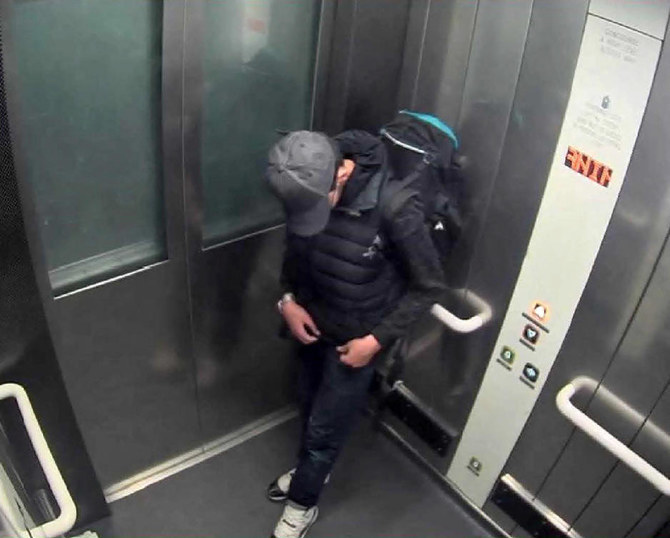
A handout photo released by the Manchester Arena Inquiry in Manchester, northern England on September 8, 2020, shows suicide bomber Salman Abedi carrying a rucksack in the lift at Victoria Station in Manchester. (AFP)
Short Url
Updated 02 March 2023
Follow

Missed chance to stop bombing at Ariana Grande’s Manchester concert — UK inquiry

  • “There was a significant missed opportunity to take action that might have prevented the attack,” inquiry chairman John Saunders said
  • Saunders’ previous reports have concluded there were serious shortcomings and mistakes made in the security at the venue

LONDON: There was a significant missed opportunity to take action that might have stopped a deadly suicide bombing at the end of an Ariana Grande pop concert in the English city of Manchester in 2017, an inquiry into the attack concluded on Thursday.
Twenty-two people — the youngest aged just eight — died in the blast and more than 200 were injured when a man detonated a homemade bomb at Manchester Arena as parents arrived to collect their children following the US singer’s show.
“There was a significant missed opportunity to take action that might have prevented the attack,” inquiry chairman John Saunders said in his third and final report into the bombing, the deadliest in Britain since the 2005 London transport suicide attacks.
“It is not possible to reach any conclusion on the balance of probabilities or to any other evidential standard as to whether the attack would have been prevented.”
Saunders’ previous reports have concluded there were serious shortcomings and mistakes made in the security at the venue. He also found that one of those killed would probably have survived if the response by the emergency services had not been so flawed.
The bombing was carried out by Salman Abedi, 22, while his younger brother Hashem was jailed for 55 years in 2020 for encouraging and helping him.
A third, elder brother, Ismail, was in July convicted in his absence of failing to attend the inquiry to give evidence, having fled Britain. The Abedi brothers were born to Libyan parents who emigrated to Britain during the rule of Muammar Qaddafi.


19 EU countries call on EU to fund ‘return hubs’

Updated 5 sec ago
Follow

19 EU countries call on EU to fund ‘return hubs’

  • The European Parliament must still vote on the measures
  • Denmark has made illegal immigration one of its main battlehorses during its six-month stint at the helm of the EU presidency

COPENHAGEN: After the European Union significantly tightened its immigration policy earlier this month, 19 EU countries on Wednesday urged the European Commission to finance “return hubs” outside the bloc for failed asylum-seekers.
Interior ministers from the 27-member bloc greenlighted a package of measures on December 8 that include the opening of return hubs and harsher penalities for migrants who refuse to leave European territory.
Austria, Belgium, Bulgaria, Croatia, Cyprus, the Czech Republic, Denmark, Estonia, Finland, Germany, Greece, Italy, Latvia, Lithuania, Malta, the Netherlands, Poland, Romania and Sweden called on the Commission to make the changes possible.
“Specifically, the EU countries want ... the Commission to help ensure, going forward, that the financing of, among other things, return centers can be done using EU funds,” the Danish immigration ministry said in a statement, with the signed letter sent to the Commission attached.
The European Parliament must still vote on the measures.
Denmark has made illegal immigration one of its main battlehorses during its six-month stint at the helm of the EU presidency, which ends at the end of the month.
“The work is not done, and I’m glad that there are now 19 countries that stand behind a letter calling on the EU system to provide diplomatic and economic help to ensure that the new and innovative solutions — such as return centers — will become a reality,” Danish Immigration Minister Rasmus Stoklund said in a statement.
“For years, Denmark has worked hard to persuade other European countries of Danish ideas such as moving the processing of asylum applications outside Europe, as well as other ideas involving cooperation with third countries outside the EU,” the ministry added.
“The group of EU countries that support such new and innovative solutions has steadily expanded,” it said.
Activists working with migrants have meanwhile denounced the measures, saying they violate migrants’ human rights and risk pushing them into danger.