WASHINGTON: US intelligence agencies cannot link a foreign adversary to any of the incidents associated with so-called “Havana syndrome,” the hundreds of cases of brain injuries and other symptoms reported by American personnel around the world.
The findings released Wednesday by US intelligence officials cast doubt on the longstanding suspicions by many people who reported cases that Russia or another country may have been running a global campaign to harass or attack Americans using some form of directed energy.
Most of the cases investigated appear to have different causes, from environmental factors to undiagnosed illnesses, said the officials, who say they have not found a single explanation for most or all of the reports.
Instead, officials say, there is evidence that foreign countries were not involved. In some cases, the US detected among adversarial governments confusion about the allegations and suspicions that Havana syndrome was an American plot. And investigators found “no credible evidence” that any adversary had obtained a weapon that could cause the reported symptoms or a listening device that might inadvertently injure people.
The Biden administration has been under pressure to respond to Havana syndrome cases from government personnel who have reported injuries and their advocates, including members of Congress. President Joe Biden in 2021 signed into law the HAVANA Act, which provided compensation to people deemed to have sustained injuries consistent with what the government calls “anomalous health incidents.”
Affected people have reported headaches, dizziness and other symptoms often linked to traumatic brain injuries. Some US employees have left government due to the severity of their illnesses.
“Nothing is more important than the health and wellbeing of our workforce,” said Maher Bitar, the White House National Security Council’s senior director for intelligence programs, in a statement. “Since the start of the Biden-Harris Administration, we have focused on ensuring that our colleagues have access to the care and support they need.”
Mark Zaid, a lawyer for more than two dozen people who have reported injuries, said the new assessment lacked transparency and left key questions unanswered.
“Until the shrouds of secrecy are lifted and the analysis that led to today’s assertions are available and subject to proper challenge, the alleged conclusions are substantively worthless,” he said in a statement. “But the damage it has caused to the morale of the victims, particularly by deflecting from the government’s failure to evaluate all the evidence, is real and must be condemned.”
Authorities in Havana said the findings reflect what Cuba has repeatedly stated: that no attacks occurred.
“We’re not surprised,” Johana Tablada, deputy director of the US division of Cuba’s Foreign Ministry, told The Associated Press.
Tablada noted that former US President Donald Trump used the alleged attacks as an excuse to radically tighten sanctions against Cuba, including the partial paralysis of its consular services for more than five years. She said that, because of unfounded accusations, “very harsh measures were taken against our people in Cuba and in the United States that harmed Cuban families, exchanges between our countries (and) caused a downward spiral (of ties) that was practically irreversible.”
Two officials familiar with the assessment briefed reporters Wednesday on condition of anonymity, under ground rules set by the US Director of National Intelligence.
Investigators reviewed roughly 1,500 cases in 96 countries. Many of those cases, officials said, have been linked to other potential explanations aside from a foreign campaign: medical illnesses, malfunctioning air conditioning and ventilation systems, or electromagnetic waves coming from benign devices like a computer mouse. And some people may have come forward to report symptoms based on what they had heard about other cases or the exhaustive media reports about Havana syndrome, officials said.
A core group of roughly two dozen cases identified in an interim assessment published last year has been exhaustively studied, officials said. None of the cases was linked to an attack by an adversary.
The officials stressed their investigation was exhaustive, with participation from seven US agencies. One official described reviewing a report from an American who reported having possibly been hit by a car while driving. US investigators tracked down the car and the driver and investigated that person’s family connections and any foreign travel, the official said.
Some leads were followed for as long as nine months, the official said.
Officials briefing reporters declined to say how the latest assessment, first reported by The Washington Post, may affect payments under the HAVANA Act. The State Department has compensated affected employees with one-time payments from $100,000 to $200,000.
The leaders of the House Intelligence Committee insisted that “there should be no change” to compensation while they review the assessment.
“We will seek to ensure the review was conducted with the highest degree of analytical rigor and that it considered all the available intelligence and perspectives, documenting all substantial differences in analysis,” said Reps. Mike Turner, R-Ohio, and Jim Himes, D-Connecticut, in their statement.
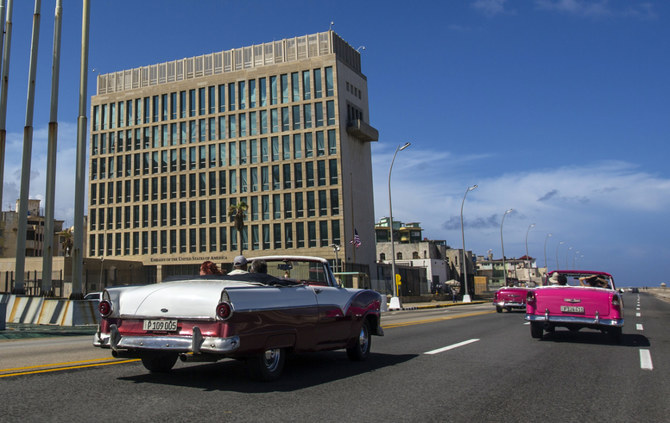
Havana syndrome cases date to a series of reported brain injuries in 2016 at the US Embassy in Cuba. Incidents have been reported by diplomats, intelligence officers and military personnel in the Washington area and at global postings. Russia has long been suspected by some intelligence officers of using directed energy devices to attack US personnel.
But the CIA last year said it believed it was unlikely that Russia or another foreign adversary had used microwaves or other forms of directed energy to attack American officials. The agency has faced criticism from those who have reported cases and from advocates who accuse the government of long dismissing the array of ailments.
Even with the lack of answers and attributions of responsibility, officials have sought to stress their commitment to victims’ health.
“I want to be absolutely clear: these findings do not call into question the experiences and real health issues that US government personnel and their family members — including CIA’s own officers — have reported while serving our country,” said CIA Director William Burns in a statement. “We will continue to remain alert to any risks to the health and wellbeing of Agency officers, to ensure access to care, and to provide officers the compassion and respect they deserve.”


![]()

US intel agencies: No sign foreign adversaries behind ‘Havana syndrome’
Short Url
https://arab.news/m24fk
US intel agencies: No sign foreign adversaries behind ‘Havana syndrome’
- There were suspicions that Russia was behind the hundreds of cases of brain injuries and other symptoms reported in the US Embassy in Havana and elsewhere
- Investigators reviewed 1,500 cases in 96 countries and concluded that there were no evidence pointing to the involvement of foreign adversaries in the ailments


Latest updates


© 2026 SAUDI RESEARCH & PUBLISHING COMPANY, All Rights Reserved And subject to Terms of Use Agreement.