ANKARA: Turkish authorities have expanded a criminal probe into individuals responsible for buildings levelled by a deadly earthquake with 564 suspects identified, the interior minister has announced.
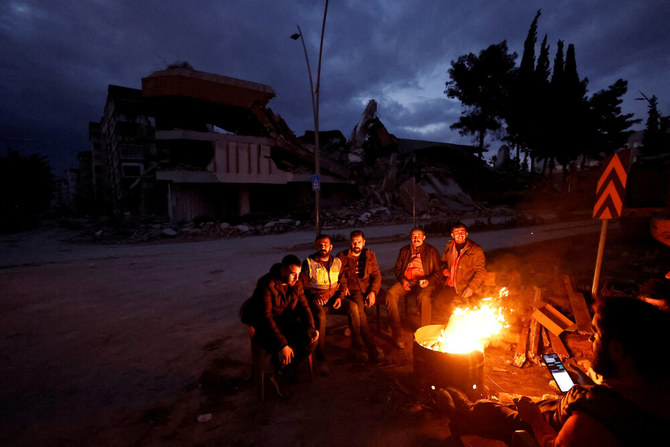
A 7.8-magnitude tremor on February 6 and its aftershocks have killed more than 43,000 people in Turkiye and left millions without homes.
“160 of them have been detained, 18 are in police custody and 175 have been released on bail,” Interior Minister Suleyman Soylu said in an interview on the state-run TRT Haber channel late Wednesday.
“We have banned all of those under investigation from traveling. Nothing is more precious than human life.
“We are being thorough.”
Tens of thousands of buildings collapsed without warning following the violent tremor as many people slept.
Turkish media has vocally criticized developers for using shoddy materials and failing to comply with construction codes.
In the face of growing anger, several developers were arrested in the first days following the earthquake.
“1,250,000 buildings were examined in 11 provinces. 164,321 buildings made up of 520,000 independent units have already been destroyed, severely damaged or urgently need to be destroyed,” Environment Minister Murat Kurum announced on Thursday.
President Recep Tayyip Erdogan has announced plans to rebuild 270,000 homes in the devastated provinces within one year.
“We are making plans taking into account the cultural landscape, our children’s future and guaranteeing our towns are on safe ground,” Kurum added.
“We will build the new housing with this in mind.”

Turkiye expands probe into construction sector after quake
Short Url
https://arab.news/nj5tb
Turkiye expands probe into construction sector after quake
- “160 of them have been detained, 18 are in police custody and 175 have been released on bail,” Interior Minister Suleyman Soylu said
- Tens of thousands of buildings collapsed without warning following the violent tremor as many people slept
Hundreds mourn in Syria’s Homs after deadly mosque bombing
HOMS: Hundreds of mourners gathered Saturday despite rain and cold outside of a mosque in the Syrian city of Homs where a bombing the day before killed eight people and wounded 18.
The crowd gathered next to the Imam Ali ibn Abi Talib Mosque in the Wadi Al-Dhahab neighborhood, where the population is predominantly from the Alawite minority, before driving in convoys to bury the victims.
Officials have said the preliminary investigations indicate explosive devices were planted inside the mosque but have not yet publicly identified a suspect.
A little-known group calling itself Saraya Ansar Al-Sunna claimed responsibility for the attack in a statement posted on its Telegram channel, in which it indicated that the attack intended to target members of the Alawite sect, an offshoot of Shia Islam whom hard-line Islamists consider to be apostates.
The same group had previously claimed a suicide attack in June in which a gunman opened fire and then detonated an explosive vest inside a Greek Orthodox church in Dweil’a, on the outskirts of Damascus, killing 25 people as worshippers prayed on a Sunday.
A neighbor of the mosque, who asked to be identified only by the honorific Abu Ahmad (“father of Ahmad“) out of security concerns, said he was at home when he heard the sound of a “very very strong explosion.”
He and other neighbors went to the mosque and saw terrified people running out of it, he said. They entered and began trying to help the wounded, amid blood and scattered body parts on the floor.
While the neighborhood is primarily Alawite, he said the mosque had always been open to members of all sects to pray.
“It’s the house of God,” he said. “The mosque’s door is open to everyone. No one ever asked questions. Whoever wants to enter can enter.”
Mourners were unable to enter the mosque to pray Saturday because the crime scene remained cordoned off, so they prayed outside.
Some then marched through the streets chanting “Ya Ali,” in reference to the Prophet Muhammad’s cousin and son-in-law whom Shiite Muslims consider to be his rightful successor.
The crowd gathered next to the Imam Ali ibn Abi Talib Mosque in the Wadi Al-Dhahab neighborhood, where the population is predominantly from the Alawite minority, before driving in convoys to bury the victims.
Officials have said the preliminary investigations indicate explosive devices were planted inside the mosque but have not yet publicly identified a suspect.
A little-known group calling itself Saraya Ansar Al-Sunna claimed responsibility for the attack in a statement posted on its Telegram channel, in which it indicated that the attack intended to target members of the Alawite sect, an offshoot of Shia Islam whom hard-line Islamists consider to be apostates.
The same group had previously claimed a suicide attack in June in which a gunman opened fire and then detonated an explosive vest inside a Greek Orthodox church in Dweil’a, on the outskirts of Damascus, killing 25 people as worshippers prayed on a Sunday.
A neighbor of the mosque, who asked to be identified only by the honorific Abu Ahmad (“father of Ahmad“) out of security concerns, said he was at home when he heard the sound of a “very very strong explosion.”
He and other neighbors went to the mosque and saw terrified people running out of it, he said. They entered and began trying to help the wounded, amid blood and scattered body parts on the floor.
While the neighborhood is primarily Alawite, he said the mosque had always been open to members of all sects to pray.
“It’s the house of God,” he said. “The mosque’s door is open to everyone. No one ever asked questions. Whoever wants to enter can enter.”
Mourners were unable to enter the mosque to pray Saturday because the crime scene remained cordoned off, so they prayed outside.
Some then marched through the streets chanting “Ya Ali,” in reference to the Prophet Muhammad’s cousin and son-in-law whom Shiite Muslims consider to be his rightful successor.
© 2025 SAUDI RESEARCH & PUBLISHING COMPANY, All Rights Reserved And subject to Terms of Use Agreement.


