

Saudi filmmakers’ DH’BAB Production aims to bridge culture gap between Hollywood and Saudi Arabia

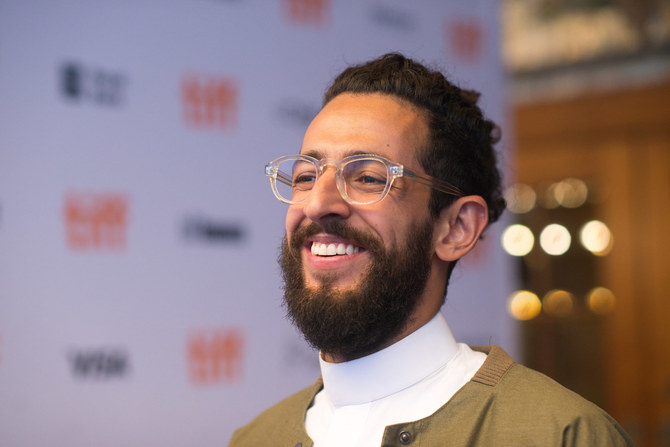
Hisham Fageeh's goal is to ensure their movies are as entertaining for ardent film fans as for those with little theatre-going experience. (Getty Images)
Short Url
Updated 26 February 2023
Follow

Saudi filmmakers’ DH’BAB Production aims to bridge culture gap between Hollywood and Saudi Arabia

LOS ANGELES: Saudi filmmakers Hisham Fageeh and Sultan Tamer have decided to take a step toward bridging the culture gap between Hollywood and post-cinema ban Saudi Arabia’s burgeoning film industry.  

The pair recently launched their company DH’BAB Production, which provides a platform for Saudi creators to tell stories uniquely rooted in their culture. 

“America has a deep history of representing Arabs in a specific way, and other minorities,” Fageeh said in an interview with Arab News. “I don’t necessarily need to change all of Hollywood. I just want to make a tiny, tiny enclave where people are telling authentic stories that are not racist or Orientalist.” 

The goal of Fageeh, the comedian and star of “Barakah Meets Barakah,” and his partner – fellow producer Tamer – is to ensure their movies are as entertaining for ardent film fans as for those with little theatre-going experience. 

“We’re going to focus on genre stuff. So, a lot of horror, a lot of comedy,” said Fageeh. “The prestige stuff is important. We love it and we know we have friends that are doing it, but we want to make movie going a tradition back home, especially with the cinemas opening up.” 

The founders believe that streaming cinema is not enough, and hope that the movies they make can become blockbusters in their home country and popularize theaters as a place for community members to come together. 

“Because it’s the only visceral space that exists that is accessible to everyone where you can go and collectively laugh at a film or you can hold your breath at the suspense of a horror or a thriller,” Fageeh explained.  

“I really want that to be part of the social and cultural tradition of people in Saudi Arabia,” he added.  

According to the website, the company is now working on two productions — “Grave Sin” and “The Tribe” — that are in the development stage.  

“Grave Sin” is a horror feature film set in Saudi Arabia that revolves around Aziz, who begrudgingly leaves Japan to console his grieving mother by building her a new house. Paranormal activity will blur the lines between emotional and actual demons haunting him.  

“The Tribe” is a Saudi Arabia-set television series centered on a group of Jeddah high schoolers who survived a bus crash in the world’s largest uninterrupted desert, Rub Al-Khali, The Empty Quarter, and must uncover the dark supernatural secrets of an ancient, buried city if they ever hope to go home.   


Amr Diab and Sherine top Spotify list of 2025 MENA artists

Updated 17 December 2025
Follow

Amr Diab and Sherine top Spotify list of 2025 MENA artists

  • Egyptian stars and icon Fairuz continue to resonate in region
  • Artists shaping rap, mahraganat, hybrid sounds feature

DUBAI: Spotify has released its list of the Top Middle East and North Africa artists and songs globally, shaped by streams from listeners both inside and outside the region, offering a snapshot of how MENA music travelled in 2025.

Topping the global MENA artists list is Amr Diab, a mainstay of Arab pop. He also led Egypt’s Wrapped this year, while his catalogue — spanning both older hits and newer releases — continued to draw sustained global engagement.

The return of “Tamally Maak” to the global Top Tracks list underlines the lasting appeal of his music across generations.

Sherine is one of the year’s most emotionally resonant voices with four tracks in the global Top 10. Her classics “Kalam Eineh,” “El Watar El Hassas” and “3la Bali,” alongside her newer release “Btmanna Ansak,” reached listeners from Egypt to Germany and the UK.

Spotify data shows her catalogue maintaining a strong, personal connection with audiences throughout 2025.

Regional classics also featured prominently. Nancy Ajram’s early-2000s hit “Ya Tabtab Wa Dallaa” found renewed popularity in markets including Indonesia and Turkiye, while Khaled’s “C’est la vie” continued to cross borders, resonating with listeners from France to India.

Fairuz remained a fixture in daily listening habits, anchoring morning and coffee playlists across the Arab world and the diaspora.

Beyond pop, artists shaping rap, mahraganat and hybrid sounds maintained strong global visibility.

ElGrandeToto, Morocco’s Top Artist on Spotify from 2020 to 2025, continued to spotlight the evolution of Moroccan hip-hop, which in 2025 blended rai, chaabi and local rhythms with trap influences.

His collaboration with Spanish-Moroccan rapper Morad, “Ojos Sin Ver,” featured on the global MENA Top Tracks list, highlighting the genre’s cross-regional and European appeal.

Egyptian rapper Marwan Pablo also remained a prominent global presence, recognized for his introspective approach within the country’s hip-hop scene.

Mahraganat artists Essam Sasa and Eslam Kabonga appeared in the global rankings as well, underscoring the genre’s expanding reach beyond its local roots.

The global MENA Top Tracks list included “KALAMANTINA,” a collaboration between Saint Levant and Marwan Moussa that blends hip-hop and pop within a hybrid electro-shaabi sound.