

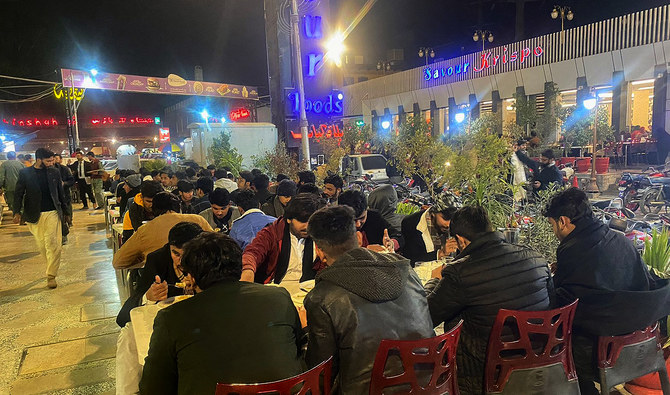

RAWALPINDI: As million across Pakistan and abroad follow the 8th edition of the Pakistan Super League (PSL), businessmen in the garrison city of Rawalpindi ask for compensation for the losses they are suffer due to the closure of a food street and businesses around the Rawalpindi Cricket Stadium during the Twenty20 and international matches.
Pakistan’s inaugural national cricket league, launched in 2016, has been an unexpected success, even though many of the matches had to be played in the United Arab Emirates due to security risks till the tournament was fully moved to Pakistan in 2020. This year, Rawalpindi is hosting 11 PSL matches from March 1 till March 12.
However, authorities close the food street around the Rawalpindi Cricket Stadium, a popular destination among food enthusiasts in Rawalpindi and Islamabad, during both PSL and international cricket matches over security reasons.
“Since the resumption of international cricket matches in Pakistan, businesses have been incurring losses worth millions of rupees because food stalls and restaurants are closed during matches by the authorities,” Shiekh Muhammad Ibrahim, a restaurant owner, told Arab News.
Ibrahim demanded the authorities develop a system to hold matches without shutting down local businesses as this had become a routine occurrence due to the growing number of cricketing events taking place in the country.
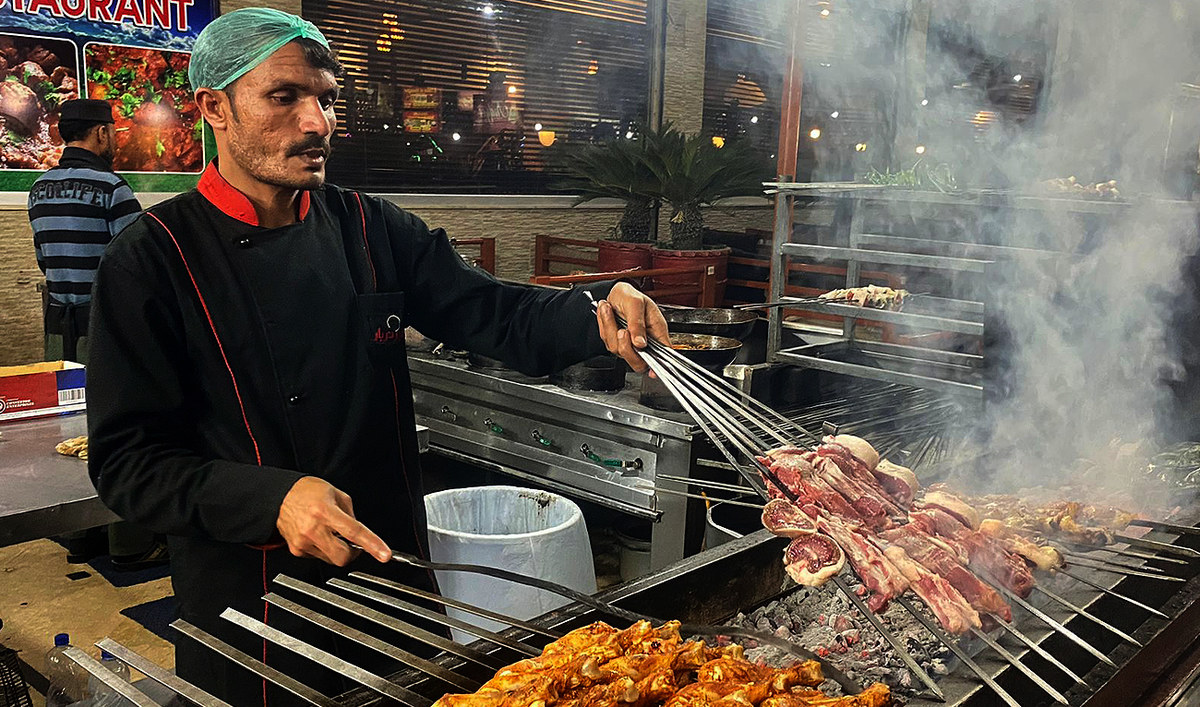
A stall vendor is busy in preparing food at Rawalpindi Cricket Stadium, in Rawalpindi, Pakistan on February 17, 2023. (AN Photo)
Pakistan was deemed unsafe for international cricket after a militant attack on the Sri Lankan cricket team in Lahore killed eight people and injured several others in March 2009.
As a consequence, the South Asian country was unable to co-host the 2011 Cricket World Cup, but international cricket teams started returning to Pakistan in December 2019.
While the return of international cricket to the country has brought joy to most Pakistanis, it has led to worries for a few others.
Kareem Khan, another restaurant owner, said he pays Rs350,000 ($1,331) in rent to the local administration and they do not exempt him from paying the rent on the days when his business is "forcibly closed" due to security measures.
“They should at least exempt us from paying rents during such closures as we are earning nothing,” Khan told Arab News.
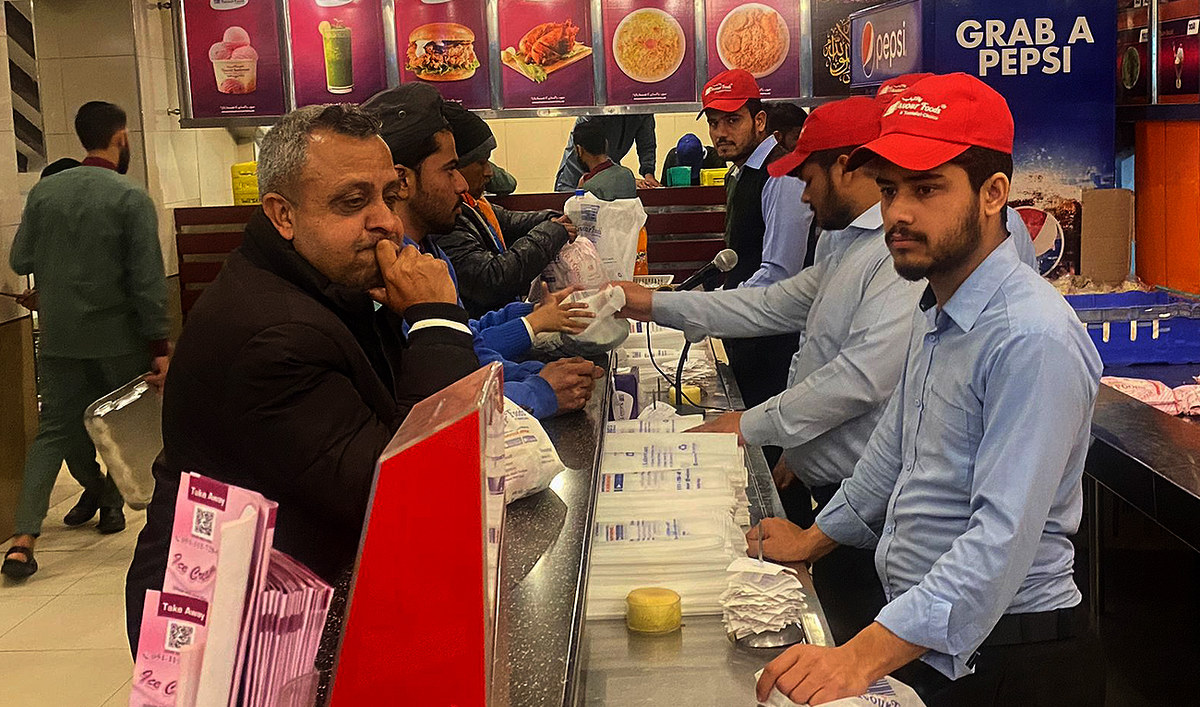
Customers waiting in line for their orders at a restaurant on a popular food street inside Rawalpindi Cricket Stadium, in Rawalpindi on February 17, 2023. (AN Photo)
Adnan Abbasi, who owns a tea stall, said he is the sole provider for a family of seven and depends on his daily earnings from selling tea to make ends meet.
“The extended closure of the food street for more than two weeks due to security measures has made it difficult for us to survive, particularly during this time of high inflation,” Abbasi told Arab News.
Shakeel Ahmed, a manager at another eatery, suggested the authorities should come up with a system to allow businesses to operate during matches as good food options could attract more people to the matches.
“They can clear the area and limit the workforce by issuing passes, but the extreme measure of closure is making it difficult for the businesses to continue,” he told Arab News.
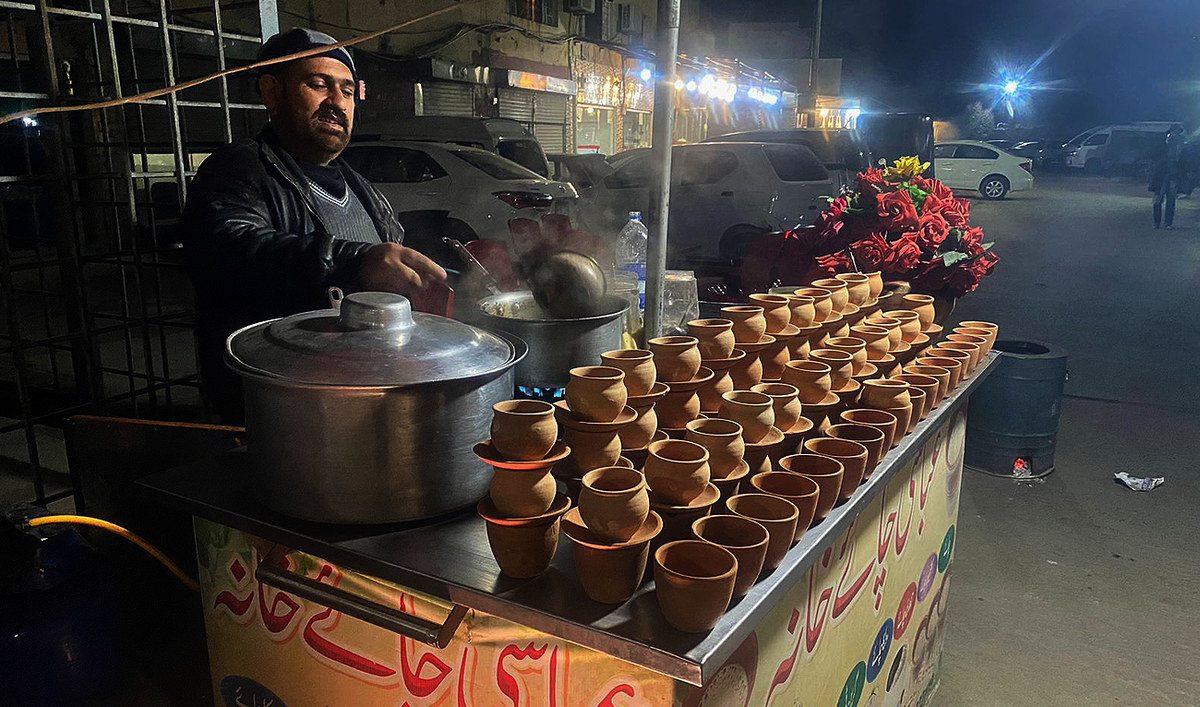
A stall vendor is busy preparing tea at Rawalpindi Cricket Stadium, in Rawalpindi, Pakistan on February 17, 2023. (AN Photo)
A senior local government official justified the closure of the food street, saying it is necessary to ensure a smooth conduct of games and safety of international teams and players, who are extremely particular about security arrangements.
“Due to security concerns, the food street closes on every cricketing event. It is not the first time,” Nausheen Israr, the Rawalpindi additional deputy commissioner, told Arab News. "And when it's a matter of security, it's better to take precautions."
The official said such closures are a common practice across Pakistan, giving example of a food street near Lahore's Gaddafi Stadium that is closed over similar concerns.
“As per law, businesses have to abide by certain directions of the administration for smooth functioning of things,” Israr said, adding that a smooth conduct of key sports events was the responsibility of the administration.
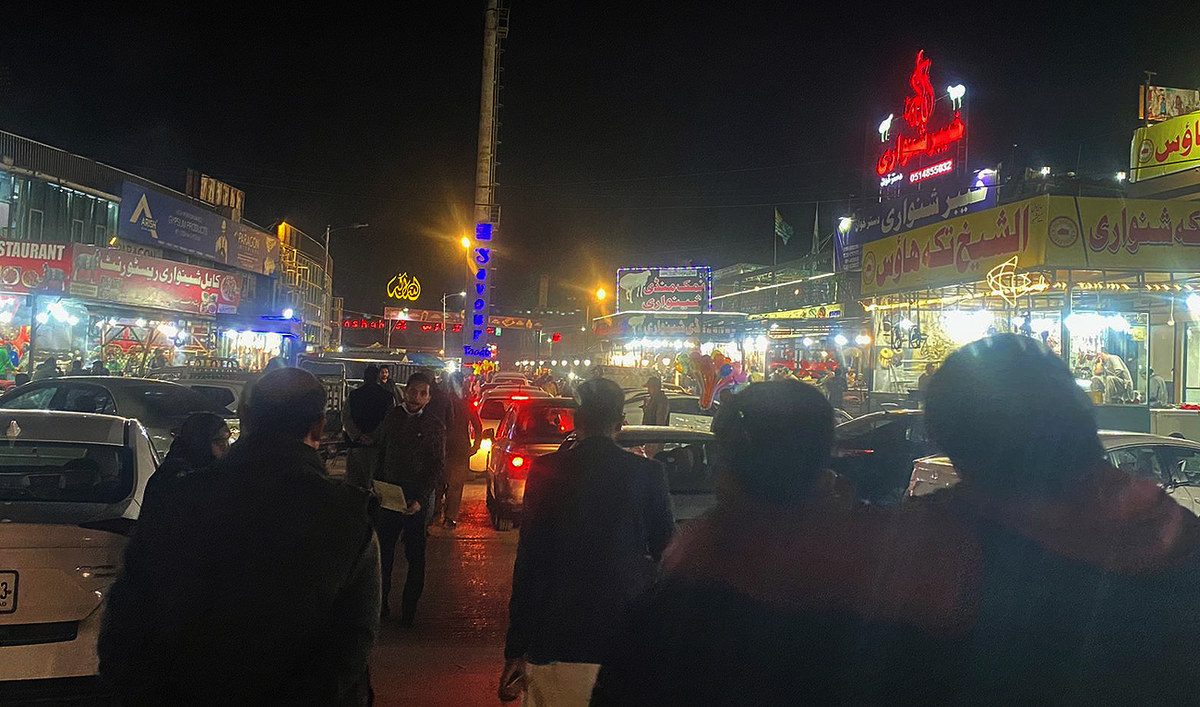
A large number of people visit food street daily at Rawalpindi Cricket Stadium, in Rawalpindi, Pakistan on February 17, 2023. (AN Photo)


