Pakistan, IMF agree on more talks, delaying bailout 

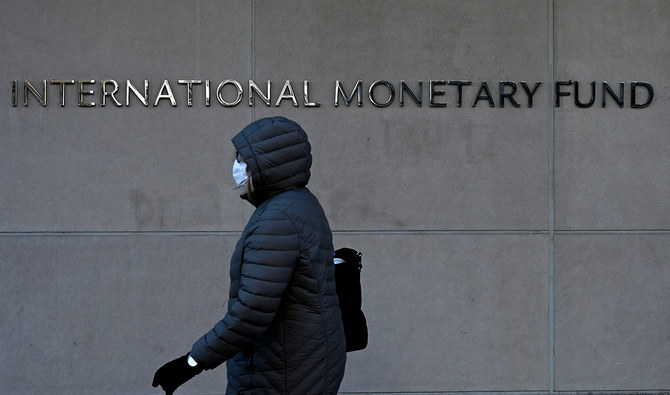
A woman walks past the International Monetary Fund headquarters in Washington, DC, on January 26, 2022. (AFP)
Short Url
Updated 10 February 2023
Follow

Pakistan, IMF agree on more talks, delaying bailout 

  • Finance ministry officials and IMF both said the talks did not result in a ‘board discussion’ 
  • A $1.1 billion tranche from the IMF is necessary to prevent Pakistan from a looming default 

KARACHI: Pakistan and the International Monetary Fund have agreed to continue talks on a deal, delaying the disbursement of $1.1 billion in funding critical to keeping the South Asian economy afloat. 

Finance ministry officials and the IMF both said the talks, which began late last week and were due to end on Thursday, did not result in a “board discussion,” a meeting that would lead to the release of the funds which are part of a $6.5 billion bailout that Pakistan signed in 2019. 

The tranche was initially expected to be paid out last December. 

“Virtual discussions will continue in the coming days,” IMF Pakistan Mission Chief Nathan Porter said in a statement, adding that considerable progress had been made. 

Pakistan’s Secretary of Finance Hamed Sheikh had told Reuters late on Thursday that the IMF had asked for more time “for staff-level negotiations.” To release the funds, the IMF needs to reach a staff-level agreement with Pakistan, which then needs to be approved by the IMF’s head office in Washington. 

The money is necessary to prevent Pakistan from defaulting on external payment obligations, and an IMF deal paves the way for other organizations and governments to provide funds, analysts say. 

The fiscal adjustments demanded by any deal, however, are likely to fuel record high inflation, which hit 27.5 percent year-on-year in January. 

Finance Minister Ishaq Dar is due to speak to the media later on Friday. In addition to the stalled tranche, $1.4 billion remain of the $6.5 billion bailout program, which is due to end in June. 

The IMF funding is crucial for the country’s $350 billion economy, which is facing a balance-of-payments crisis with foreign exchange reserves dipping to less than three weeks of import cover. Last week, Prime Minister Shahbaz Sharif called Pakistan’s economic situation “unimaginable.” 


Pakistan assembly speaker warns opposition against anti-state remarks in parliament

Updated 17 January 2026
Follow

Pakistan assembly speaker warns opposition against anti-state remarks in parliament

  • Ayaz Sadiq says criticism of judiciary and armed forces will not be allowed on assembly floor
  • He calls violence during protests unacceptable, vows neutrality as National Assembly speaker

ISLAMABAD: Pakistan’s National Assembly Speaker Sardar Ayaz Sadiq said on Saturday that opposition lawmakers would not be allowed to speak against Pakistan, the judiciary or the armed forces on the floor of parliament, calling such remarks unacceptable.

Speaking to reporters during a visit to the eastern city of Lahore, Sadiq said parliamentary debate must remain within constitutional and legal limits, while reiterating his commitment to act impartially as speaker.

“No one will be allowed to speak against Pakistan, the judiciary or the armed forces on the floor of the National Assembly,” Sadiq said. “Negative or controversial remarks about judges or the armed forces are unacceptable.”

His comments come amid heightened political tensions after opposition groups held protests in the past, criticizing state institutions and targeting government and military properties.

The speaker said peaceful protest was a democratic right but drew a sharp line at violence and vandalism.

“Protest is the right of every citizen in a democratic society, but it must remain peaceful and within the bounds of the constitution and the law,” he continued, adding that arson, damage to property and the use of sticks or weapons in the name of protest were “unacceptable” and posed a threat to the rule of law.

“No opposition lawmaker will be allowed to speak on the National Assembly floor if they speak against Pakistan,” Sadiq said.

The speaker also noted the country’s economic indicators were gradually improving, citing an increase in foreign exchange reserves, and said Pakistan had further strengthened relations with countries including the United States, China, Russia, Türkiye and Saudi Arabia.