Pakistan, IMF fail to reach staff-level agreement – finance secretary

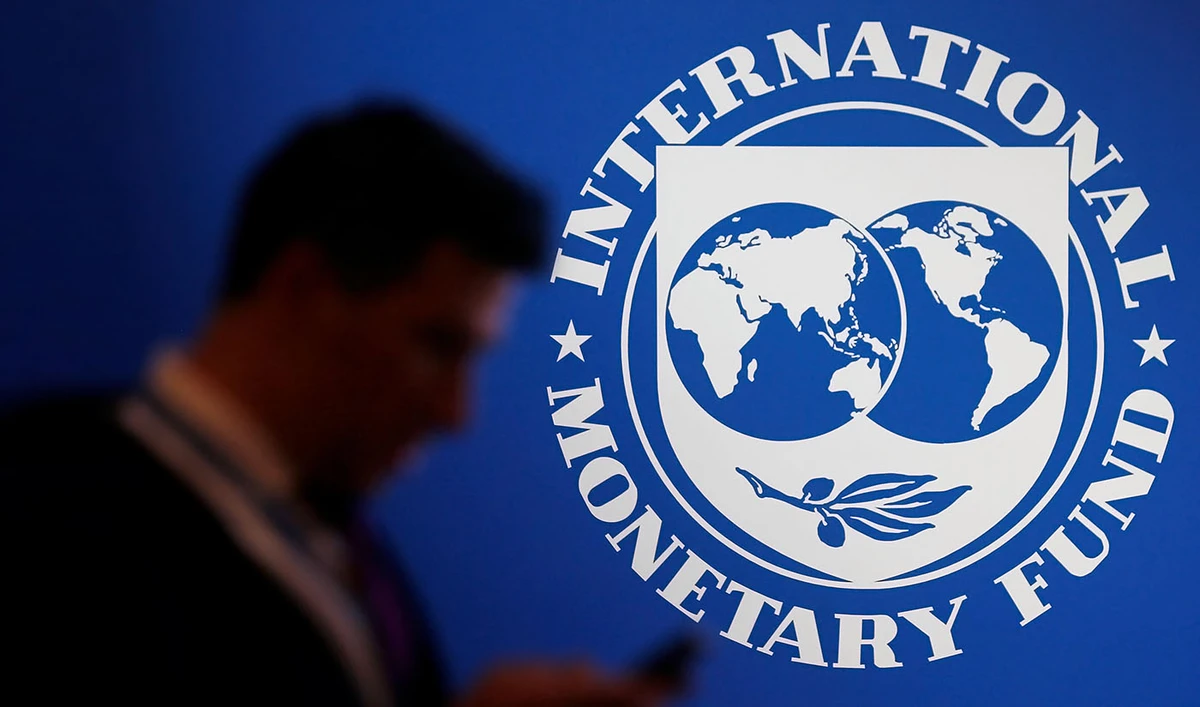
A participant stands near a logo of IMF at the International Monetary Fund - World Bank Annual Meeting 2018 in Nusa Dua, Bali, Indonesia, on October 12, 2018. (REUTERS/File)
Short Url
Updated 09 February 2023
Follow

Pakistan, IMF fail to reach staff-level agreement – finance secretary

  • IMF asks for additional time to reach staff-level agreement as some issues between both sides remain unsettled, confirms official
  • Lender shares MEFP, a key document that leads to agreement, with government after Islamabad agrees to prior actions

ISLAMABAD: After an entire day of suspense, talks between a cash-strapped Pakistan and the International Monetary Fund (IMF) concluded on Thursday without the two sides reaching a staff-level agreement, secretary finance Hamed Yaqoob Sheikh confirmed.  

The two sides have been negotiating since the beginning of the month for the revival of a stalled $6.5 billion loan program. The IMF mission, which was scheduled to leave Pakistan on February 10, was involved in day-long talks with government officials to find a breakthrough that would see Pakistan receive the next tranche of $1.1 billion from the lender.

Pakistan faces a crippling dollar liquidity crunch amid the rapid depletion of its official foreign currency reserves which currently stand at $2.916 billion. The situation has forced the government to restrict even the import of essential items, including medical equipment and industrial raw material, which has had a negative impact on Pakistan's overall economy. 

The resumption of the IMF loan is expected to ease the situation while making other bilateral and multilateral sources of funding available to the country. 

“The staff-level agreement between Pakistan and the IMF has not been reached yet,” the secretary-finance told a select group of journalists after negotiations with the global lender concluded.  

"The IMF has shared the MEFP (a key document indicating a movement toward a likely agreement) with the government," he said. He added that both sides have agreed on certain prior actions before the staff-level agreement. 

Implementing the prior actions means the government would hike electricity and gas prices to abolish the energy sector debt. This would generate additional revenue through new taxes to overcome the primary deficit. 

"Some points between the IMF and Pakistan are yet to be settled, which will be decided from Washington [the IMF headquarters],” he said, adding that the staff-level agreement would be signed after approval from the IMF's headquarters.  

"The IMF review mission has sought additional time to reach a staff-level agreement," he said. Sheikh added that the IMF mission said “it was beyond their mandate” to accept some suggestions of the government without the approval of the headquarters. 

He said the IMF mission would issue a detailed statement on the negotiations, following which Finance Minister Ishaq Dar will brief the media.  

The IMF staff mission was in Pakistan from January 31 to February 9 following a request from Islamabad for negotiations to revive the bailout program. 

The finance secretary claimed the government and the IMF have reached an agreement over the required external financing of Pakistan for the remaining fiscal year. These additional required inflows will be coming from multilateral creditors, friendly countries, and commercial loans, he said. 

Sheikh did not specify the amount.

Pakistan army chief assumes role as first Chief of Defense Forces, signaling unified command

Updated 5 sec ago
Follow

Pakistan army chief assumes role as first Chief of Defense Forces, signaling unified command

  • New role is held simultaneously with Gen Asim Munir’s existing position as Chief of Army Staff
  • It is designed to centralize operational planning, war-fighting doctrine, modernization across services

ISLAMABAD: Pakistan’s most senior military officer, Field Marshal Syed Asim Munir, formally took charge as the country’s first Chief of Defense Forces (CDF) on Monday, marking a structural change in Pakistan’s defense command and placing the army, navy and air force under a single integrated leadership for the first time.

The new role, held simultaneously with Munir’s existing position as Chief of Army Staff, is designed to centralize operational planning, war-fighting doctrine and modernization across the services. It reflects a trend seen in several advanced militaries where a unified command oversees land, air, maritime, cyber and space domains, rather than service-level silos.

Pakistan has also established a Chief of Defense Forces Headquarters, which Munir described as a “historic” step toward joint command integration.

In remarks to officers from all three forces after receiving a tri-services Guard of Honor at the General Headquarters (GHQ) in Rawalpindi, Munir said the military must adapt to new theaters of conflict that extend far beyond traditional ground warfare.

He stressed the need for “a formalized arrangement for tri-services integration and synergy,” adding that future war will involve emerging technologies including cyber operations, the electromagnetic spectrum, outer-space platforms, information warfare, artificial intelligence and quantum computing.

“He termed the newly instituted CDF Headquarters as historic, which will afford requisite integration, coherence and coordination to meet the dynamics of future threat spectrum under a tri-services umbrella,” the military quoted Munir as saying in a statement. 

The ceremony also included gallantry awards for Pakistan Navy and Air Force personnel who fought in Marka-e-Haq, the brief May 2025 conflict between Pakistan and India, which Pakistan’s military calls a model for integrated land, air, maritime, cyber and electronic combat. During his speech, Munir paid tribute to the personnel who served in the conflict, calling their sacrifice central to Pakistan’s defense narrative.

The restructuring places Pakistan closer to command models used by the United States, United Kingdom and other nuclear-armed states where a unified chief directs inter-service readiness and long-range war planning. It also comes at a time when militaries worldwide are re-engineering doctrine to counter threats spanning satellites, data networks, information space and unmanned strike capabilities.