

Finance minister says Pakistan’s talks with IMF expected to conclude today

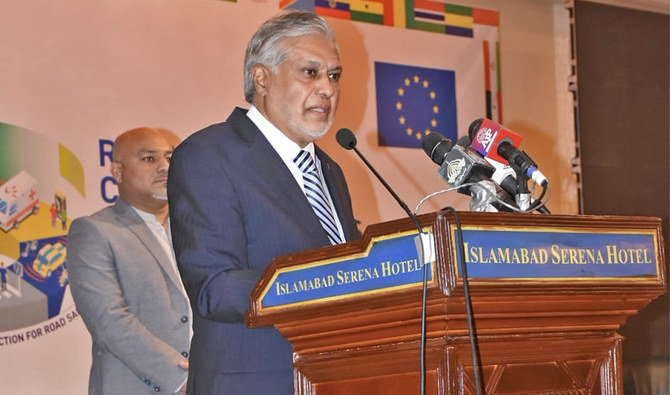
Pakistan's finance minister Ishaq Dar addresses "Road Safety Conference for Parliamentarians, a global perspective, Pakistan-2023", in Islamabad, Pakistan, on February 9, 2023. (@FinMinistryPak/Twitter)
Short Url
Updated 09 February 2023
Follow

Finance minister says Pakistan’s talks with IMF expected to conclude today

  • Ishaq Dar maintains satisfactory progress has been made in the ongoing negotiations and ‘things are on track’
  • The visiting IMF mission to Pakistan is yet to share a key document with the government to indicate a likely agreement

ISLAMABAD: Pakistan’s finance minister Ishaq Dar said on Thursday the country’s ongoing talks with a visiting International Monetary Fund (IMF) delegation were “on track” and about to conclude as the two sides negotiate for the resumption of a stalled loan program that would help the country secure the next tranche of $1.1 billion.

Pakistan faces a crippling dollar liquidity crunch amid the rapid depletion of its official foreign currency reserves which currently stand at $3 billion. The situation has even forced the government to restrict the import of essential items, including medical equipment and industrial raw material, which has had a negative impact on the overall economy.

The resumption of the IMF loan is expected to ease the situation while making other bilateral and multilateral sources of funding available to the country.
The two sides have been negotiating since the beginning of the month, though the visiting IMF mission is yet to share the initial draft of the Memorandum of Economic and Fiscal Policies (MEFP), a key document indicating a movement toward a likely agreement, with the government.

Amid the ongoing talks with the global money lender, Dar mentioned satisfactory progress while promising to announce “good news” soon.

“The progress [in the final round of talks] with the IMF is satisfactory and things are on track,” the finance minister told reporters in Islamabad. “Hopefully, the negotiations will conclude today.”
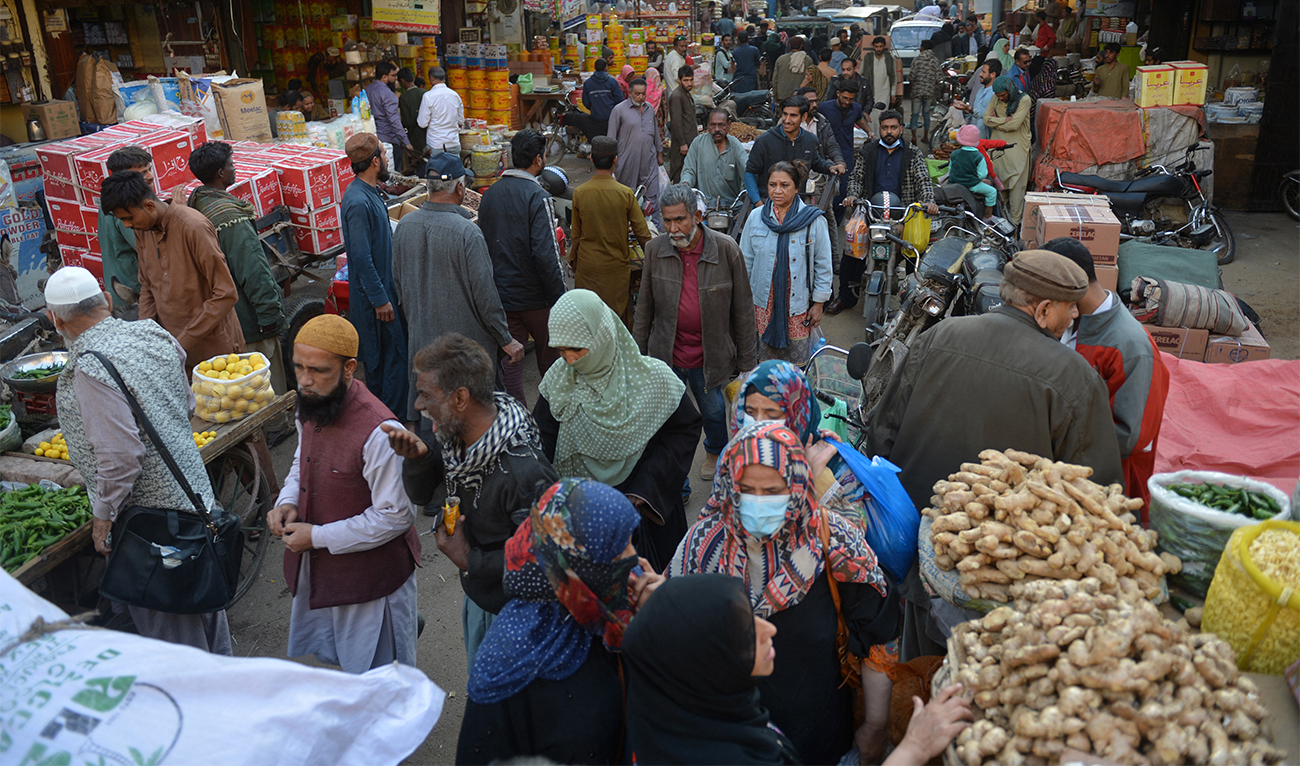


People throng at a wholesale market in Karachi, Pakistan, on February 1, 2023. (AFP)

Pakistan’s state minister for finance Aisha Ghaus Pasha also indicated the government was expecting to reach an understanding with the global lender soon.
While the economic reforms currently under discussion between the two sides are likely to put a significant burden on low-income segments, Pasha said the government was trying to protect the vulnerable segments of society from further financial burden amid record inflation.

Pakistan’s national currency has also recovered some of its losses since Wednesday amid hopes for an IMF staff-level agreement.


IMF hails Pakistan privatization drive, calls PIA sale a ‘milestone’

Updated 10 January 2026
Follow

IMF hails Pakistan privatization drive, calls PIA sale a ‘milestone’

  • Fund backs sale of national airline as key step in divesting loss-making state firms
  • IMF has long urged Islamabad to reduce fiscal burden posed by state-owned entities

KARACHI: The International Monetary Fund (IMF) on Saturday welcomed Pakistan’s privatization efforts, describing the sale of the country’s national airline to a private consortium last month as a milestone that could help advance the divestment of loss-making state-owned enterprises (SOEs).

The comments follow the government’s sale of a 75 percent stake in Pakistan International Airlines (PIA) to a consortium led by the Arif Habib Group for Rs 135 billion ($486 million) after several rounds of bidding in a competitive process, marking Islamabad’s second attempt to privatize the carrier after a failed effort a year earlier.

Between the two privatization attempts, PIA resumed flight operations to several international destinations after aviation authorities in the European Union and Britain lifted restrictions nearly five years after the airline was grounded following a deadly Airbus A320 crash in Karachi in 2020 that killed 97 people.

“We welcome the authorities’ privatization efforts and the completion of the PIA privatization process, which was a commitment under the EFF,” Mahir Binici, the IMF’s resident representative in Pakistan, said in response to an Arab News query, referring to the $7 billion Extended Fund Facility.

“This privatization represents a milestone within the authorities’ reform agenda, aimed at decreasing governmental involvement in commercial sectors and attracting investments to promote economic growth in Pakistan,” he added.

The IMF has long urged Islamabad to reduce the fiscal burden posed by loss-making state firms, which have weighed public finances for years and required repeated government bailouts. Beyond PIA, the government has signaled plans to restructure or sell stakes in additional SOEs as part of broader reforms under the IMF program.

Privatization also remains politically sensitive in Pakistan, with critics warning of job losses and concerns over national assets, while supporters argue private sector management could improve efficiency and service delivery in chronically underperforming entities.

Pakistan’s Cabinet Committee on State-Owned Enterprises said on Friday that SOEs recorded a net loss of Rs 122.9 billion ($442 million) in the 2024–25 fiscal year, compared with a net loss of Rs 30.6 billion ($110 million) in the previous year.