LEAP 2023 attracts funds worth $2.43bn for tech startups as investment continues to flow on day four of event

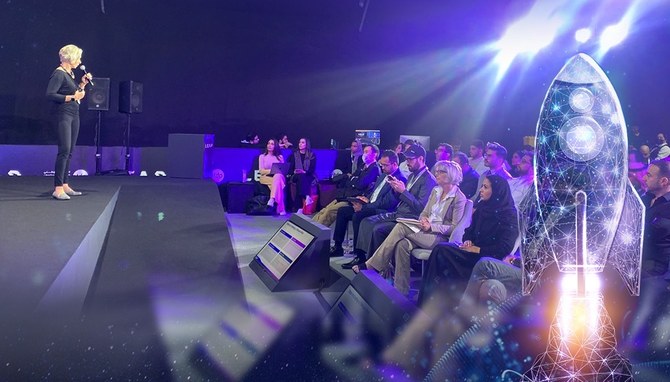
The new funding announced on Wednesday will support the growth of emerging technology companies in Saudi Arabia. (Supplied)
Short Url
Updated 08 February 2023
Follow

LEAP 2023 attracts funds worth $2.43bn for tech startups as investment continues to flow on day four of event

RIYADH: Investment programs worth $2.43 billion were announced on the third day of the Saudi tech event LEAP 2023, following on from the $9 billion in deals revealed on the event's first day.   

The new funding announced on Wednesday will support the growth of emerging technology companies in Saudi Arabia. This is in addition to eight other investment funds worth $646 million launched during the event to stimulate innovation and digital entrepreneurship.   

Organizations providing the $2.43 billion funding include Saudi Arabia’s Riyad Bank, which announced the launch of $1 billion in financing for telecommunications and information technology enterprises. The National Technology Development Program also started six new initiatives and attracted a corpus of $430 million from global technology companies.  

Banque Saudi Fransi is another Saudi bank that signed off on a finance portfolio, this one worth $1 billion to finance and grow companies in the information and communication sector.  

According to the Ministry of Communications and Information Technology, the funding included one from STV worth $150 million, which is its first fund for alternative financing that is compatible with Islamic law.  

Additionally, Riyadh-based IMPACT46 also announced the launch of a $133 million fund, which targets emerging technology companies in the Kingdom and the Middle East.  

The list also includes Merak Capital which launched Merak Fund for direct financing, valued at $53 million, for nurturing technology companies in the Kingdom, even as the Saudi Investment Bank earmarked $40 million for an innovation incubator in the field of financial technology.  

The announcements included Rakeza’s venture capital fund backed by a global business accelerator in Riyadh valued at $25 million and the launch of BIM Ventures, a business development company worth $100 million in partnership with Al-Sulaiman Group to spot innovative and financially sustainable technology companies.  

On Wednesday, Shorooq Partners launched a financial fund to accelerate electronic games estimated to be $115 million, while Planetary Capital floated the first Saudi-Canadian corpus to invest in emerging space technology companies, both local and global, amounting to $30 million.  

The event also bolstered the Saudi-Chinese relationship as Camel Lab partnered with Hong Kong-based Android developer Weo Technology to launch an application called Ha, the latest and most competitive social platform ever. 

The investment flow continued on day four of LEAP, with a further $580 million announced.

One of the most prominent announcements was revealed by Ignite – a programme under Saudi’s Digital Content Council – which launched several initiatives, a package of financing programmes, and pioneering private sector partnerships amounting to $170 million. 

Technology consulting services company Wipro revealed investments of $110 million to expand its cloud studio service, develop digital healthcare solutions, and support the development of local talent.

Unity, the global games development platform, also announced the establishment of its first regional academy and a center for developing electronic games - in partnership with the MCIT - to create and foster technical talents.

Zoho, a leading IT, software development, and cloud computing company, outlined plans to expand its presence in the Kingdom with new office openings and the establishment of a cloud area for its services. Zoho also confirmed an allocation of $300 million over the next 10 years as a portfolio balance to support Saudi startups aiding the country’s digital transformation.

Having entered the data center arena in 2021, DAMAC Group announced the expansion of investments in large data centers in the Kingdom with a total capacity of more than 55 megawatts.

Day four of the event also saw digital enabler stc Group reveal a collaboration with Oracle to modernize its database technologies and accelerate its transition to the cloud. 

Yazeed Alfaris, vice president of applications at stc, said: “Oracle Exadata Cloud@Customer provides us with the flexibility we need to build a robust, extensive cloud platform in our own data centers, that offers both security and scalability to meet the changing requirements of our business and our customers.”


First EU–Saudi roundtable on critical raw materials reflects shared policy commitment

Updated 16 January 2026
Follow

First EU–Saudi roundtable on critical raw materials reflects shared policy commitment

RIYADH: The EU–Saudi Arabia Business and Investment Dialogue on Advancing Critical Raw Materials Value Chains, held in Riyadh as part of the Future Minerals Forum, brought together senior policymakers, industry leaders, and investors to advance strategic cooperation across critical raw materials value chains.

Organized under a Team Europe approach by the EU–GCC Cooperation on Green Transition Project, in coordination with the EU Delegation to Saudi Arabia, the European Chamber of Commerce in the Kingdom and in close cooperation with FMF, the dialogue provided a high-level platform to explore European actions under the EU Critical Raw Materials Act and ResourceEU alongside the Kingdom’s aspirations for minerals, industrial, and investment priorities.

This is in line with Saudi Vision 2030 and broader regional ambitions across the GCC, MENA, and Africa.

ResourceEU is the EU’s new strategic action plan, launched in late 2025, to secure a reliable supply of critical raw materials like lithium, rare earths, and cobalt, reducing dependency on single suppliers, such as China, by boosting domestic extraction, processing, recycling, stockpiling, and strategic partnerships with resource-rich nations.

The first ever EU–Saudi roundtable on critical raw materials was opened by the bloc’s Ambassador to the Kingdom, Christophe Farnaud, together with Saudi Deputy Minister for Mining Development Turki Al-Babtain, turning policy alignment into concrete cooperation.

Farnaud underlined the central role of international cooperation in the implementation of the EU’s critical raw materials policy framework.

“As the European Union advances the implementation of its Critical Raw Materials policy, international cooperation is indispensable to building secure, diversified, and sustainable value chains. Saudi Arabia is a key partner in this effort. This dialogue reflects our shared commitment to translate policy alignment into concrete business and investment cooperation that supports the green and digital transitions,” said the ambassador.

Discussions focused on strengthening resilient, diversified, and responsible CRM supply chains that are essential to the green and digital transitions.

Participants explored concrete opportunities for EU–Saudi cooperation across the full value chain, including exploration, mining, and processing and refining, as well as recycling, downstream manufacturing, and the mobilization of private investment and sustainable finance, underpinned by high environmental, social, and governance standards.

From the Saudi side, the dialogue was framed as a key contribution to the Kingdom’s industrial transformation and long-term economic diversification agenda under Vision 2030, with a strong focus on responsible resource development and global market integration.

“Developing globally competitive mineral hubs and sustainable value chains is a central pillar of Saudi Vision 2030 and the Kingdom’s industrial transformation. Our engagement with the European Union through this dialogue to strengthen upstream and downstream integration, attract high-quality investment, and advance responsible mining and processing. Enhanced cooperation with the EU, capitalizing on the demand dynamics of the EU Critical Raw Materials Act, will be key to delivering long-term value for both sides,” said Al-Babtain.

Valere Moutarlier, deputy director-general for European industry decarbonization, and directorate-general for the internal market, industry, entrepreneurship and SMEs at European Commission, said the EU Critical Raw Materials Act and ResourceEU provided a clear framework to strengthen Europe’s resilience while deepening its cooperation with international partners.

“Cooperation with Saudi Arabia is essential to advancing secure, sustainable, and diversified critical raw materials value chains. Dialogues such as this play a key role in translating policy ambitions into concrete industrial and investment cooperation,” she added.