

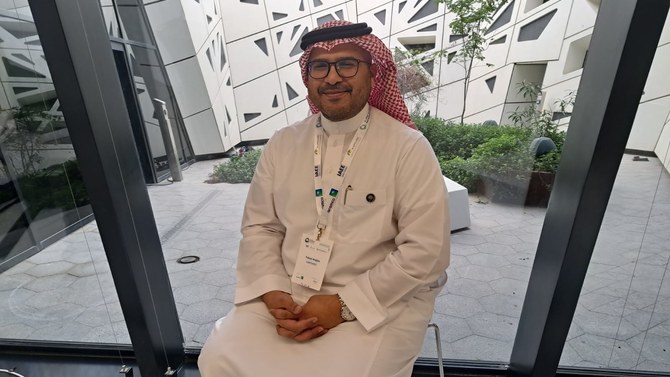

RIYADH: The world should embrace a balanced approach where climate ambitions are met without compromising on energy security and affordability, a top official from the King Abdullah Petroleum Studies and Research Center has said.
In an exclusive interview with Arab News on the sidelines of the 44th conference of the International Association for Energy Economics, Fahad Alajlan, president of KAPSARC, said that Saudi Arabia is leading this balanced approach through programs like Saudi Green Initiative, clean energy investments, and decarbonization efforts.
He also called for involving all stakeholders to find a solution to effectively fight climate change.
According to Alajlan, climate change conferences like the UN’s COP should include oil and gas companies in their discussions as more than 50 percent of emissions are coming from the energy sector.
The KAPSARC president said that Saudi Arabia is leapfrogging others in the carbon capture technology which will play a crucial role in the ongoing energy transition efforts.
“In the past, oil and gas companies have been excluded from discussions. If we look at emissions today, more than 50 percent come from the energy sector, so it is very important that we involve oil and gas companies in this discussion, to become part of the solution rather than demonizing and excluding them,” said Alajlan.
He added: “The COP 28 presidency in the UAE will be an inclusive COP. It will be a COP that brings everybody to be part of the solution. So, it is very important to get this inclusive approach.”
Alajlan noted that carbon capture is not the only solution to reduce emissions, but it is a part of the solution which will ensure a sustainable future.
Carbon capture initiatives should be sufficiently complemented with renewables, hydrogen, and green efforts to get better sustainable results, he argued.
“It (carbon capture) is not the only solution; it is part of the solution. If we look today, there are about 50 commercial carbon capture projects globally. Saudi Arabia has one of the biggest with a capacity of 500,000 tons, but the ambition goes much bigger,” he said.

Fahad Alajlan addressing the IAEE conference (Screenshot)
Saudi Arabian Oil Co.’s carbon capture and storage hub in the Kingdom is eyeing to have a storage capacity of up to 9 million tons of carbon dioxide a year by 2027, and 45 million tons by 2035, he further noted.
According to Alajlan, the ongoing IAEE conference in Saudi Arabia is crucial, as it came at a time when the entire world is witnessing a new energy landscape post the invasion of Ukraine, which highlighted the vulnerabilities surrounding energy security.
“There are many pathways to achieve climate ambition and energy transition. These pathways should ensure energy security, energy affordability, and climate change. The discussion here (IAEE conference) has focused on Saudi Arabia as an example of many pathways that exist. Saudi Arabia has pursued renewable energy, clean energy investment, and hydrogen,” he added.
Alajlan also said that the issue of energy affordability is posing problems to energy transition even in the MENA region, and it should be seriously addressed.
“We have a few countries that are struggling to meet their energy needs. The cost of energy has risen exceedingly in 2022. So, we need to make sure that this is being addressed. We cannot have winners and losers in this energy transition,” he added.
According to Alajlan, energy financing is very much necessary for a smooth transition, as developed nations have agreed to invest hundreds of billions of dollars in developing economies for clean energy initiatives.
“There are a lot of roles to be played by government and private sectors, but also global development institutions and multi-development institutions like the World Bank and the IMF (International Monetary Fund), and credit agencies, that would lend and finance these energy projects and make sure that energy is not only accessible but also affordable,” added Alajlan.
He further noted that the $100 billion committed by developed economies for developing economies to catalyze energy transition is not sufficient, as it requires $3 trillion to $8 trillion annually.
Talking about the importance of green financing in the energy sector, Alajlan said that the world should think about how green finance can be pushed into technologies like carbon capture, hydrogen, and ultimately energy transition.
“We know the world is growing, energy demand is growing, and the issue of emissions is critical. So, we need to lower our emissions while growing the energy supply. We need more financing, whether that is in oil and gas, renewables and hydrogen,” he added.
Alajlan asserted that the general public too should be aware of the necessity of energy transition so that they can also contribute their part to these efforts.


