

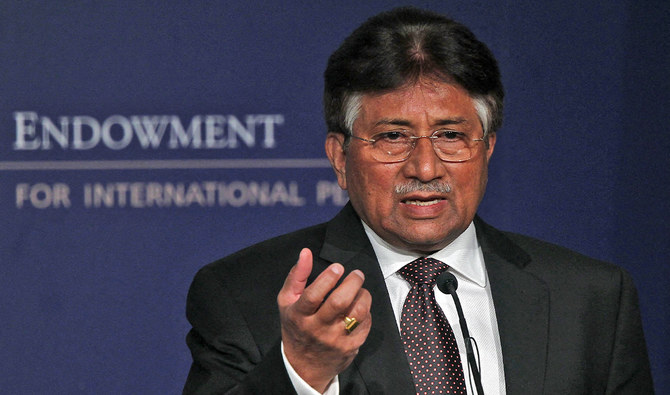

ISLAMABAD: Pervez Musharraf was a polarizing figure in Pakistani politics, returning the country to a period of economic stability while accused of rampant abuses and weakening democracy.
The nation’s most recent military leader governed for nearly a decade after seizing power in a bloodless coup in 1999.
His rule was marred by repeated allegations of abuses, including ruthlessly rounding up his opponents as well as being accused of involvement in former prime minister Benazir Bhutto’s assassination.
The effects of his decision to back the United States in its invasion of Afghanistan — albeit in the face of threats of bombing and in return for a massive aid injection — continue to reverberate.
“Musharraf boosted education standards and infrastructure in Pakistan. He brought development to the country,” 24-year-old student Mohammad Waqas told AFP in Islamabad.
“But on the other hand, the country suffered losses in the face of terrorism. Entering America’s war weakened our own country.”
Pakistan is currently undergoing yet another economic crisis, and widespread political uncertainty ahead of elections due later this year.
In the face of the turmoil, some remember Musharraf with a certain fondness.
“He was a good ruler. There has not been a leader like him before and there will never be one like him again,” said 70-year-old Islamabad shopkeeper Muhammad Khan.
Veteran Pakistani politician and Musharraf ally Parvez Elahi told AFP: “He was a ruler with a lot of depth, who loved hard work and he would appreciate new initiatives.”
In 2006 — at the height of their alliance — US President George W. Bush called Musharraf “a strong, forceful leader [who] has become a target of those who can’t stand the thought of moderation prevailing.”
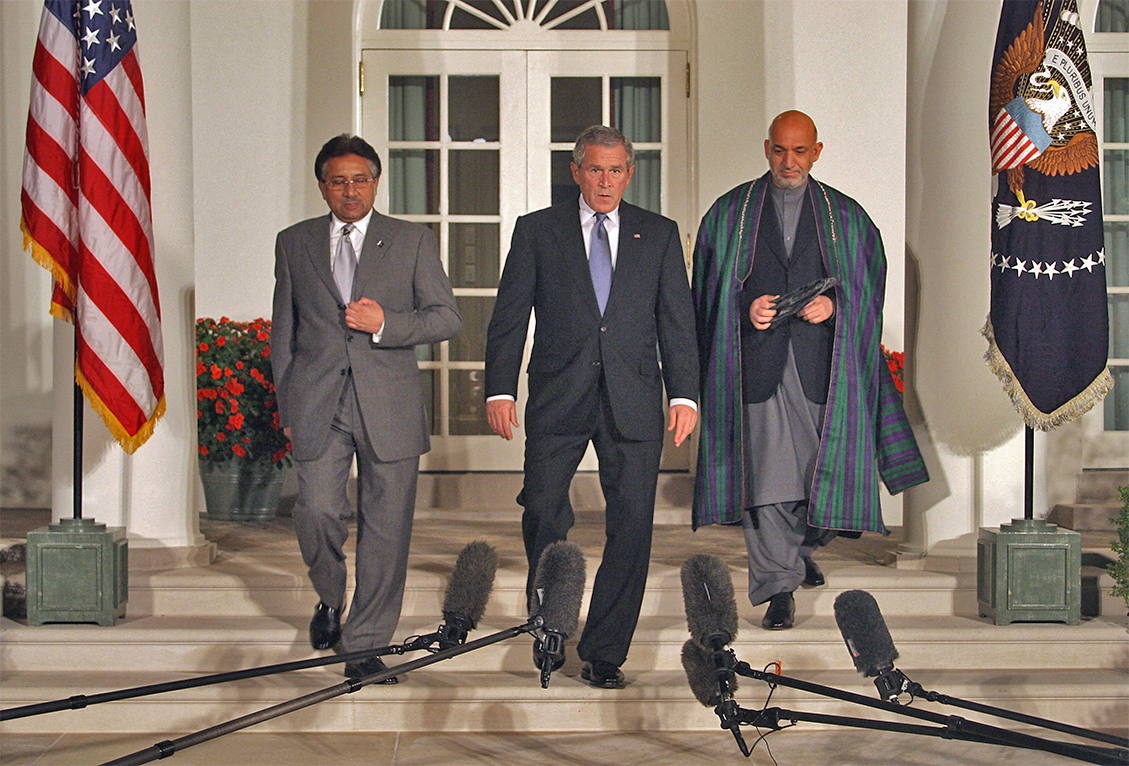
US President George W. Bush (C) arrives with Afghan President Hamid Karzai (R) and Pakistan's Gen. Pervez Musharraf to make a statement in the Rose Garden at the White House in Washington on September 27, 2006. (AFP)
His moves to overthrow an elected government and to suspend the constitution for long periods, however, also frame his legacy.
“His one act, which will be remembered throughout history, was he violated the constitution,” retired civil servant Naeem Ul Haq Satti told AFP.
“The most important thing a country has is its constitution,” the 69-year-old added.
As he faced growing pressure for democratic elections, Musharraf’s oppression of critics worsened.
He suspended the constitution for a second time in 2007, rounded up thousands of opponents and sacked the chief justice, leading to widespread protests.
“General Musharraf was one of the military dictators who misruled the country by... bringing in a group of sycophants,” businessman Abdul Basit told AFP in the Balochistan provincial capital of Quetta.
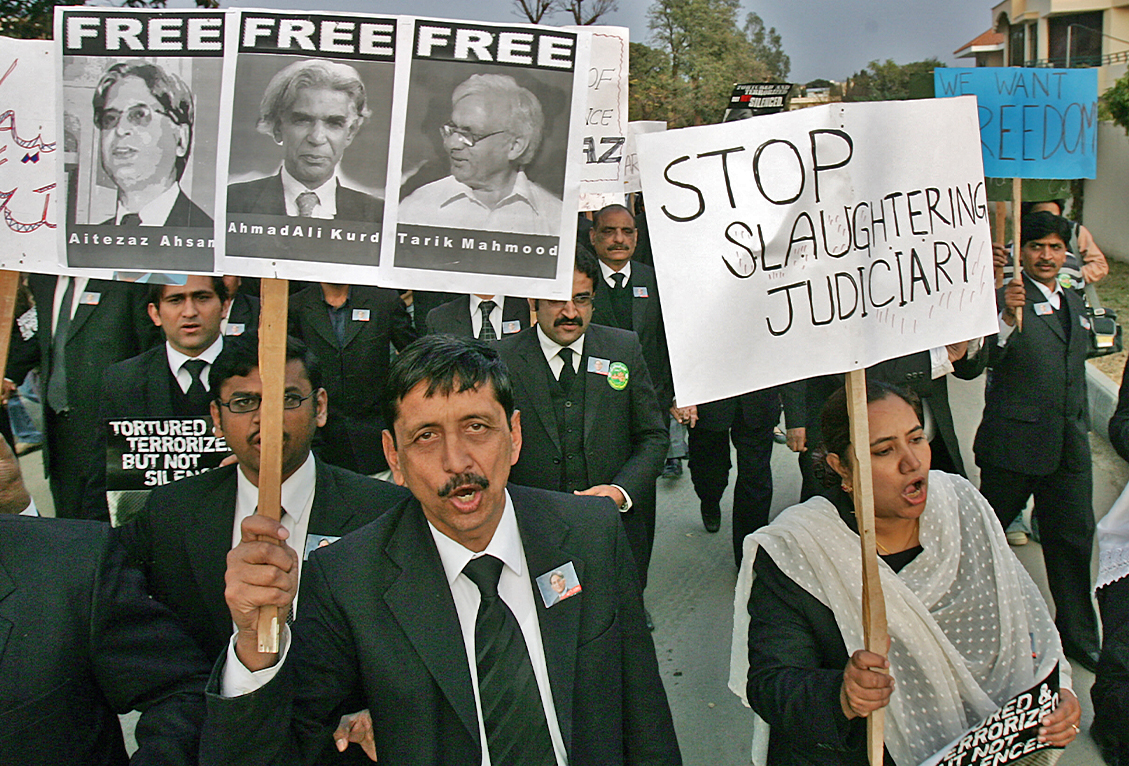
Pakistani anti-Musharraf lawyers carry pictures of arrested lawyers and shout slogans in protest against the sacking of the top judge of the Supreme Court by President Pervez Musharraf during a demonstration in Islamabad on 13 December 2007. (AFP)
Under Musharraf, Pakistan stepped up its war against ethnic Baloch separatists, with a military operation killing key separatist leader Akbar Bugti in 2006, an assassination that further fanned the flames of that movement.
“People do give credit to General Musharraf for developing the country but on the other hand, like his predecessors, he played havoc,” said Basit.
Musharraf resigned in 2008 and faced years of legal wrangling, finally being found guilty in absentia and sentenced to death for treason. That ruling was later nullified.
The former ruler ended his days in Dubai, having failed to launch a political comeback and finding himself, and his All Pakistan Muslim League party, sidelined from political relevance.


