



ISLAMABAD: Pakistan's former military ruler Pervez Musharraf has died in Dubai after a prolonged illness, the Pakistani military said on Sunday.
Musharraf seized power in a 1999 bloodless coup, ruling as "chief executive" when the 9/11 attacks on the United States took place, before becoming president in 2001.
He was the chief regional ally of the United States during its invasion of the neighbouring Afghanistan, but resigned in 2008 and was subsequently forced into exile after a backlash over his constitutional overreach.
Here are some pictures depicting the life of the former Pakistani military ruler:
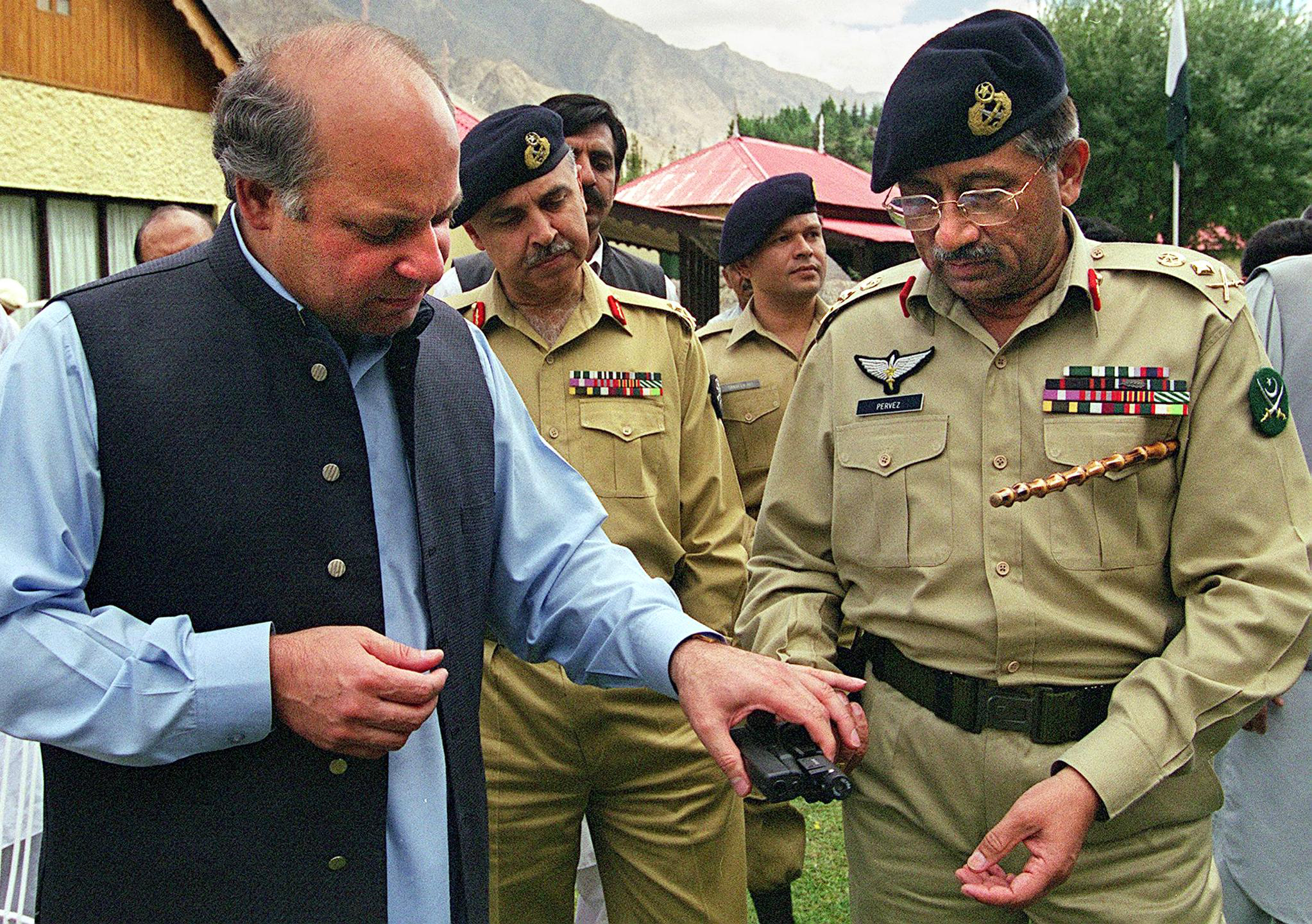
On October 7, 1998, Pakistan's former prime minister Nawaz Sharif appointed General Pervez Musharraf as the country's army chief. (AFP/File)
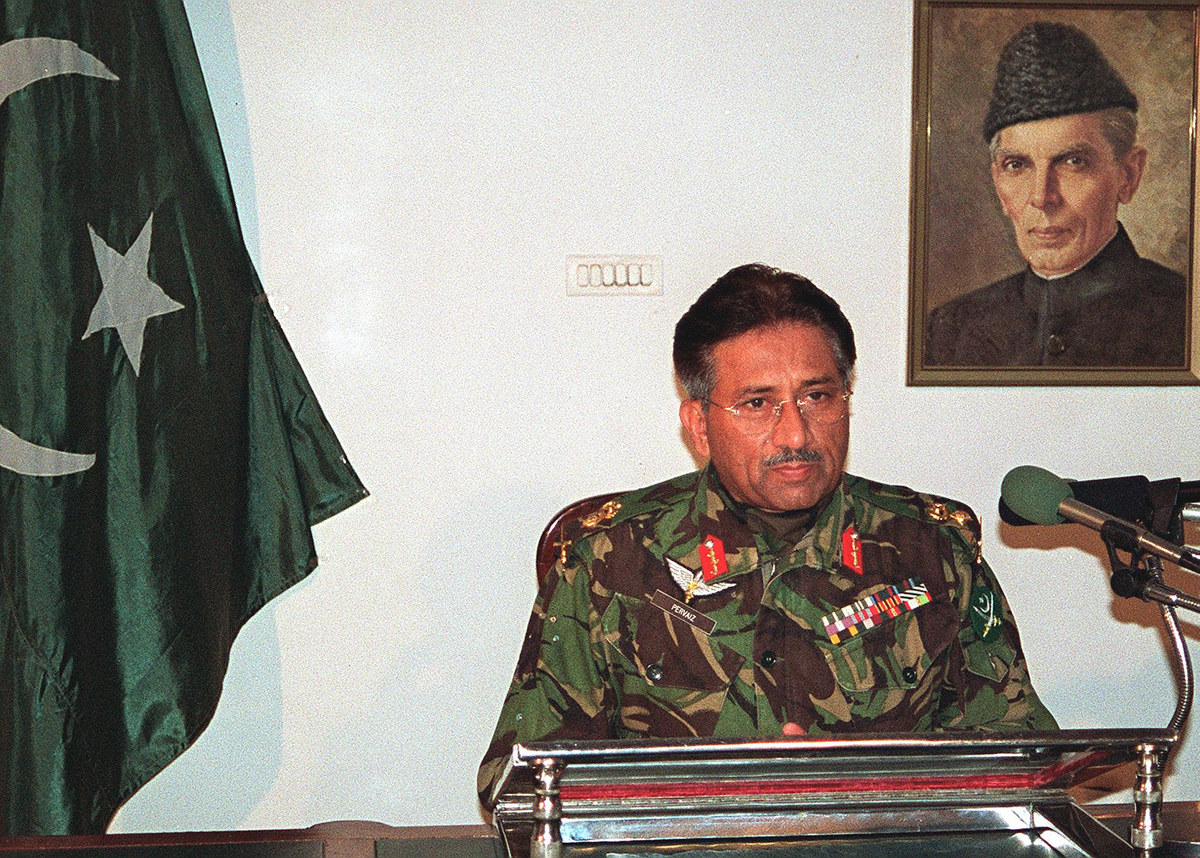
Pakistani army chief General Pervez Musharraf speaks during a nationwide address on state-owned television in Karachi on October 13, 1999. Musharraf said the armed forces had to intervene to end "uncertainty and turmoil." Musharraf said the "self serving policies" being followed by ousted Prime Minister Nawaz Sharif had rocked the country's very foundations. (AFP/File)

Pakistan's military ruler, General Pervez Musharraf, left, taking oath as the President of Pakistan during a ceremony in President House in Islamabad on June 20, 2001. (AFP/File)

In his address to the nation on radio and TV on September 19, 2001, Musharraf explained his government's promise to back possible US military actions against Afghanistan a week after the September 11 attacks on the United States. (AFP/File)
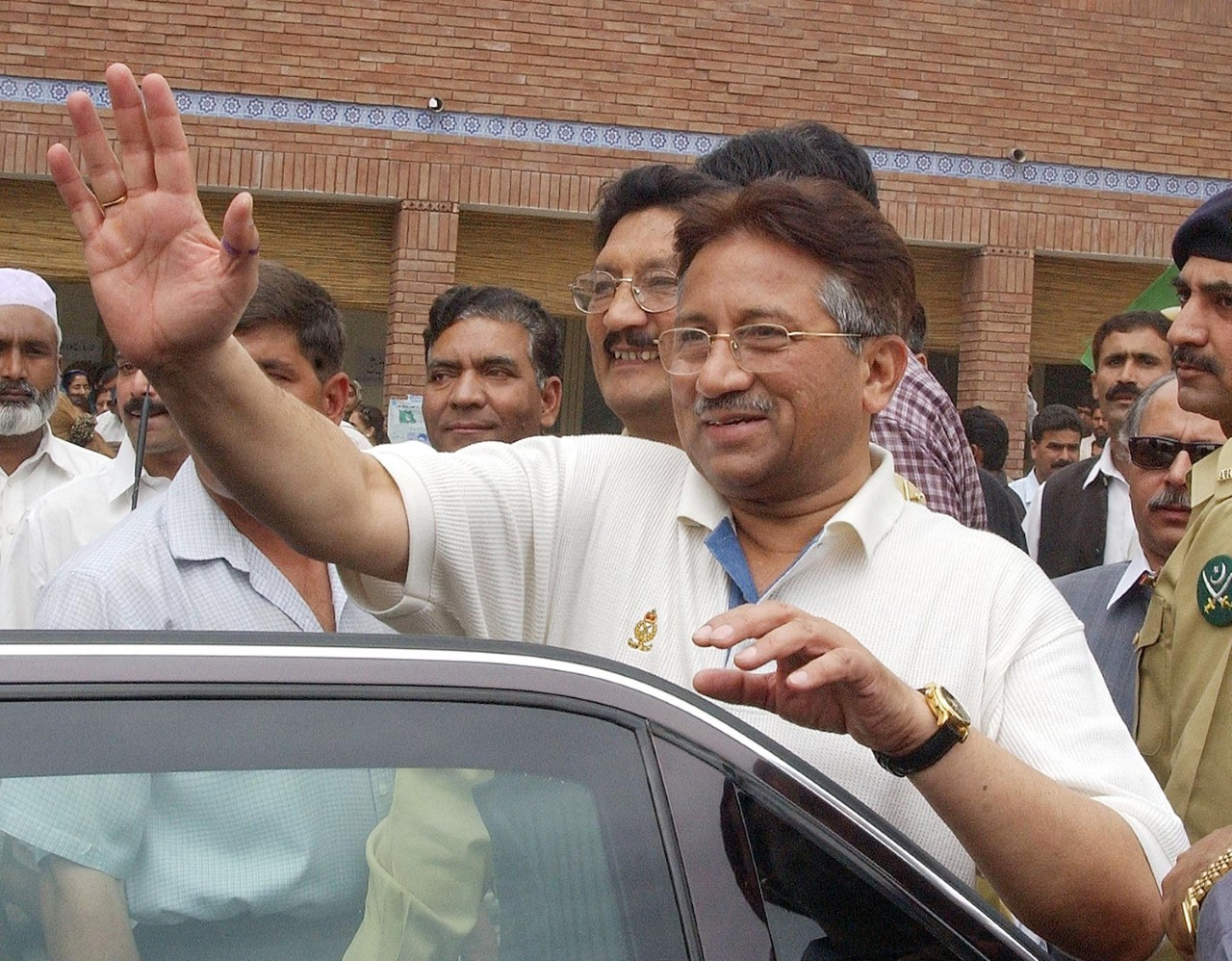
Pakistani President General Pervez Musharraf waves to his supporters at a polling station in Rawalpindi on April 20, 2002, after winning a referendum to extend his presidency by five years. (AFP/File)
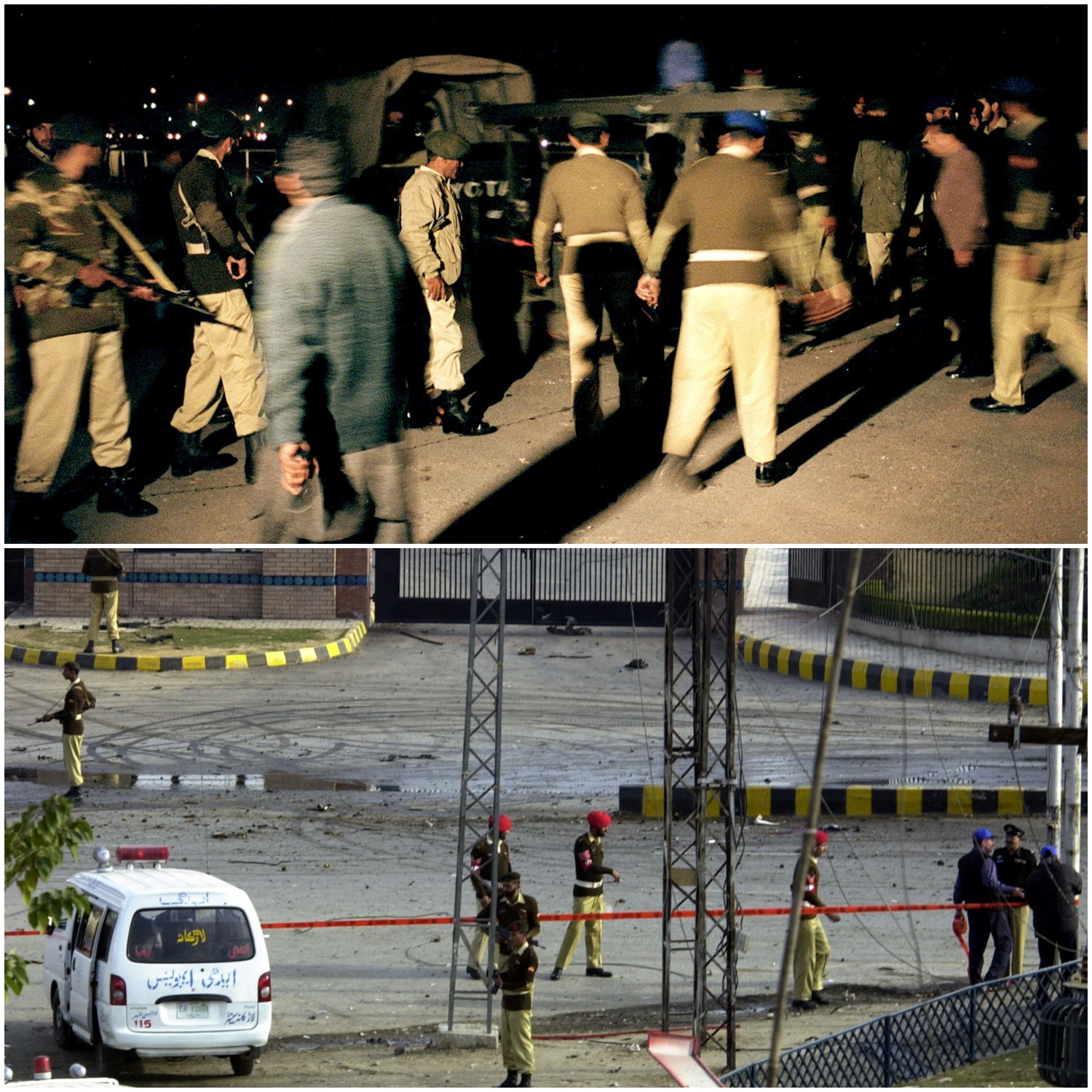
On December 14 and 25, 2003, Musharraf survived two assassination attempts by Al-Qaida in Rawalpindi. (AFP/File)
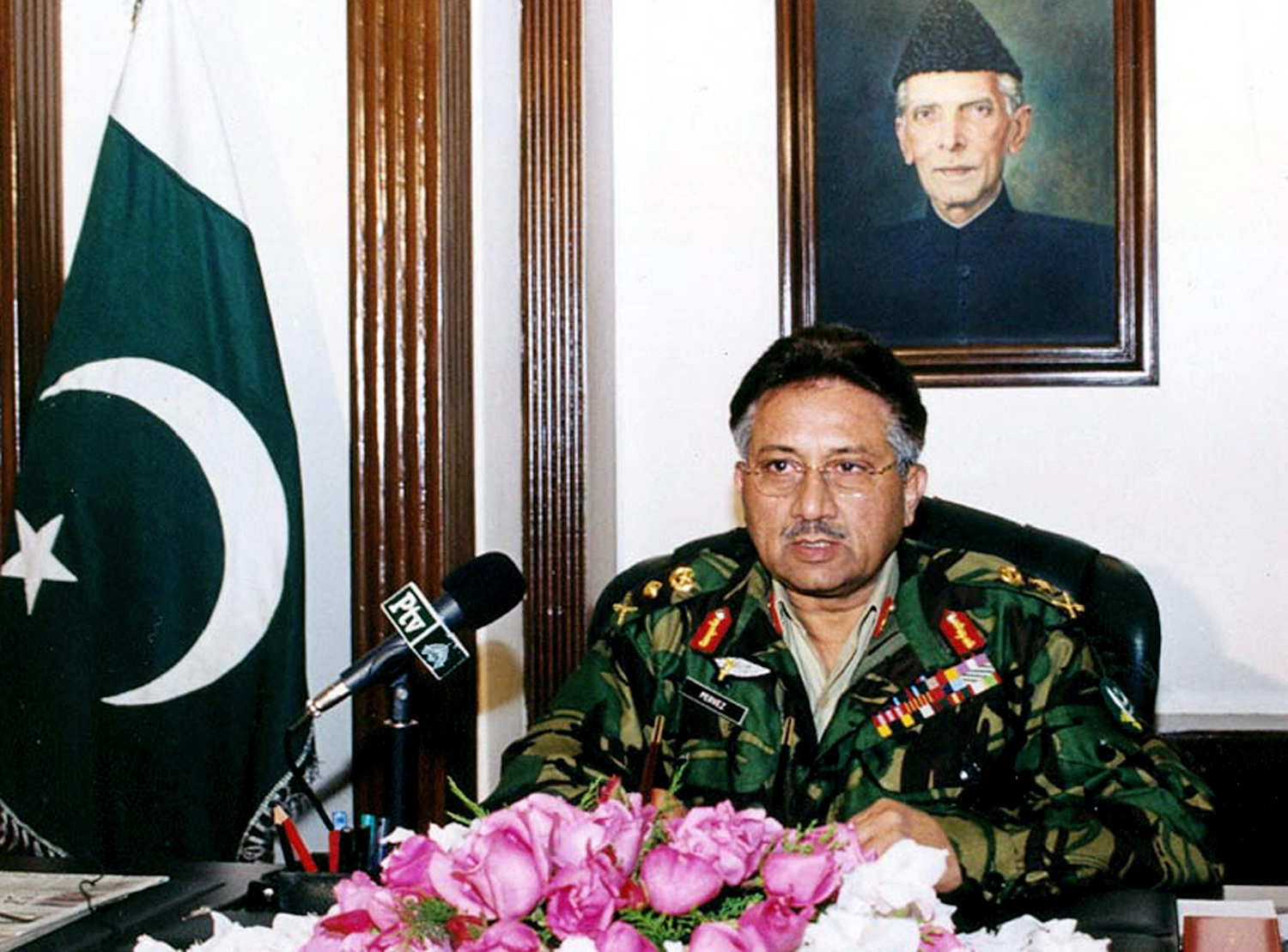
During his television address to the nation on December 24, 2003, former president Pervez Musharraf confirmed he will quit as Pakistan's military chief in December, 2004. (AFP/File)
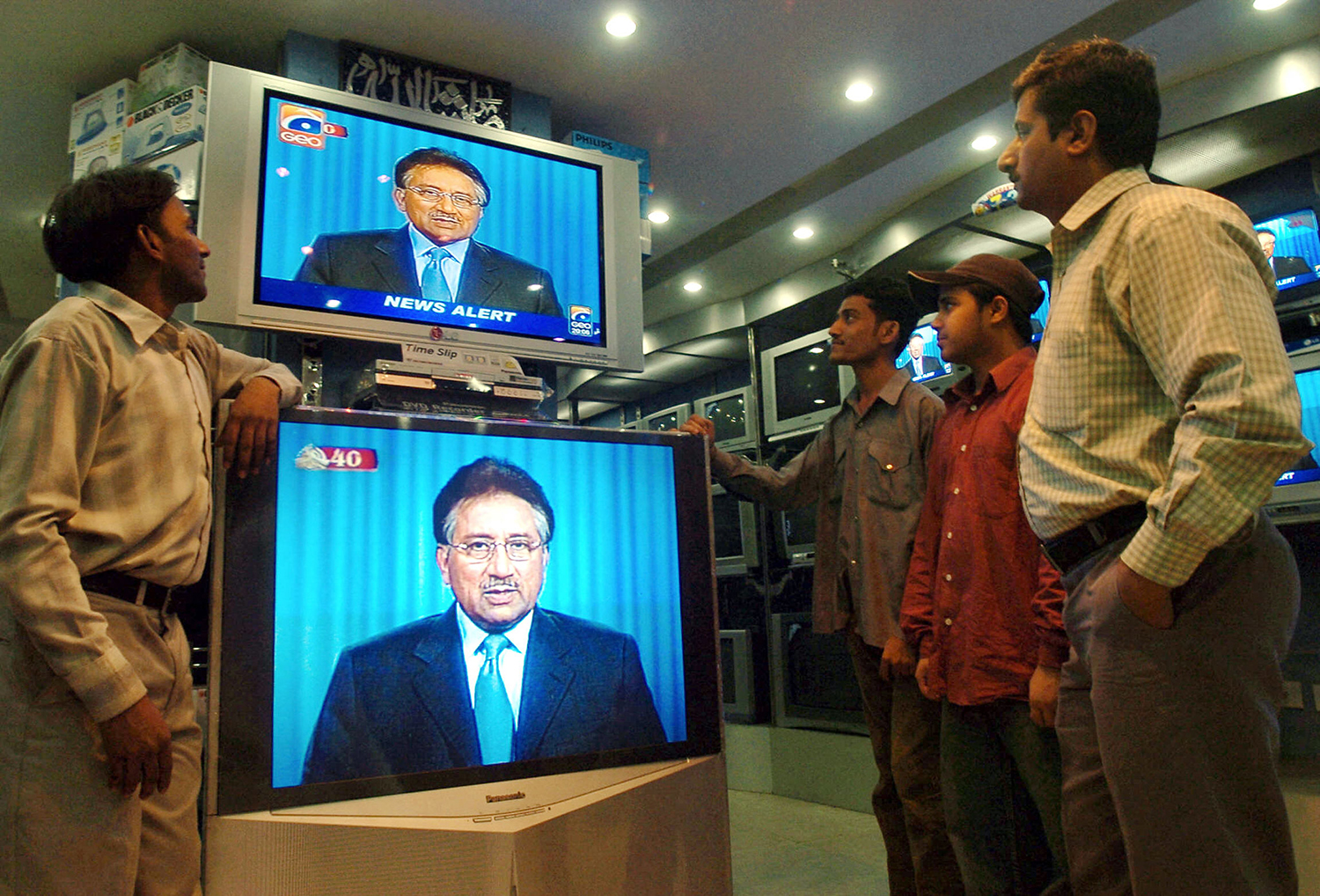
On December 30, 2004, Pakistani President Pervez Musharraf said he would stay on as army chief after controversially breaking an earlier promise to hang up his uniform by the year's end. (AFP/File)
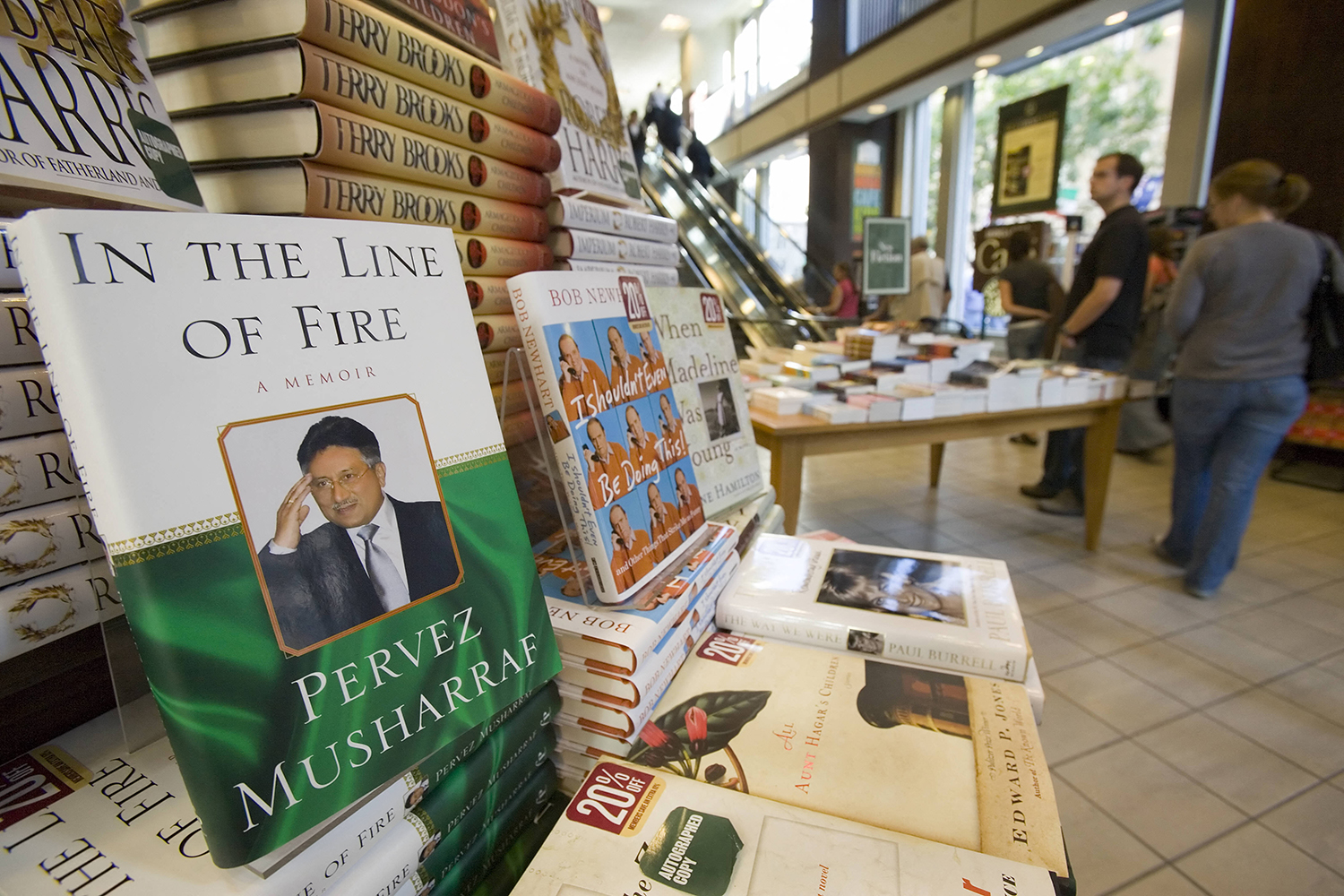
Pakistani President Pervez Musharraf launched his autobiography “In the Line of Fire” in New York, United States, on September 26, 2006. (AFP/File)
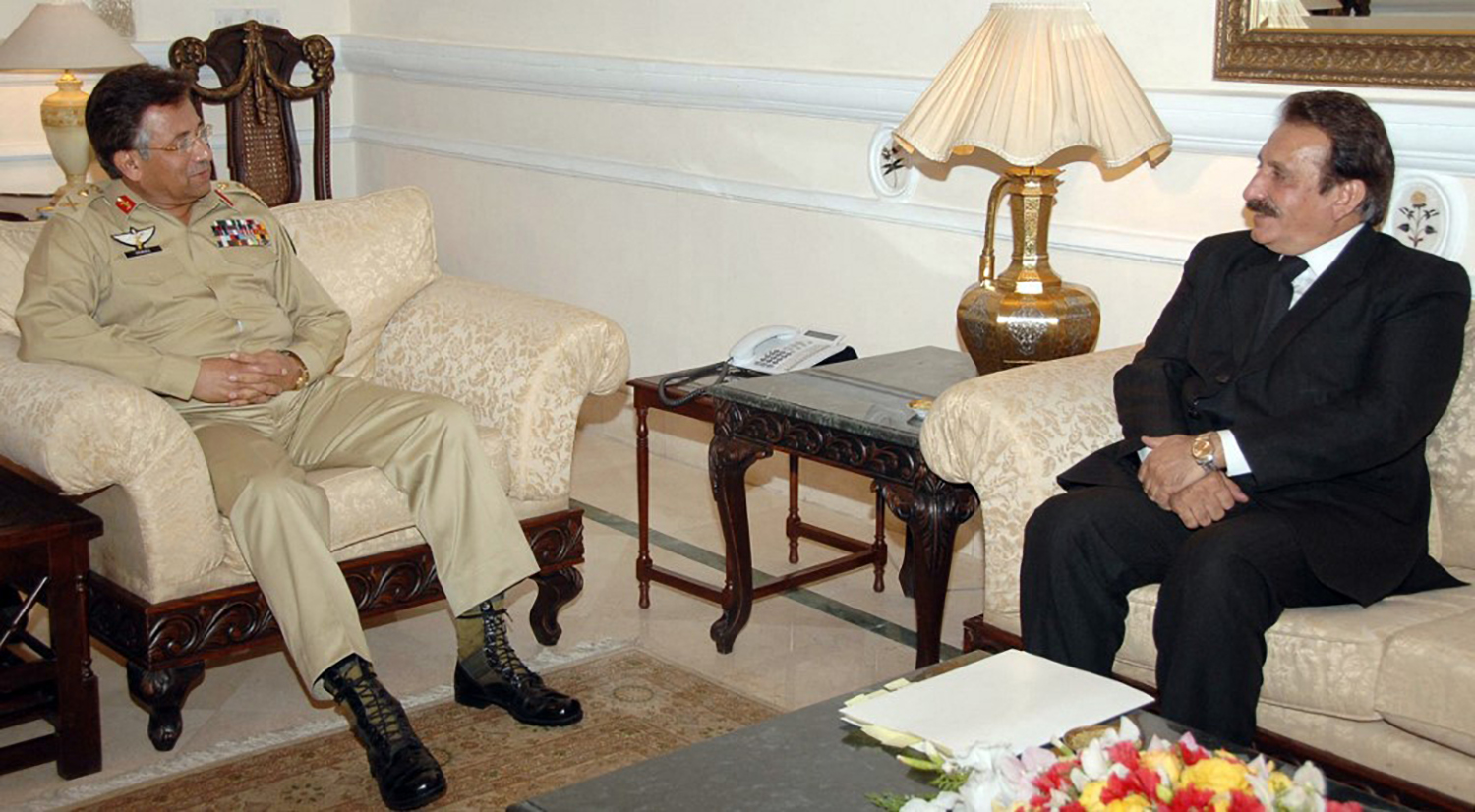
President General Pervez Musharraf suspended Supreme Court Chief Justice Iftikhar Chaudhry on allegations of misconduct on March 9, 2007, which sparked city-wide protests in the federal capital Islamabad in the top judge's favor. (PID/File)
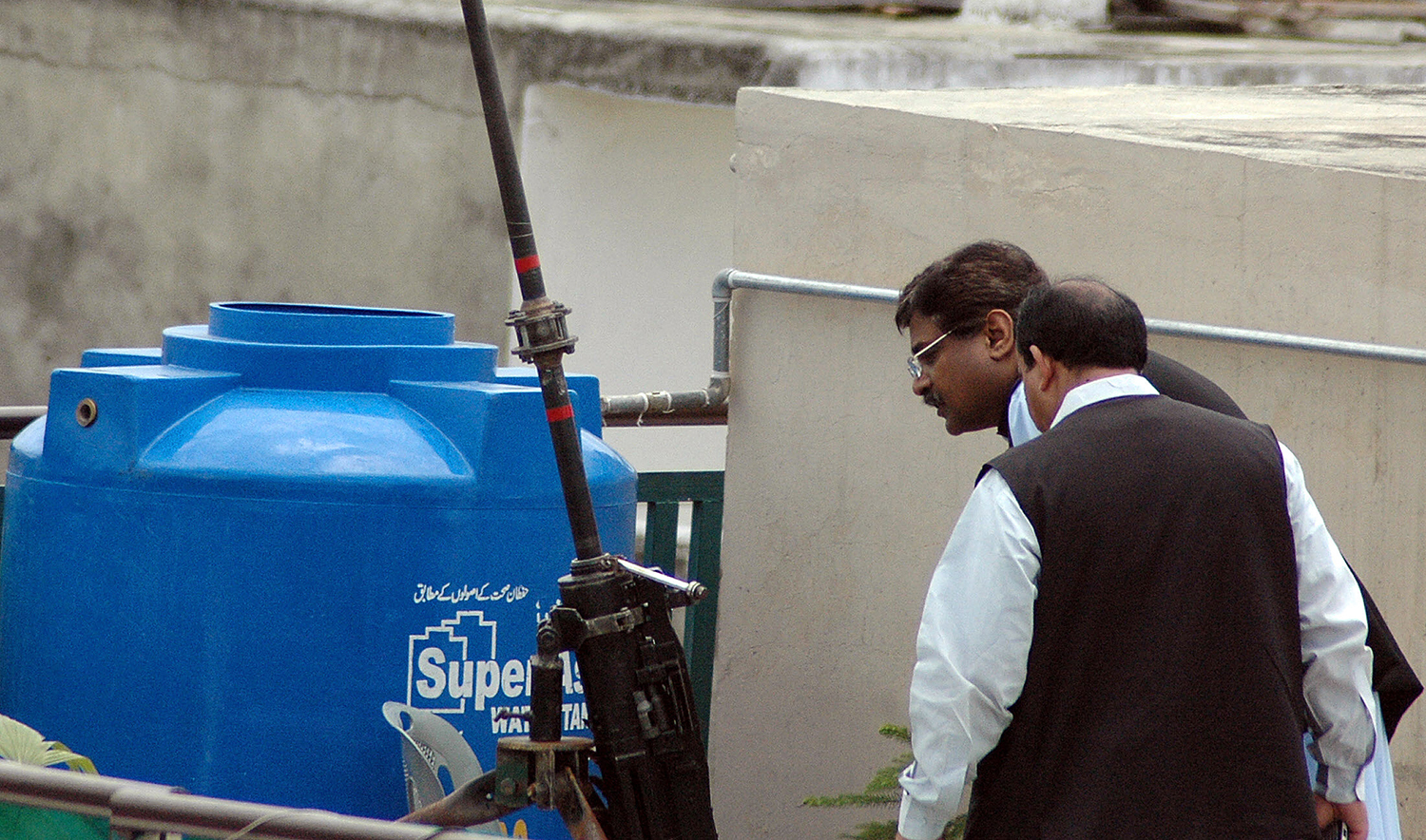
Pakistani security officials examine a long barrelled anti-aircraft gun in Rawalpindi, 06 July 2007, after gunmen fired at President Pervez Musharraf's plane. (AFP/File)
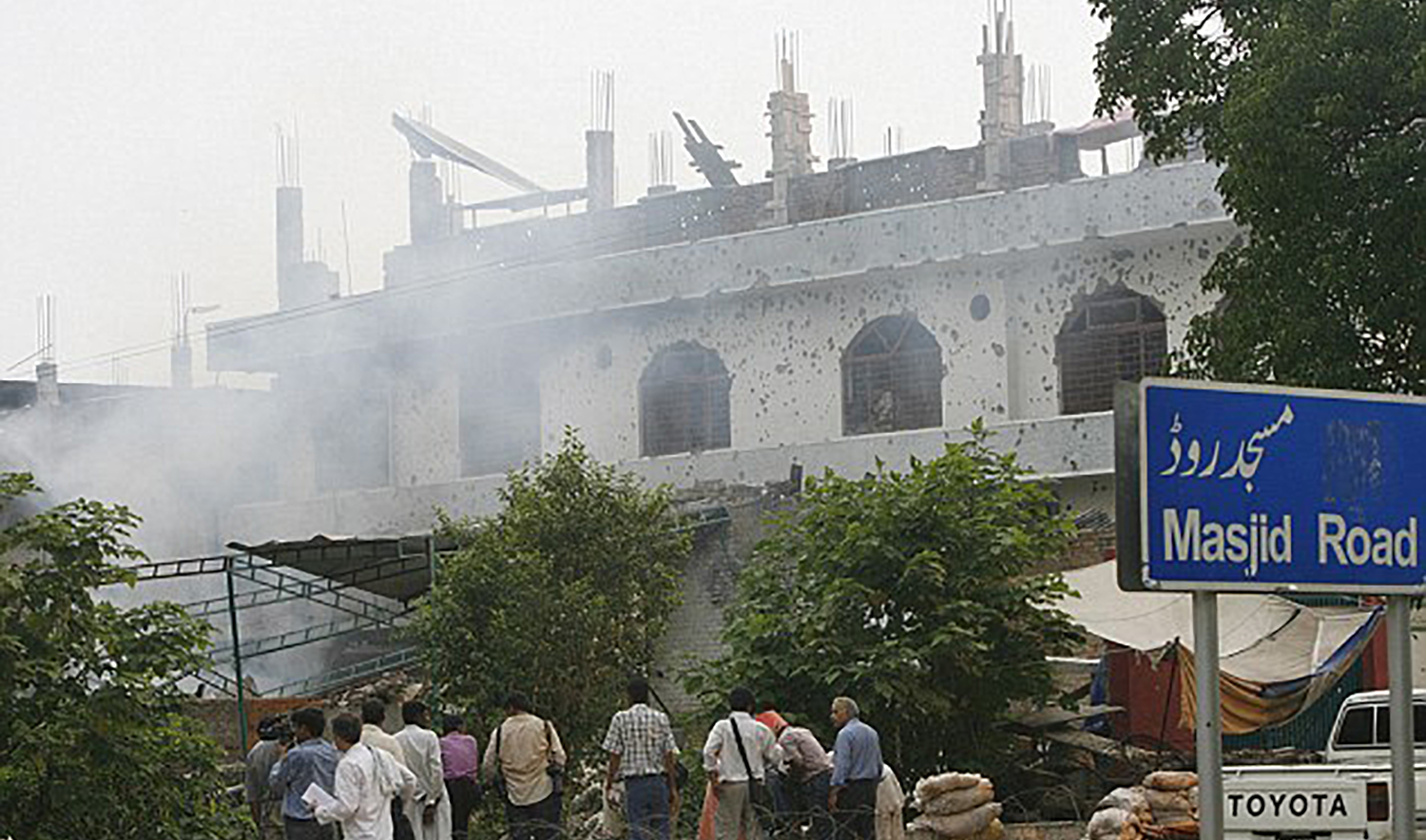
On July 10, 2007, then Pakistan president Pervez Musharraf ordered military troops to storm Lal Masjid, or Red Mosque, to end a week-long siege by seminary students in Islamabad, Pakistan. (Photo courtesy: Daily Pakistan)
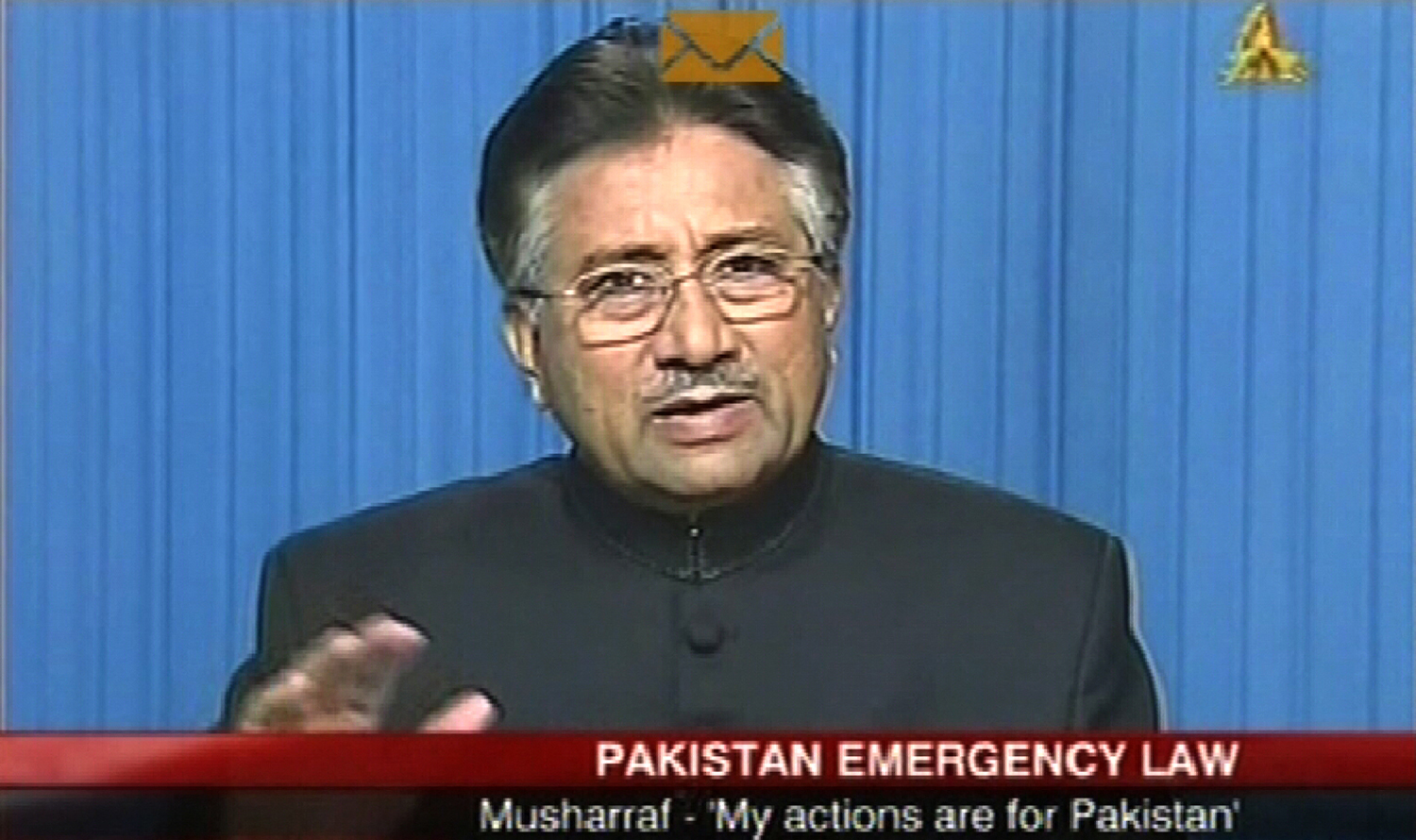
November 3, 2007 — President General Pervez Musharraf imposed emergency law in Pakistan. (Pakistan Television/Screen grab)
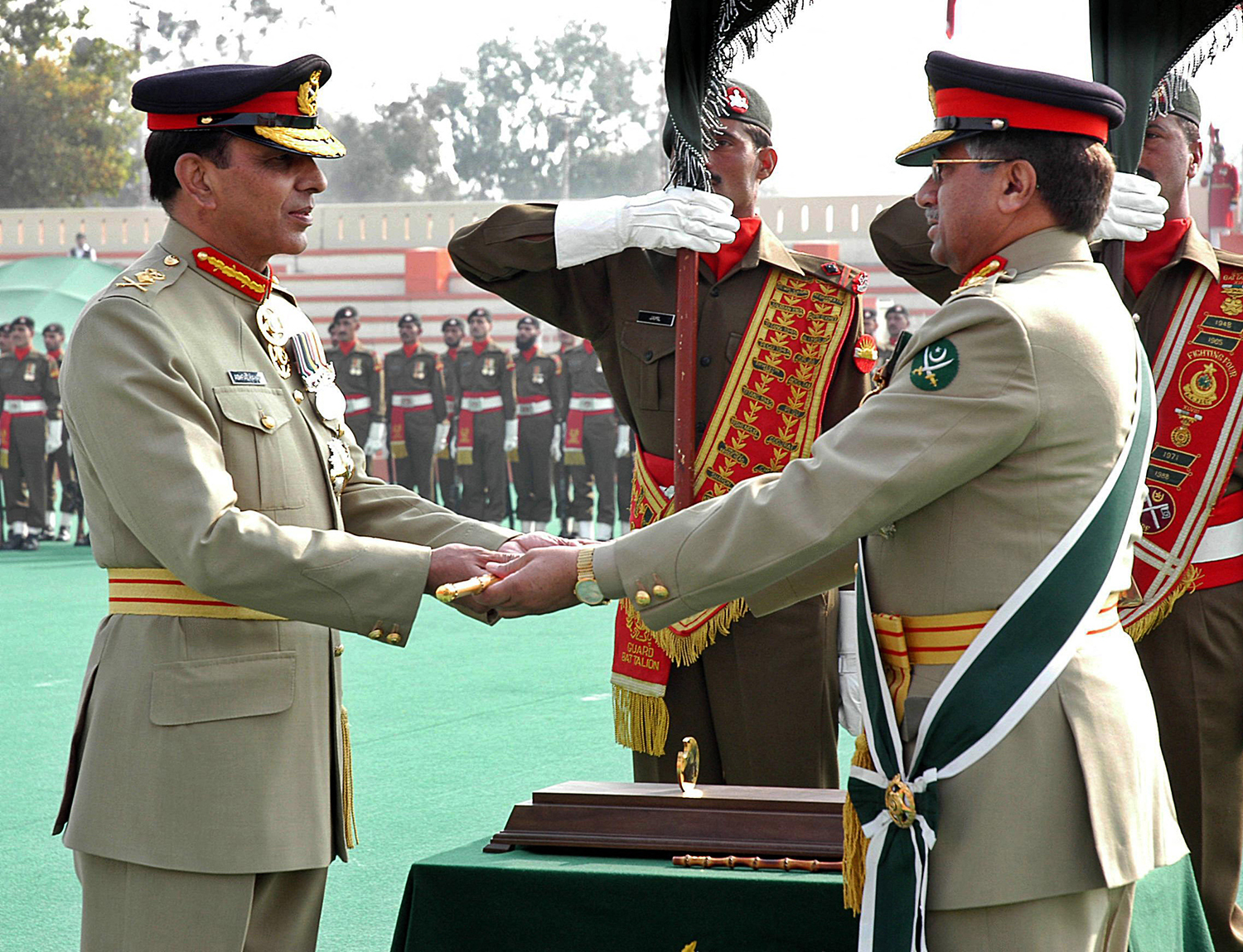
President Musharraf retired as army chief on November 28, 2007, putting an end to his eight years of military rule. (AFP/File)
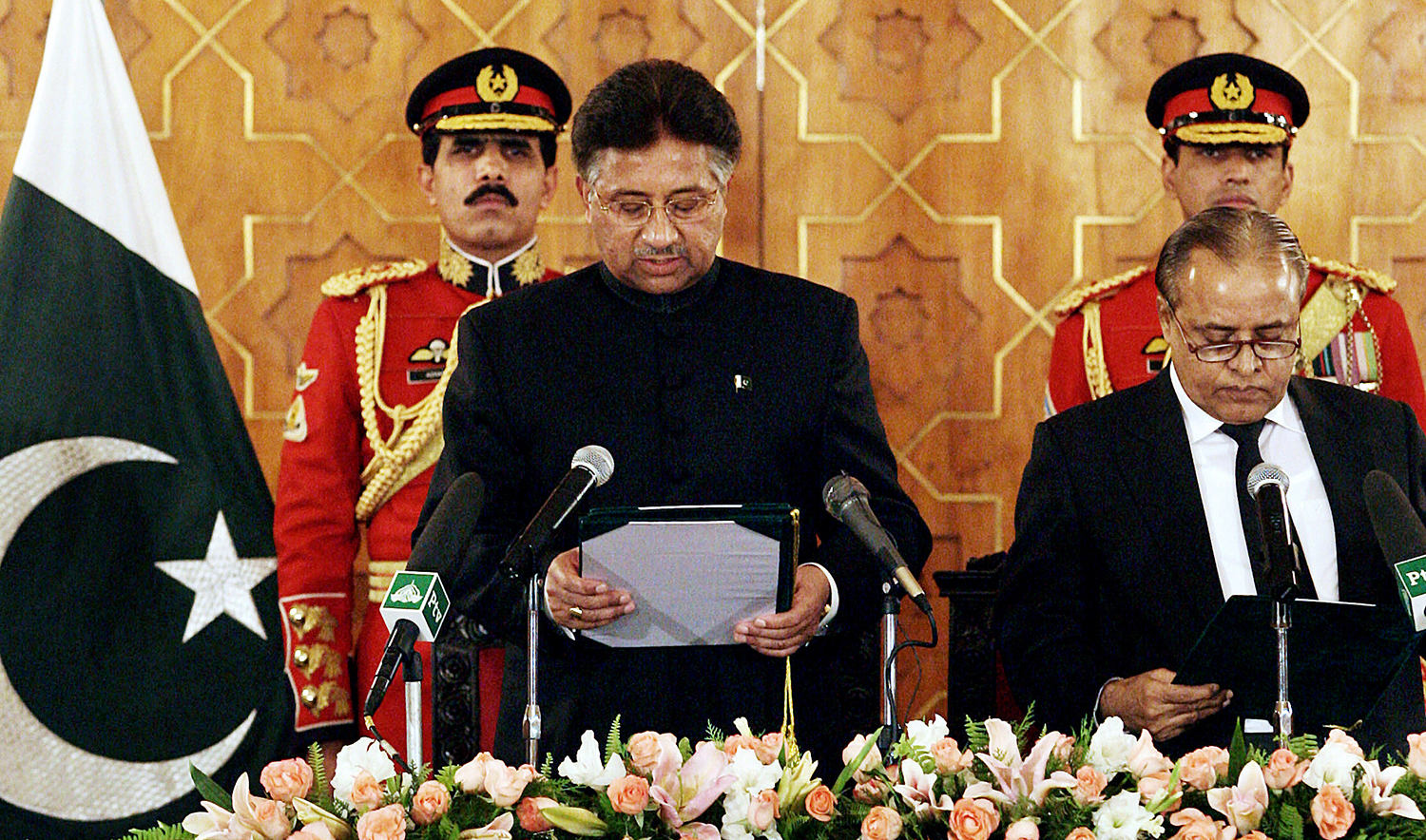
Pervez Musharraf took oath as the president of Pakistan for a second term on 29 November, 2007. (AFP/File)
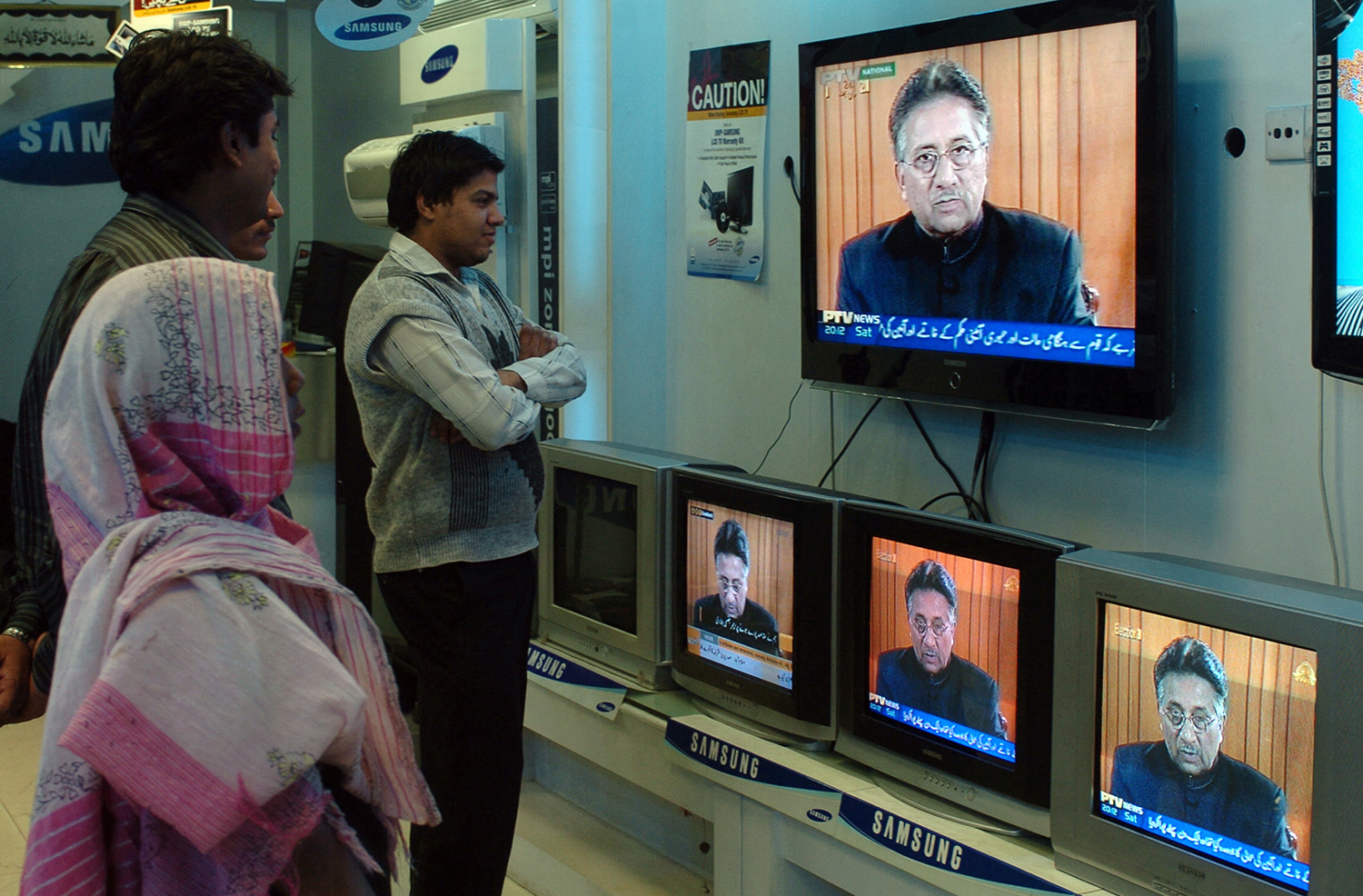
President Musharraf lifted the emergency on December 25, 2007, and pledged free and fair elections next month. (AFP/File)
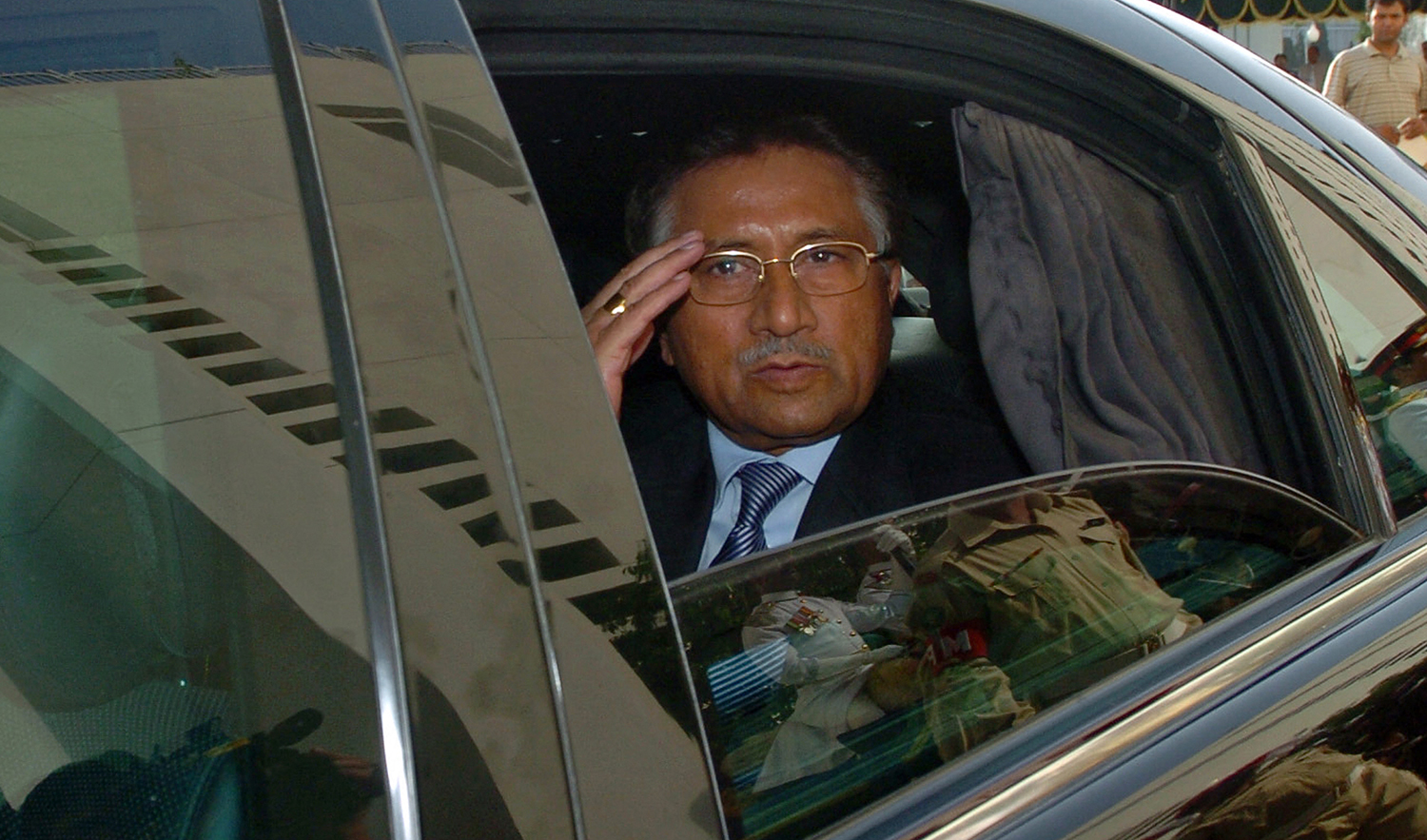
President Musharraf resigned from the office on August 18, 2008. (AFP/File)
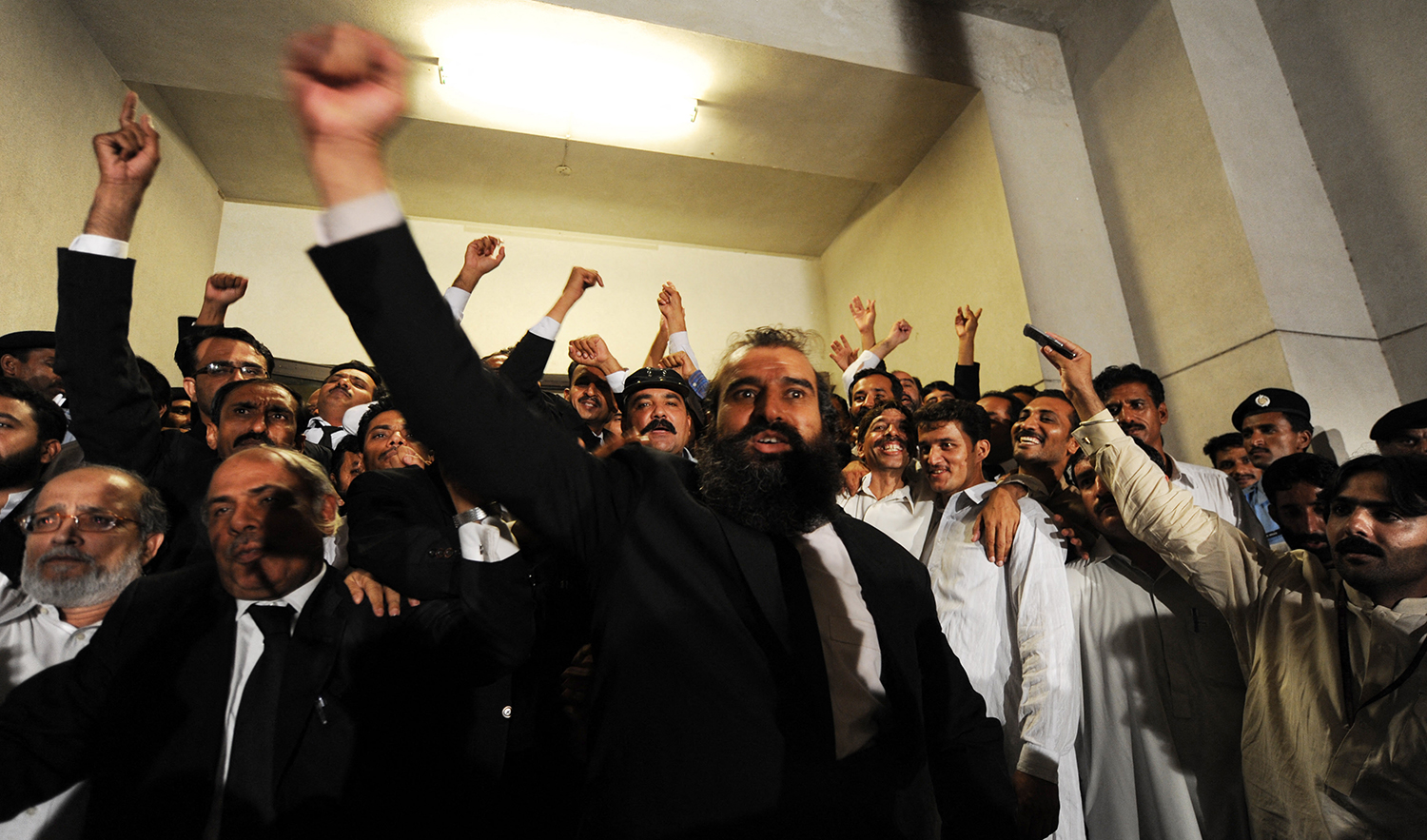
Lawyers shout slogans against former Pakistani President Pervez Musharraf and former Supreme Court Chief Justice Abdul Hamid Dogar on July 31, 2009, after the Supreme Court declared the imposition of emergency rule by the former president unconstitutional. The court gave him seven days to respond. (AFP/File)
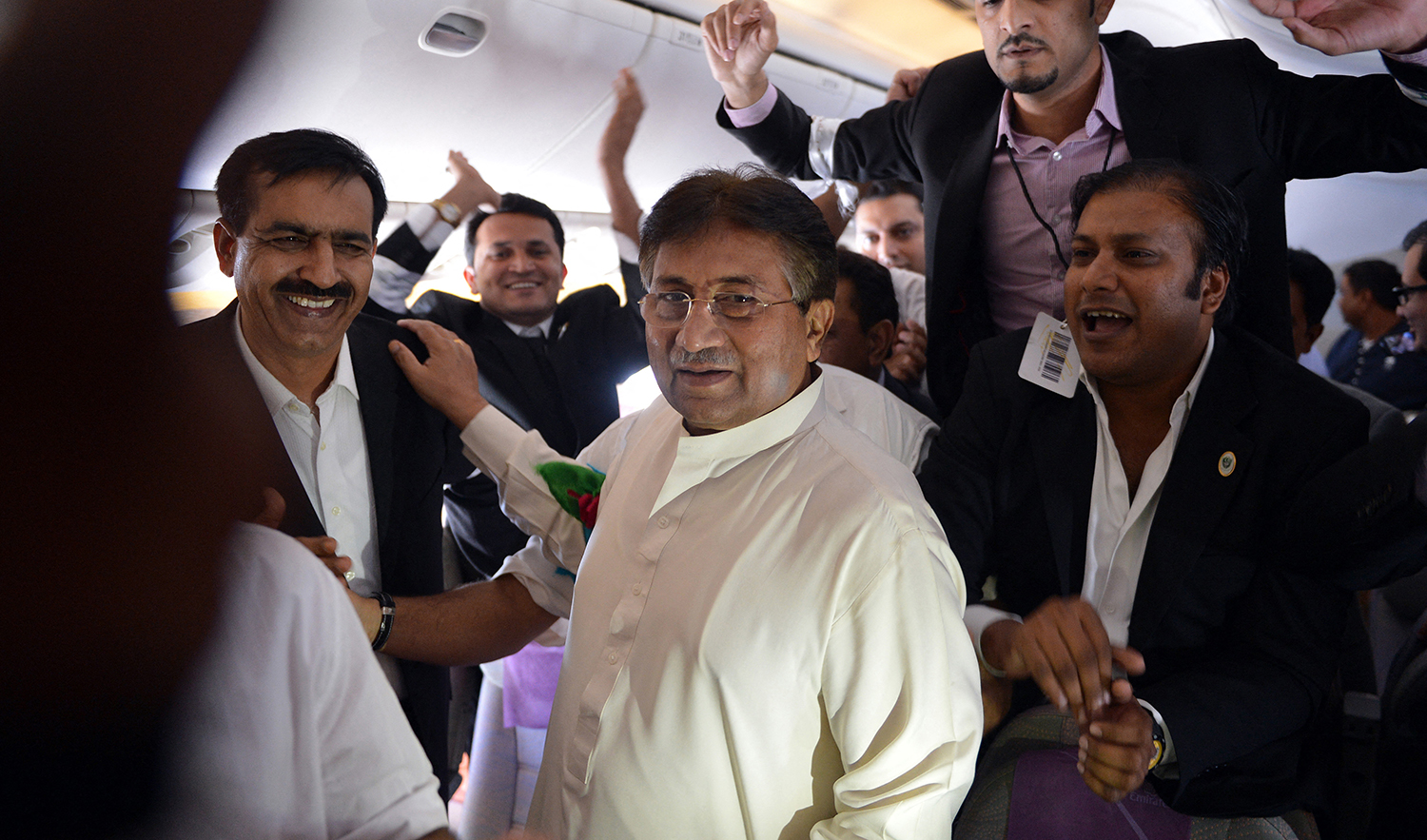
On March 24, 2013, Musharraf returned to Pakistan after more than four years in exile to contest in general elections. (AFP/File)
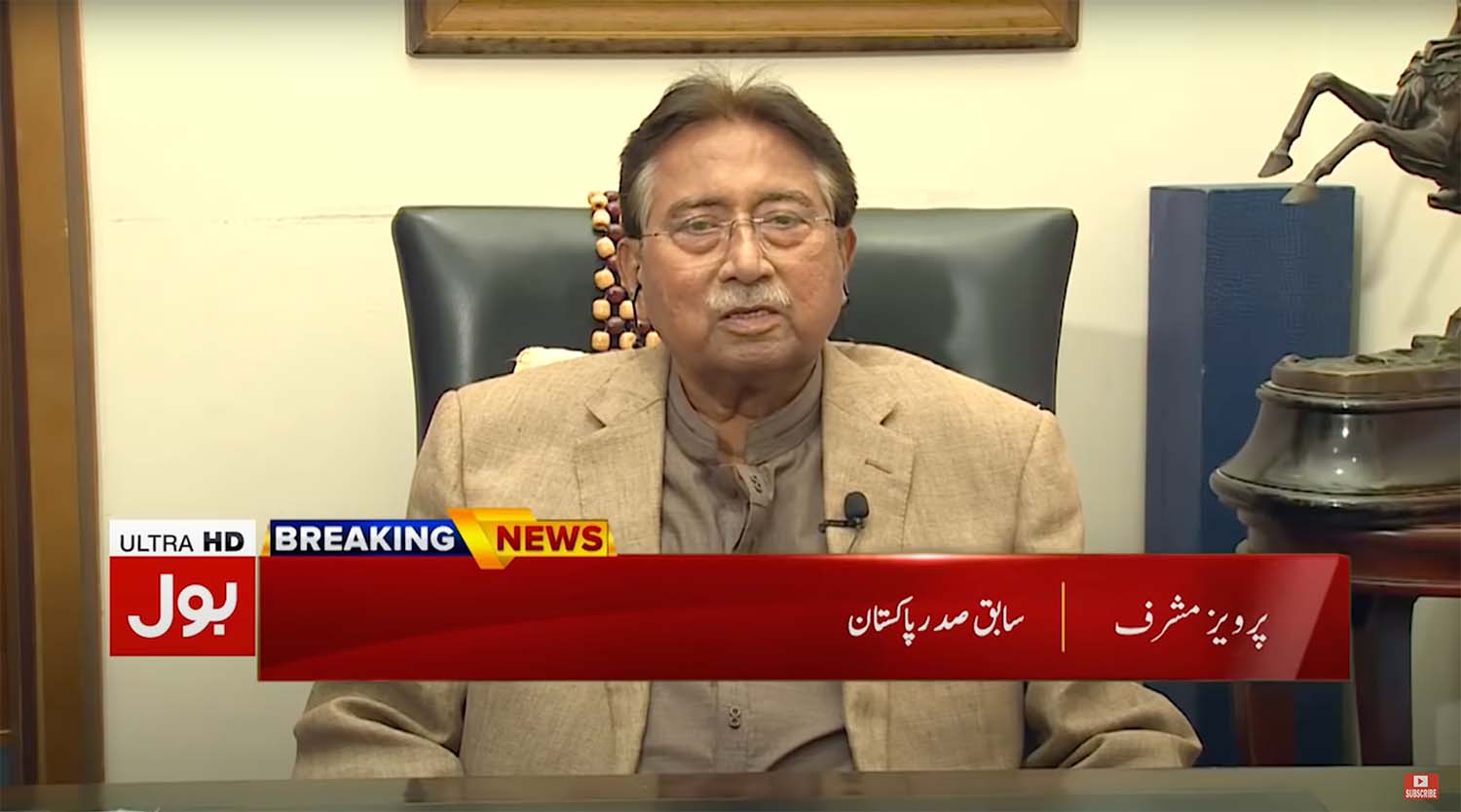
Former president Pervez Musharraf launched a career as a TV analyst on February 27, 2017. (Photo courtesy: Bol Tv)
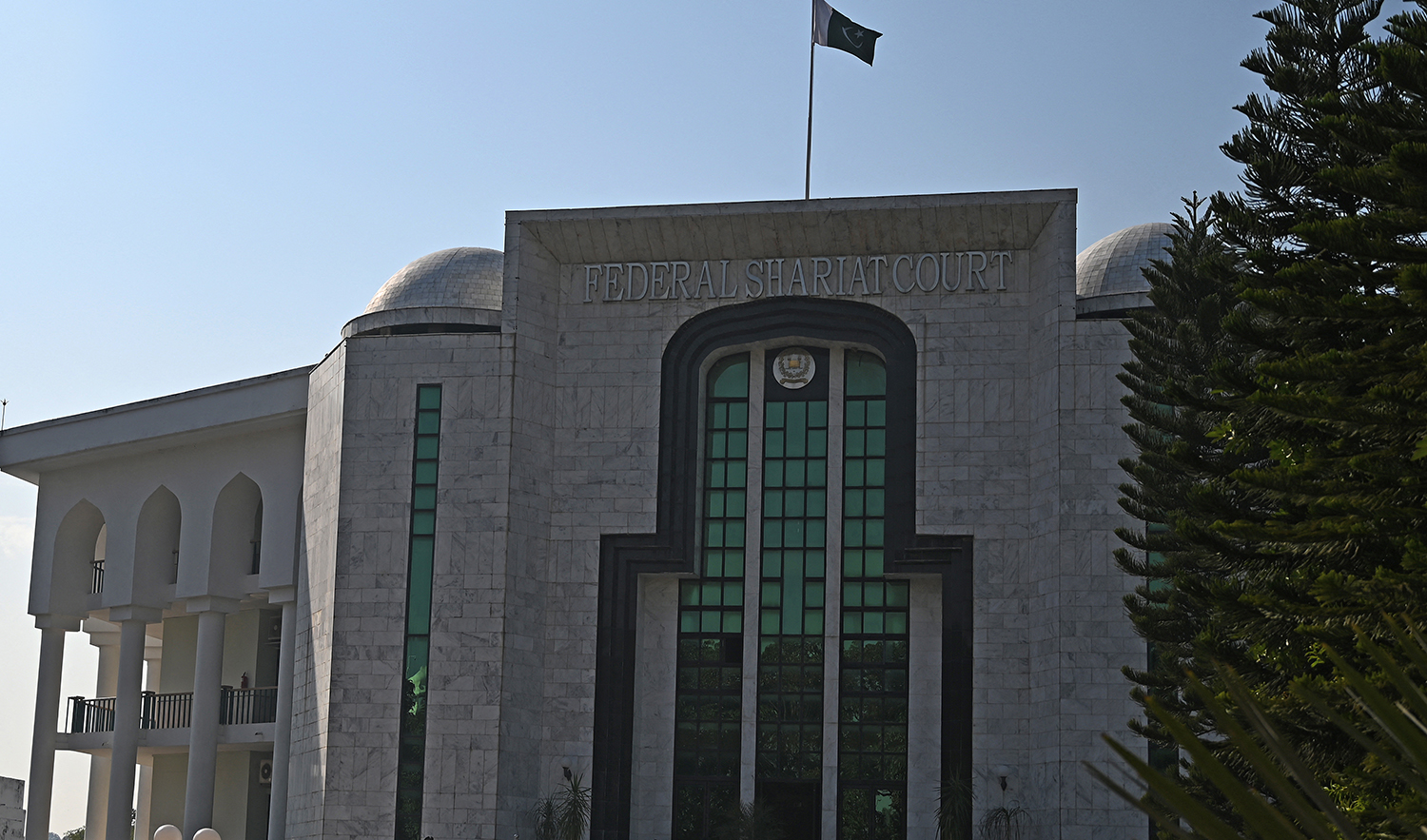
A special court on December 17, 2019, sentenced former military ruler Pervez Musharraf in absentia to death for treason. (AFP/File)
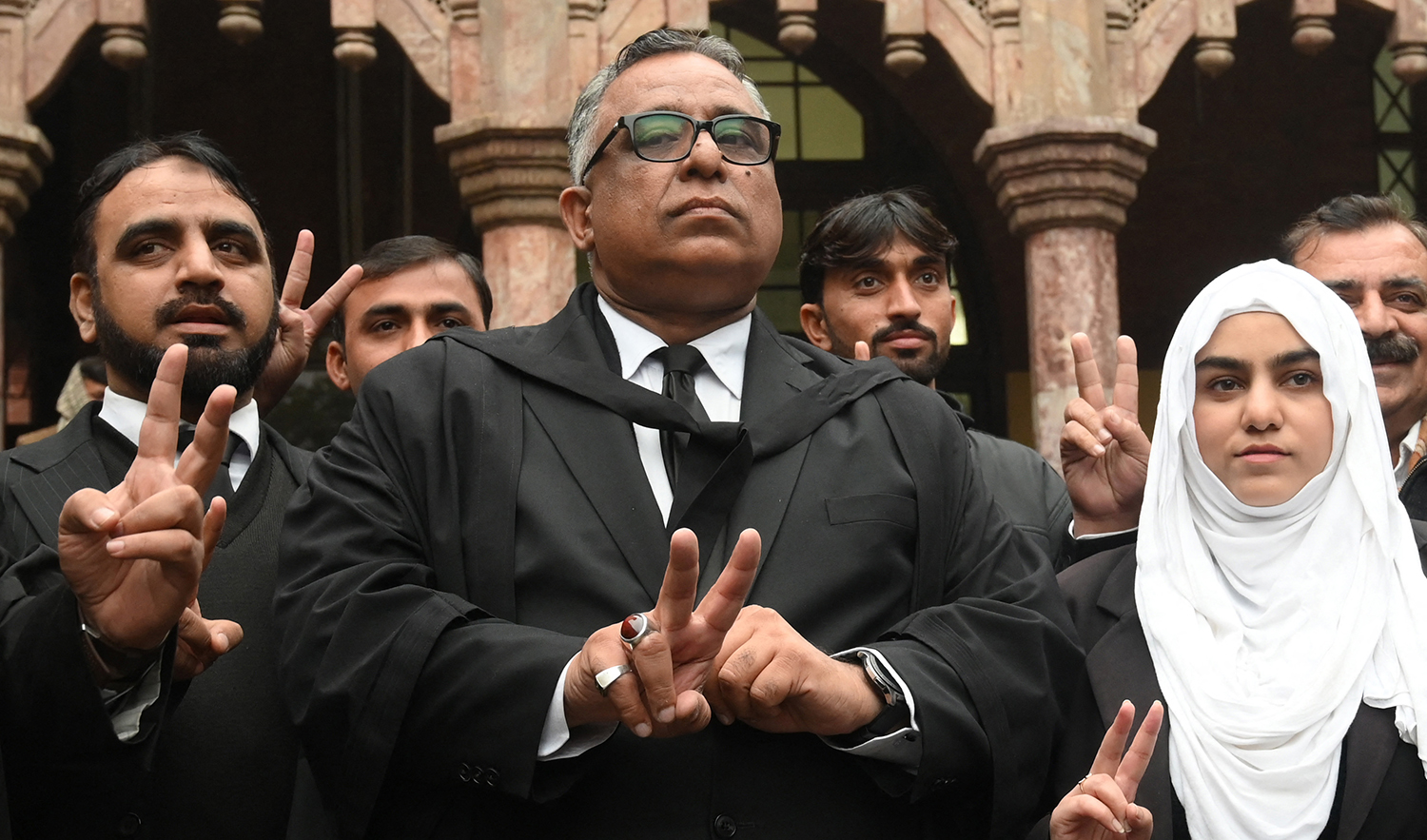
Azhar Siddique, the lawyer of Musharraf, gestures along with team members outside the Lahore High Court on January 13, 2020 after the court annulled the death sentence handed to the former president, ruling that the special court which had found him guilty of treason in 2019 was unconstitutional. (AFP/File)


