Karachi’s ‘seafood heaven’ offers unique gastronomical experience to fish lovers

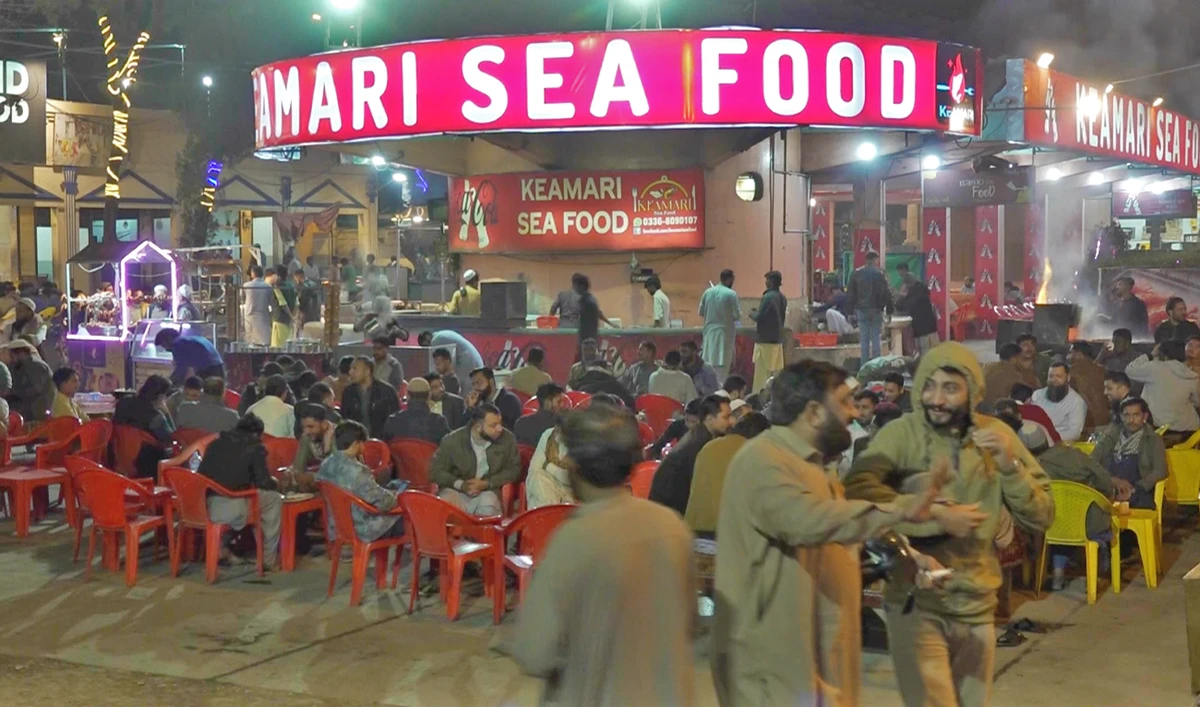
The picture taken on February 2, 2023 shows a food joint called Keamari Seafood in Karachi, Pakistan. (AN Photo)
Short Url
Updated 05 February 2023
Follow

Karachi’s ‘seafood heaven’ offers unique gastronomical experience to fish lovers

  • Situated right next to Pakistan’s largest port, Seafood Street offers a variety of fish in different forms
  • The area housed only a few shops a few decades ago before it turned into a major spot for families

KARACHI: People in Pakistan’s southern Karachi port city usually avoid using the busy Napier Mole Road on winter evenings due to huge trailers causing traffic congestion, but hundreds of them can now be seen on this route in their vehicles while trying to reach to a street that is popularly known as “seafood heaven” to tantalize their tastebuds.

Known for its diverse and multicultural environment, Karachi offers a variety of cuisines that can be found in different corners of the city. Seafood Street, which is situated in the midst of centuries-old buildings near the country’s largest port, is yet another addition to the thriving food culture of the seaside metropolis.

A few decades ago, the area only housed a few shops, mostly serving fried fish cooked in large woks. But now, the street has dozens of small kiosks, or “fish points” as people prefer to call them, that serve croaker, silver pomfret, rasbora dandia and red snapper cooked in a variety of ways before being served with chutney and flatbread.

“My father started [selling] fish here,” Muhammad Rashid, owner of Rashid Seafood, told Arab News. “Then my brother came in. But when I took over, I started offering fish barbecue [using] my mother’s [recipe].”
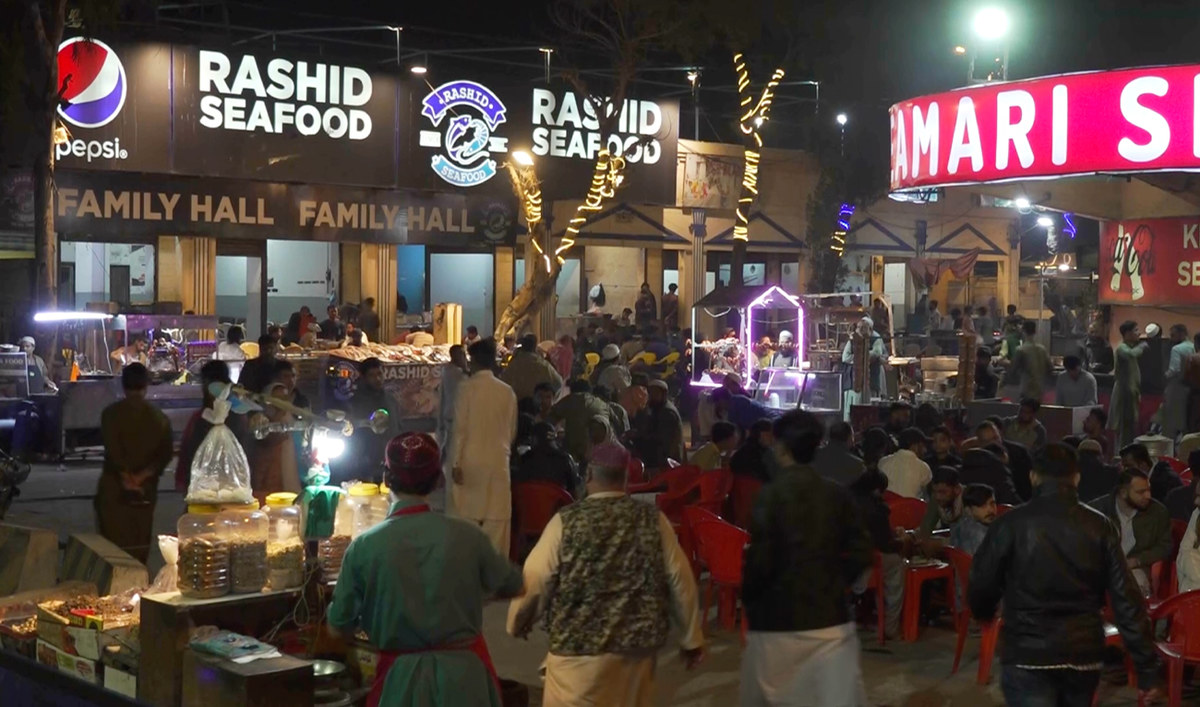


The picture taken on February 2, 2023, shows a food joint called Rashid Seafood in Karachi, Pakistan. (AN Photo)

He said that his idea of adding grilled fish to the menu was an instant hit and changed the course of his business.

While the variety of fish offered by food stalls became the unique selling point of the street, Keamari Sea Food, another food joint, came up with the idea of creating a seating area for families. The model was also adopted by others, including Rashid. Muhammad Usman, the owner of the eatery who first took this initiative, said the street started becoming famous after families started visiting it in 2019.

“Another attraction of this market is that the prices are reasonable,” he said while speaking to Arab News. “The fish is fresh out of the water [because] the sea is close to us.”

Usman added that foreigners, including many Arabs, had started visiting the place after it earned its fame.

While people throng the street to enjoy a wide variety of fish, prawn karahi and crab soup are other major attractions for foodies amid winter season.
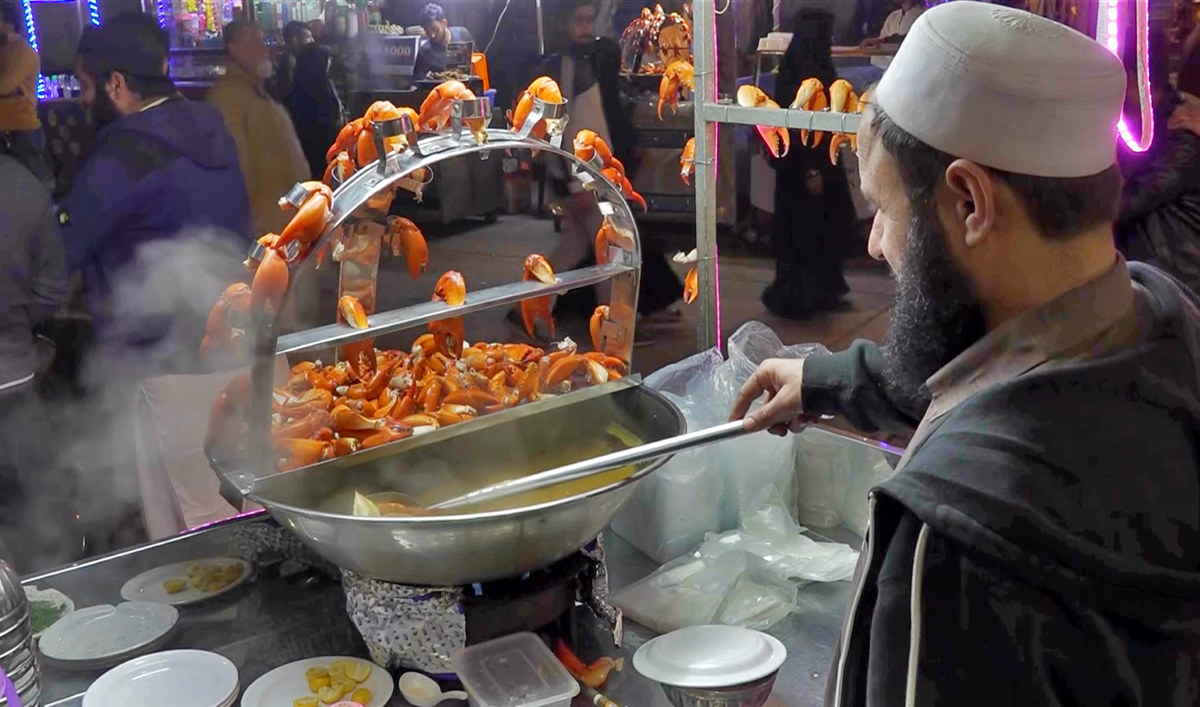


The picture taken on February 2, 2023, shows a man cooking crab soup in Karachi, Pakistan. (AN Photo)

“We tried grilled mushka [croaker] fish, grilled prawns, prawn karahi, and some white pomfret, and also their chow mein,” Siddiqa Asif, a visitor, said. 
“Everything was really good.”

Asif said it was a “great idea” to visit the place in winter, adding she wanted to try something more suitable for the season.

“It is quite far, and I think that’s also a kind of attraction for the people of Karachi that they are going somewhere to enjoy the weather and the food,” she said.

Afshan Asif, a housewife who visited the food street along with her family and ordered the famous prawn karahi, barbecue prawns, grilled croaker and red snapper, said it was her first experience with her family at the venue which had turned out to be “wonderful.”

“[It] felt good to come here,” she said. “Families have come over [too]. I didn’t expect to see families like this here, but it is good. The food is really good.

The weather is also better, and this is the best time to have fish or other seafood.”
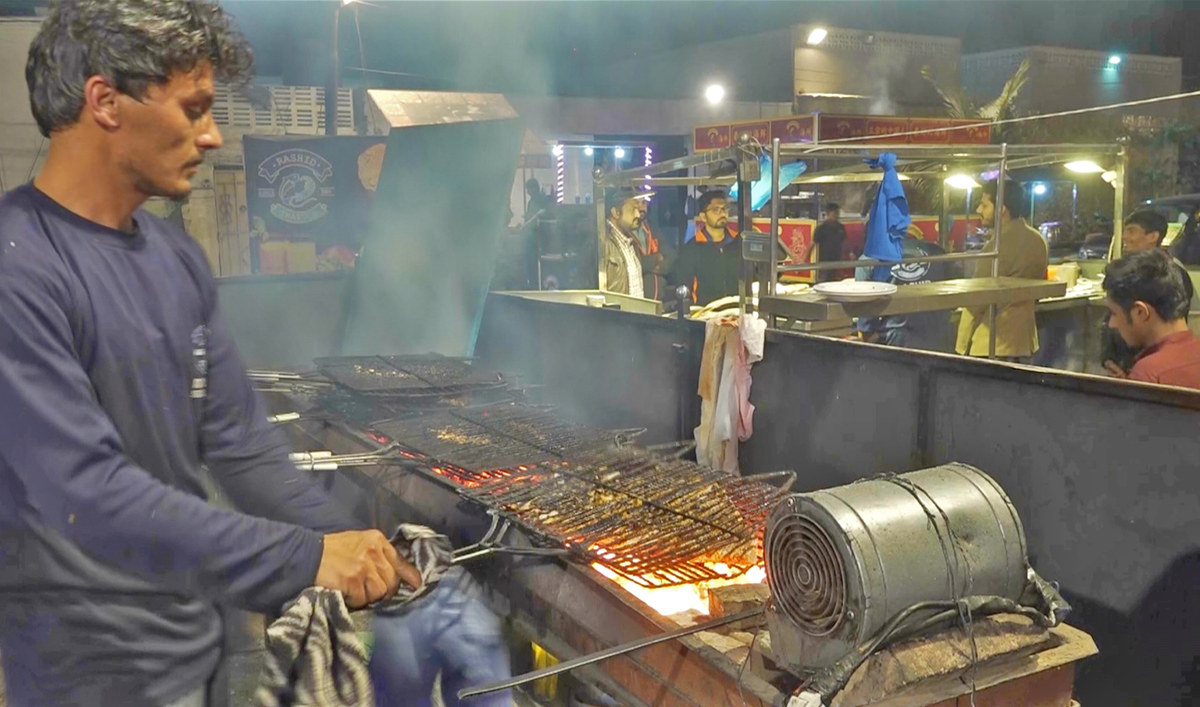


The picture taken on February 2, 2023, shows a man grilling a fish in Karachi, Pakistan. (AN Photo)

Asad Aftab, a Karachi-based businessman, said the proximity of the street to the sea and old buildings surrounding it add to its value, especially to people his age.

“I see heritage buildings [and] walls here made of blocks that used to be there in old times,” he said, “I felt as if I went back into my past.”

Aftab said everyone had a choice, but he strongly recommended people to visit the street since they would enjoy it.

“I am sitting in a very relaxed environment,” he said after finishing his meal. “The weather is also good today, it’s cold. Fish tastes even better in this weather.”

“Next time, I will return in summer and see how it feels,” he continued. “But [in] winter, street food and Keamari are a great combination.”

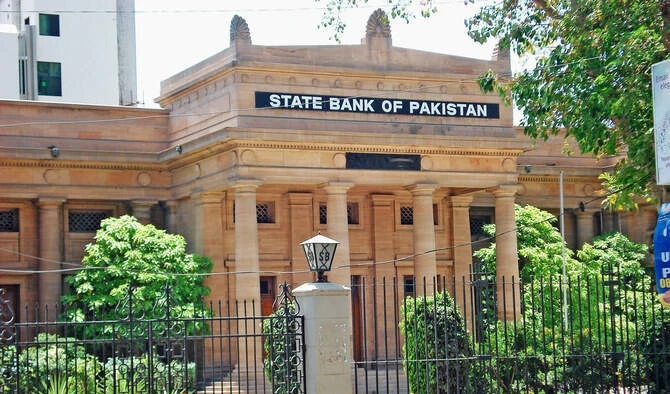
IMF warns against policy slippage amid weak recovery as it clears $1.2 billion for Pakistan

Updated 11 December 2025
Follow

IMF warns against policy slippage amid weak recovery as it clears $1.2 billion for Pakistan

  • Pakistan rebuilt reserves, cut its deficit and slowed inflation sharply over the past one year
  • Fund says climate shocks, energy debt, stalled reforms threaten stability despite recent gains

ISLAMABAD: Pakistan’s economic recovery remains fragile despite a year of painful stabilization measures that helped pull the country back from the brink of default, the International Monetary Fund (IMF) warned on Thursday, after it approved a fresh $1.2 billion disbursement under its ongoing loan program.

The approval covers the second review of Pakistan’s Extended Fund Facility (EFF) and the first review of its climate-focused Resilience and Sustainability Facility (RSF), bringing total disbursements since last year to about $3.3 billion.

Pakistan entered the IMF program in September 2024 after years of weak revenues, soaring fiscal deficits, import controls, currency depletion and repeated climate shocks left the economy close to external default. A smaller stopgap arrangement earlier that year helped avert immediate default, but the current 37-month program was designed to restore macroeconomic stability through strict monetary tightening, currency adjustments, subsidy rationalization and aggressive revenue measures.

The IMF’s new review shows that Pakistan has delivered significant gains since then. Growth recovered to 3 percent last year after shrinking the year before. Inflation fell from over 23 percent to low single digits before rising again after this year’s floods. The current account posted its first surplus in 14 years, helped by stronger remittances and a sharp reduction in imports. And the government delivered a primary budget surplus of 1.3 percent of GDP, a key program requirement. Foreign exchange reserves, which had dropped dangerously low in 2023, rose from US$9.4 billion to US$14.5 billion by June.

“Pakistan’s reform implementation under the EFF arrangement has helped preserve macroeconomic stability in the face of several recent shocks,” IMF Deputy Managing Director Nigel Clarke said in a statement after the Board meeting.

But he warned that Islamabad must “maintain prudent policies” and accelerate reforms needed for private-sector-led and sustainable growth.

The Fund noted that the 2025 monsoon floods, affecting nearly seven million people, damaging housing, livestock and key crops, and displacing more than four million, have set back the recovery. The IMF now expects GDP growth in FY26 to be slightly lower and forecasts inflation to rise to 8–10 percent in the coming months as food prices adjust.

The review warns Pakistan against relaxing monetary or fiscal discipline prematurely. It urges the State Bank to keep policy “appropriately tight,” allow exchange-rate flexibility and improve communication. Islamabad must also continue raising revenues, broadening the tax base and protecting social spending, the Fund said.

Despite the progress, Pakistan’s structural weaknesses remain severe.

Power-sector circular debt stands at about $5.7 billion, and gas-sector arrears have climbed to $11.3 billion despite tariff adjustments. Reform of state-owned enterprises has slowed, including delays in privatizing loss-making electricity distributors and Pakistan International Airlines. Key governance and anti-corruption reforms have also been pushed back.

The IMF welcomed Pakistan’s expansion of its flagship Benazir Income Support Program, which raises cash transfers for low-income families and expands coverage, saying social protection is essential as climate shocks intensify. But it warned that high public debt, about 72 percent of GDP, thin external buffers and climate exposure leave the country vulnerable if reform momentum weakens.

The Fund said Pakistan’s challenge now is to convert short-term stabilization into sustained recovery after years of economic volatility, with its ability to maintain discipline, rather than the size of external financing alone, determining the durability of its gains.