

Toyota manufacturer shuts down Pakistan plant for two weeks amid supply chain disruptions 

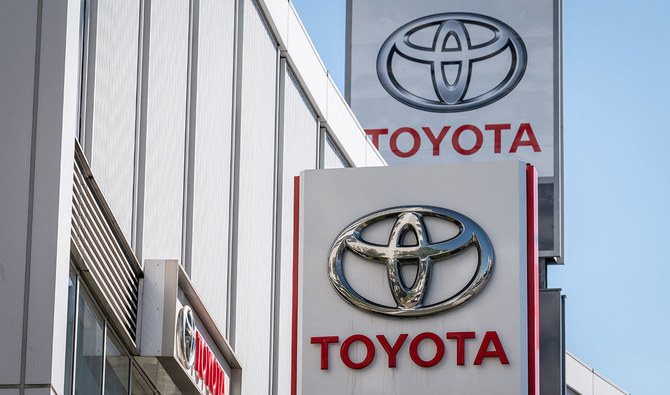
This picture taken on October 31, 2022 shows the logo of Toyota Motor displayed at a car showroom in Tokyo. (AFP)
Short Url
Updated 31 January 2023
Follow

Toyota manufacturer shuts down Pakistan plant for two weeks amid supply chain disruptions 

  • The company says it has insufficient inventory levels and is unable to continue production 
  • Pakistan has banned import of goods, including industrial raw materials, amid dollar crunch 

ISLAMABAD: The Indus Motor Company (IMC), which manufactures Toyota vehicles in Pakistan, has “completely” shut down its plant for two weeks, amid supply chain disruptions due to a ban on the import of raw materials. 

The Pakistani government has banned the import of goods, including industrial raw materials, to stop dollar outflows as the South Asian country’s foreign exchange reserves have depleted to $3.6 billion. 

Commercial banks in Pakistan have been advised to facilitate imports of specified sectors, mainly energy and food. Consequently, they have stopped issuing letters of credit (LCs), leaving importers struggling to arrange the greenback for already placed orders. 

“The company and its vendors continue to face major hurdles in import of raw materials and receiving clearance of their consignments from commercial banks. This has disrupted the entire supply chain and the vendors are unable to supply raw materials and components to the company,” the IMC said in a disclosure to the Pakistan Stock Exchange Limited on Tuesday. 

“In view of the above, the company has decided to completely shut down its plant from 1st February, 2023 to 14th February, 2023. Moreover, the company has also decided to start its production on single shift basis from 15th February, 2023 until further notice.” 

Cash-strapped Pakistan has been desperately looking to secure external financing, amid a severe foreign liquidity crunch, currency devaluation and more than 24 percent inflation. 

The South Asian country is currently holding talks with the International Monetary Fund (IMF) for the resumption of its $7 billion loan program, which has been stalled since September last year. 

A successful review of the program will result in the release of a much-needed $1.2 billion to Islamabad to meet its international financing obligations. 


US envoy, military officials attend Pakistan-US counterterrorism exercise

Updated 8 sec ago
Follow

US envoy, military officials attend Pakistan-US counterterrorism exercise

  • Exercise Inspired Gambit-2026 marks 13th round of Pakistan-US counterterrorism training
  • US Chargé d’Affaires Natalie Baker observed the drills with senior American military officials

ISLAMABAD: The top US diplomat in Pakistan, accompanied by senior American military officials, on Thursday observed joint counterterrorism drills conducted by Pakistani and US troops aimed at improving how the two forces operate together, Pakistan’s military said.

The drills are part of Exercise Inspired Gambit–2026 that is being held from Jan. 8 to Jan. 16 at the National Counter Terrorism Center in Pabbi, situated in the Punjab province, marking the 13th iteration of the bilateral training series since it began in 1995.

“Distinguished Visitors’ Day ceremony was held on 15 January 2026 at the National Counter Terrorism Center, Pabbi,” the military’s media wing, Inter-Services Public Relations (ISPR), said in a statement. “Her Excellency Ms. Natalie Baker, Chargé d’Affaires of the United States of America to Pakistan, accompanied by senior US military dignitaries, and Commander Rawalpindi Corps graced the occasion.”

“The visitors were briefed on the scope, objectives, and conduct of the exercise,” it added. “A high level of professionalism and competence was demonstrated by participants of both armies, which was appreciated by the visiting dignitaries.”

Pakistan and the United States have maintained close defense and security ties for decades, working together during the Cold War era, especially after the 1979 Soviet invasion of Afghanistan.

The relationship continued following the US-led intervention in Afghanistan after the Sept. 11, 2001, attacks, though cooperation became strained at times due to policy differences.

ISPR said the exercise was meant to enhance bilateral military cooperation through the exchange of counterterrorism experience, refinement of drills and procedures and the development of interoperability.