
TEHRAN: Iranian authorities have imposed a travel ban on leading filmmaker Masud Kimiai, local media reported Monday, after he expressed support for protests that have gripped the country for months.
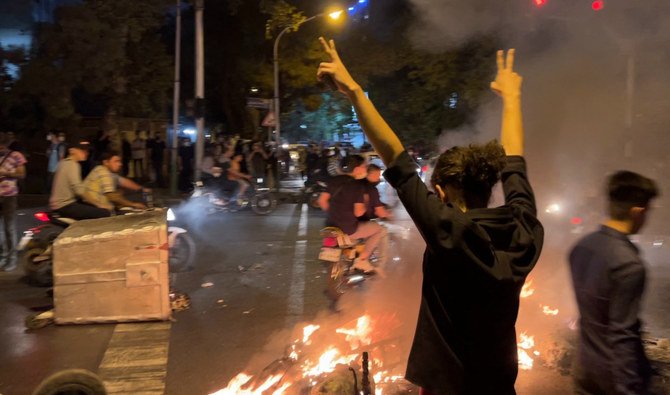
Iran has seen a wave of demonstrations that erupted after the Sept. 16 death in custody of 22-year-old Mahsa Amini, an ethnic Kurd, following her arrest for allegedly violating the country’s strict dress code for women.

Masud Kimiai
“The filmmaker, who wanted to go to the Netherlands on Sunday evening to participate in the Rotterdam film festival, was banned from leaving the airport,” the local Tehran daily Hamshahri said on its website.
In a video on Sept. 22, days after the protests broke out, Kimiai had said he was “standing with the people.”
Kimiai, 81, is considered a pioneer of modern Iranian cinema, having gained acclaim with his 1969 film “Qeysar,” which was released 10 years before the Islamic revolution.
The filmmaker was due to travel to the Netherlands for the screening of his latest film, “Killing the Traitor,” a historical melodrama set in 1950s Iran.
The 2022 film, described as a “sepia-tinted melodrama” on the Rotterdam festival’s website, tackles the period when then-Prime Minister Mohammad Mossadegh nationalized Iran’s oil industry.
Mossadegh was ousted in a 1953 coup orchestrated by London and Washington.
Several high-profile Iranian filmmakers and actors have been questioned or arrested by the authorities after expressing support for the wave of protests.
Separately, Azerbaijan said on Monday it was suspending work at its embassy in Iran, days after a gunman stormed the mission, killing one guard and wounding two others. Iran has said the attack on Friday was motivated by personal reasons but Baku labeled it an act of terrorism.
“The operation of the Azerbaijan Embassy in Iran has been temporarily suspended following the evacuation of its staff and their family members from Iran,” Azerbaijani Foreign Ministry spokesman Ayxan Hacizada said.
“That doesn’t mean that diplomatic ties had been severed,” he said, adding that Baku’s consulate general in the Iranian city of Tabriz was “up and running.”
In a phone call on Saturday with his Iranian counterpart Ebrahim Raisi, Azerbaijani President Ilham Aliyev said he hoped “this violent act of terror would be thoroughly investigated.”
Tehran’s police said the attacker, who was arrested, was an Iranian man married to an Azerbaijani woman.
The US condemned “unacceptable violence” and urged a prompt investigation. Russia’s Foreign Ministry said Moscow was “shocked” by the attack.
Iran is home to millions of Turkic-speaking, ethnic Azeris and it has long accused Azerbaijan of fomenting separatist sentiment inside its territory.
Relations between the two countries have traditionally been sour, with the former Soviet republic a close ally of Iran’s historical rival Turkiye.