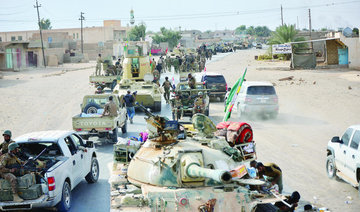
BEIRUT: Seven people have been killed after air strikes destroyed a convoy of trucks carrying arms into eastern Syria from Iraq, a war monitor said Monday.
The seven were “truck drivers and their assistants, all of them non-Syrians,” the Syrian Observatory for Human Rights said, adding that they were “killed as a result of unidentified aircraft targeting a convoy of Iran-backed groups, last night.”
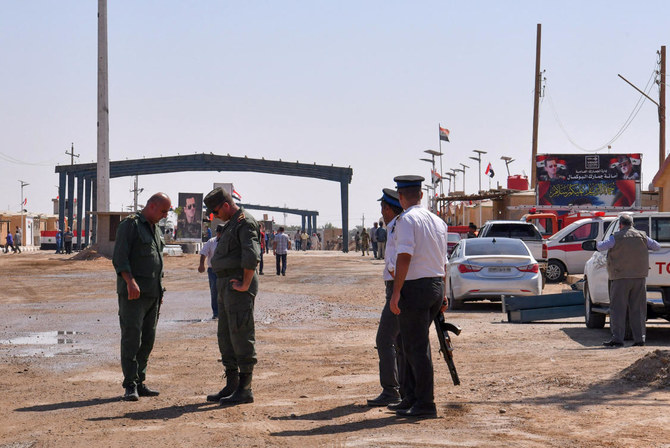
The strikes destroyed a convoy of six refrigerated trucks transporting Iranian weapons in the Albu Kamal border region, the Observatory, which has a wide network of sources inside Syria, had said Sunday.
No country claimed the strikes, but Israel has carried out hundreds of air and missile strikes against Iran-backed and government forces in Syria, where the US military is also active.
“The trucks were transporting Iranian weapons,” Observatory chief Rami Abdel Rahman had told AFP Sunday.
Tehran provides military support to its ally Damascus in Syria’s civil war, including through armed factions.
The strikes hit a convoy of trucks, but also the headquarters of Iran-backed groups in the area, activist Omar Abu Layla, who heads the Deir Ezzor 24 media outlet, told AFP Monday.
“There was heavy damage in the area that was struck,” he said.
A pro-Syrian government radio station had reported Sunday that “unidentified war planes targeted, in a number of raids, six refrigerated trucks,” without providing further details.
The Observatory said at least two similar convoys had entered Syria from Iraq this week, offloading their cargo to pro-Iran groups in the eastern town of Al-Mayadeen.
Pro-Iran militias, including Lebanon’s powerful Hezbollah group, have a major presence around the Iraq-Syria border, and are heavily deployed south and west of the Euphrates in Syria’s Deir Ezzor province.
Both Albu Kamal and Al-Mayadeen are in Deir Ezzor, and Albu Kamal has seen similar strikes in the past.
The Observatory said in November that a strike in the area hit a pro-Iran militia convoy of “fuel tankers and trucks loaded with weapons,” killing at least 14, though an Iraqi border guard official said there were no casualties.
In December, Israel’s military chief Aviv Kohavi said his country had launched the raid, adding that the convoy was carrying weapons bound for Lebanon where Hezbollah has an influential role.
A US-led coalition fighting the remnants of the Daesh group in Iraq and Syria has carried out strikes on pro-Iran fighters in Syria in the past.
Israel has also acknowledged carrying out hundreds of air and missile strikes in the country since civil war broke out in 2011.


![]()

Seven dead in strikes on arms convoy in Syria: monitor
Short Url
https://arab.news/n5wfq
Seven dead in strikes on arms convoy in Syria: monitor
- The strikes destroyed a convoy of six refrigerated trucks transporting Iranian weapons in the Albu Kamal border region
- No country claimed the strikes, but Israel has carried out hundreds of air and missile strikes against Iran-backed and government forces in Syria

Latest updates




© 2026 SAUDI RESEARCH & PUBLISHING COMPANY, All Rights Reserved And subject to Terms of Use Agreement.