
ABHA: For centuries, mountain tribes have maintained their traditional way of life in some of the world’s most isolated places, preserving a distinctive linguistic and cultural heritage that is rarely seen or heard by wider society.
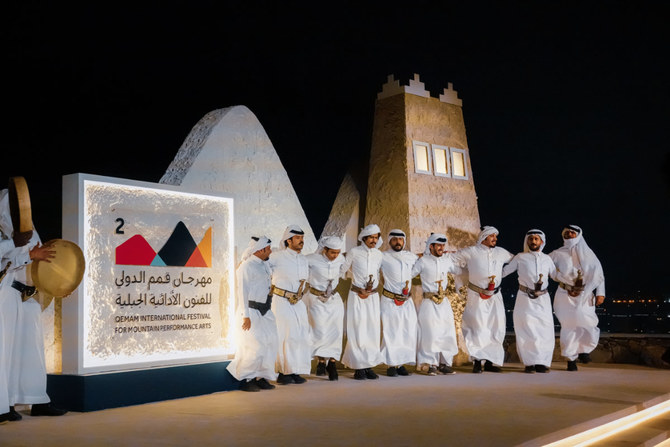
That is why Saudi Arabia’s southwestern Asir region recently hosted the second annual Qemam International Festival for Mountain Performing Arts, inviting 14 international groups and 16 Saudi ensembles to share their unique dance and storytelling traditions.
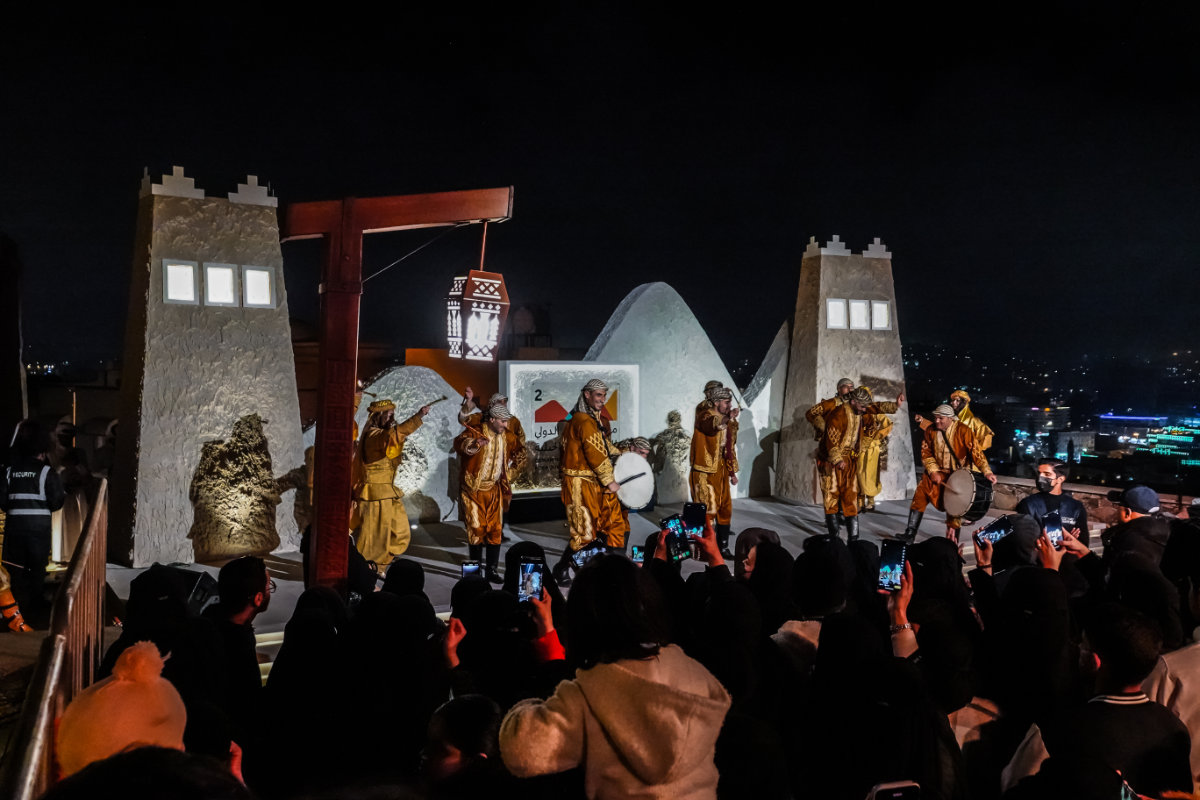
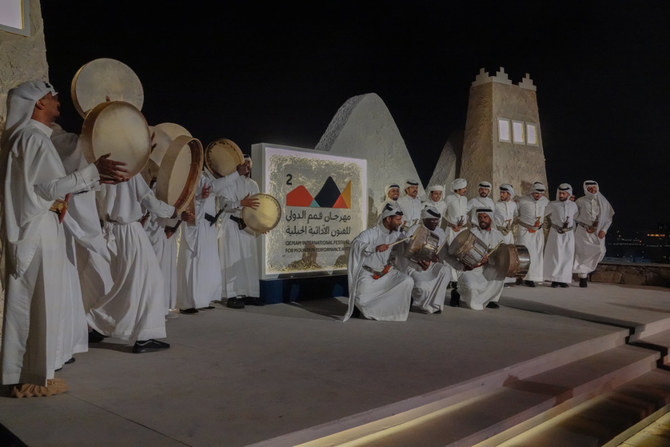
A international musical ensemble performs during the Qeman International Festival for Mountain Performing Arts in Abha. (Huda Bashatah/Arab News)
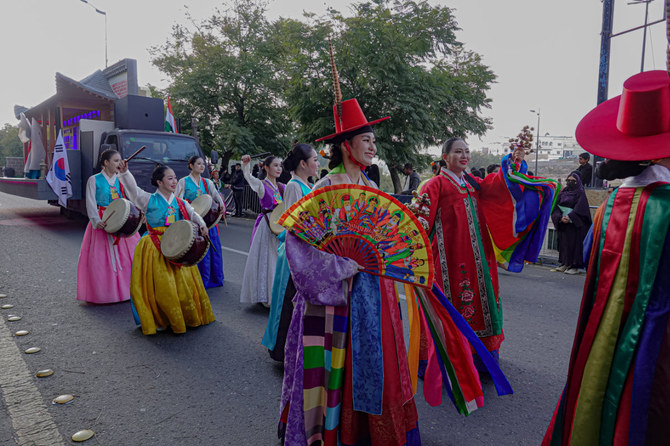
The week-long event, which closed on Jan. 27, is thought to be the world’s first festival dedicated to performing arts from mountainous regions, featuring acts from Morocco, China, South Korea, Switzerland and India, among other places, to explore their common themes of artistry.
Performances were held at Asir’s Malik Historical Palace, Al-Mushait Palaces, the Castles of Abu Nuqata Al-Mutahmi, Basta Al-Qabil, Abu Shahra Palace in Al-Masqi, Shamsan Castle and Bin Adwan Heritage Village.
Festival-goer Abdullah Al-Shehri rarely finds opportunities to expose his 4-year-old, Fahad, to his family’s Moroccan heritage. He was therefore thrilled to attend a performance of the Berber ahidouss dance by a visiting Moroccan folk troupe.
“This festival calls for people to see something new. There’s definitely much to see,” Al-Shehri told Arab News.
Abha was the first city in the Kingdom to win the Capital of Arab Tourism title in 2017. The Qemam festival is only the latest event in the region’s cultural calendar that is proving a draw for domestic and foreign tourists alike.
“I think the program will make Saudi Arabia an international center for mountain performing arts as it’s going to be an annual event and attract more and more participation from around the world. Hopefully, it will attract more tourism as well,” Sultan Al-Bazei, CEO of the Theater and Performing Arts Commission, told Arab News.
Last year’s festival saw a gathering of troupes from all of the Kingdom’s mountainous areas, from Tabuk in the north to Najran in the south. This year saw an expanded program, creating a cross-cultural dialogue between mountain cultures worldwide.
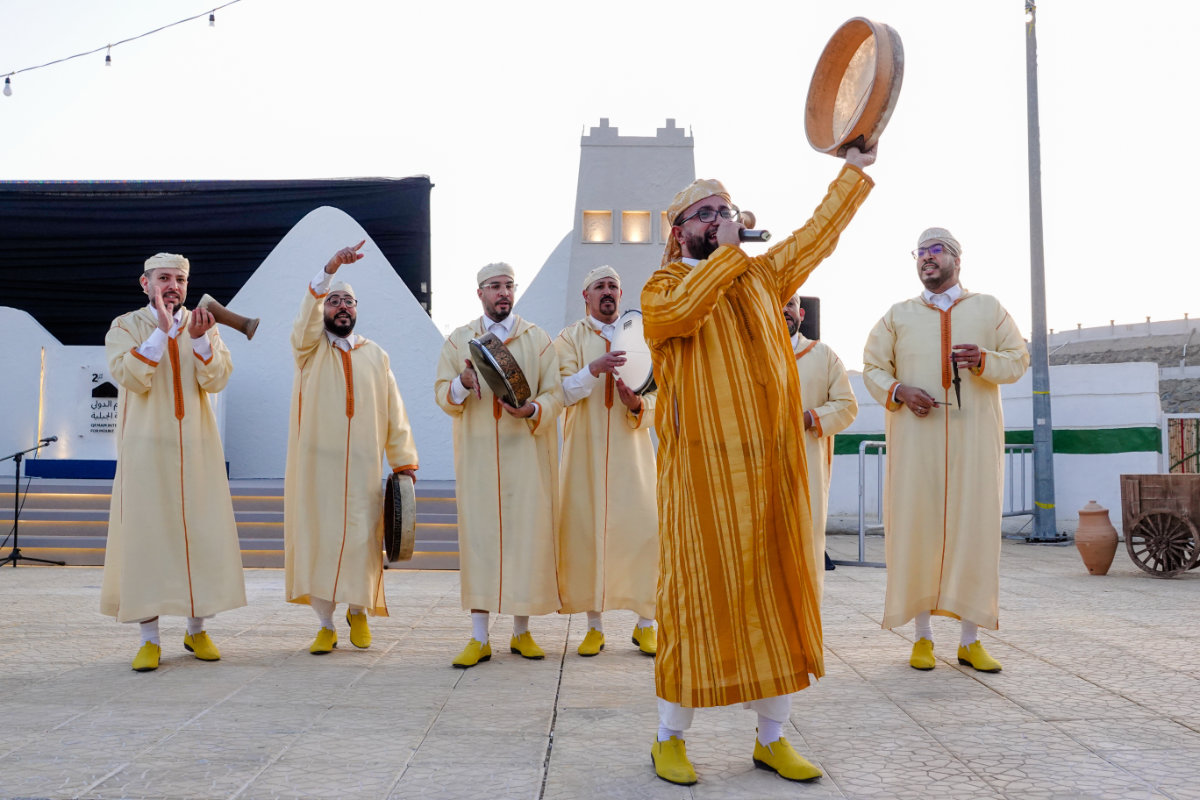
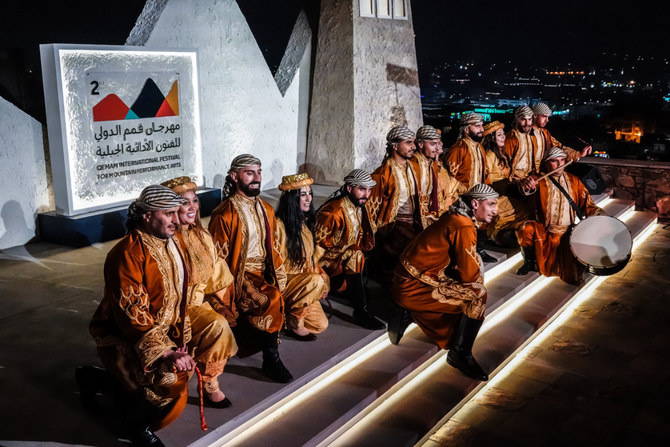
A international troupe performs during the Qeman International Festival for Mountain Performing Arts in Abha. (Huda Bashatah/Arab News)
“This will make it a unique opportunity for researchers to study the similarities, if there are any, or the differences between the performing arts of the mountain areas around the world,” Al-Bazei said.
“We think that most of the body movements have similarities of some sort. It’s very important for people to see other cultures, how they celebrate with dances and songs of their own.”
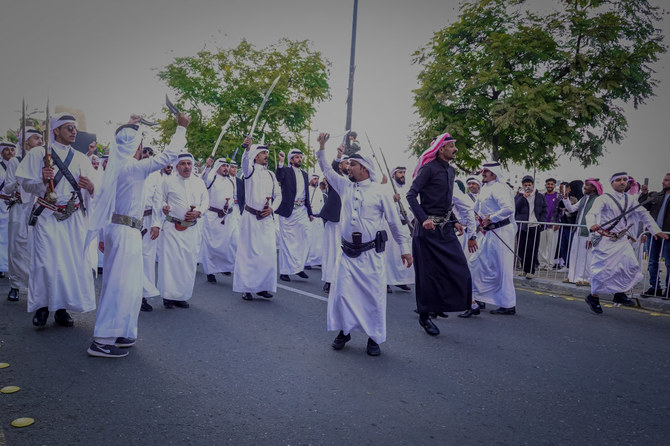
At the festival’s opening ceremony, the various international troupes performed together as part of a cross-cultural parade.
“During this parade, some of the groups were dancing together, sometimes to the tunes and rhythms of the others, which actually makes the point that culture and art bring people together,” Al-Bazei said.
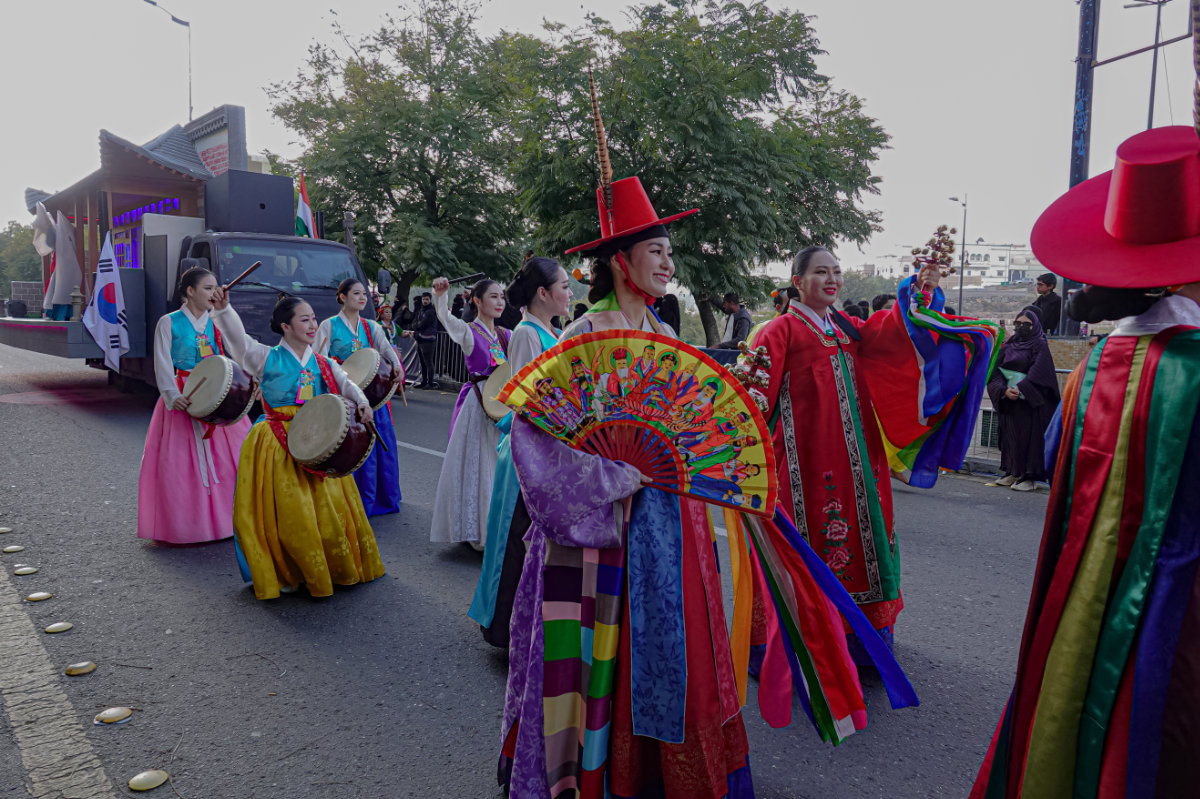
International troupes took part in the Qeman International Festival for Mountain Performing Arts opening and parade. (Huda Bashatah/Arab News)
Anthropologists and performers view folk dancing as a form of storytelling using a universal language.
“It’s like art. For us, it lives in our blood. It’s not only history. This is life, and if you come to our performance, you will see that every dancer’s eyes are happy. It’s our happiness to dance,” Bachana Chanturia, artistic director of the Georgian National Ensemble, told Arab News.
The group was first established in Sukhumi under the Ministry of Education and Culture of the Autonomous Republic of Abkhazia in 1931 with the name Apkhazeti. It later relocated to Tbilisi, Georgia, after the 1992 war.
Composed of 70 members, the group uses music and dance to showcase Georgian history. In contrast with most traditional dance companies within the region, the ensemble innovates traditional folklore by incorporating new trends, concepts, and modes of storytelling.
At the Qemam festival, the group performed a 20-minute show at the Shamsan Historical Palace consisting of three dances — shvante, chamba and vazha — earning perhaps the biggest round of applause of the entire festival.
Using quick, dynamic motions, the mixed-gender dance troupe’s performance tells the story of the Svanetians, a people of the highland region of Svaneti in northwest Georgia, near the border with Russia — a Caucasus area characterized by snow-capped peaks and deep gorges.
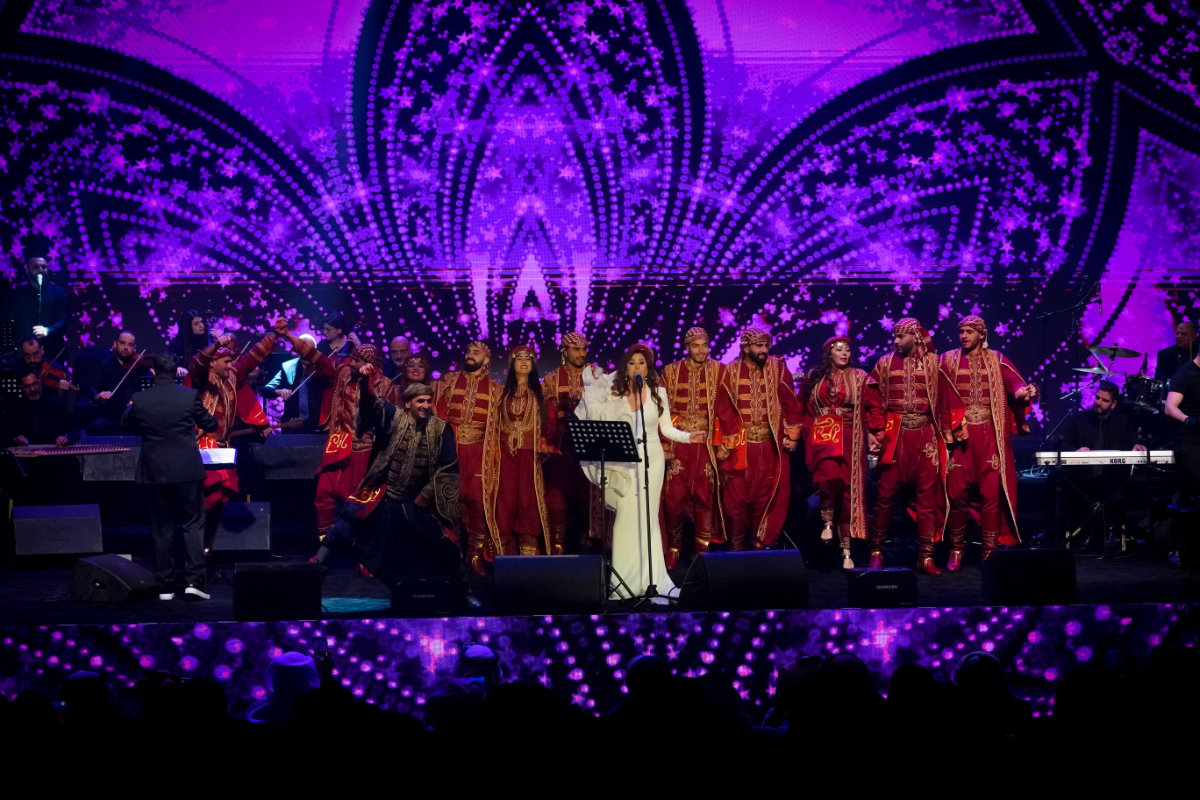
A international ensemble performs during the Qeman International Festival for Mountain Performing Arts in Abha. (Huda Bashatah/Arab News)
The group’s performance then transitions into a traditional Abkhazian dance, telling a thrilling story of a competitive horse race over the mountains, complete with equestrian clothing.
The dance is an emblem of love, courage, respect for women and competition through the imitation of mountain wildlife. The routine ends with the Vazha mountain sequence originating from Georigia’s Khazbegi region.
In Georgia, artistic performances are woven into the fabric of the community. From the age of 5 or 6, children are taught to dance, sing and play musical instruments and are later encouraged to join one of the many professional dance groups.
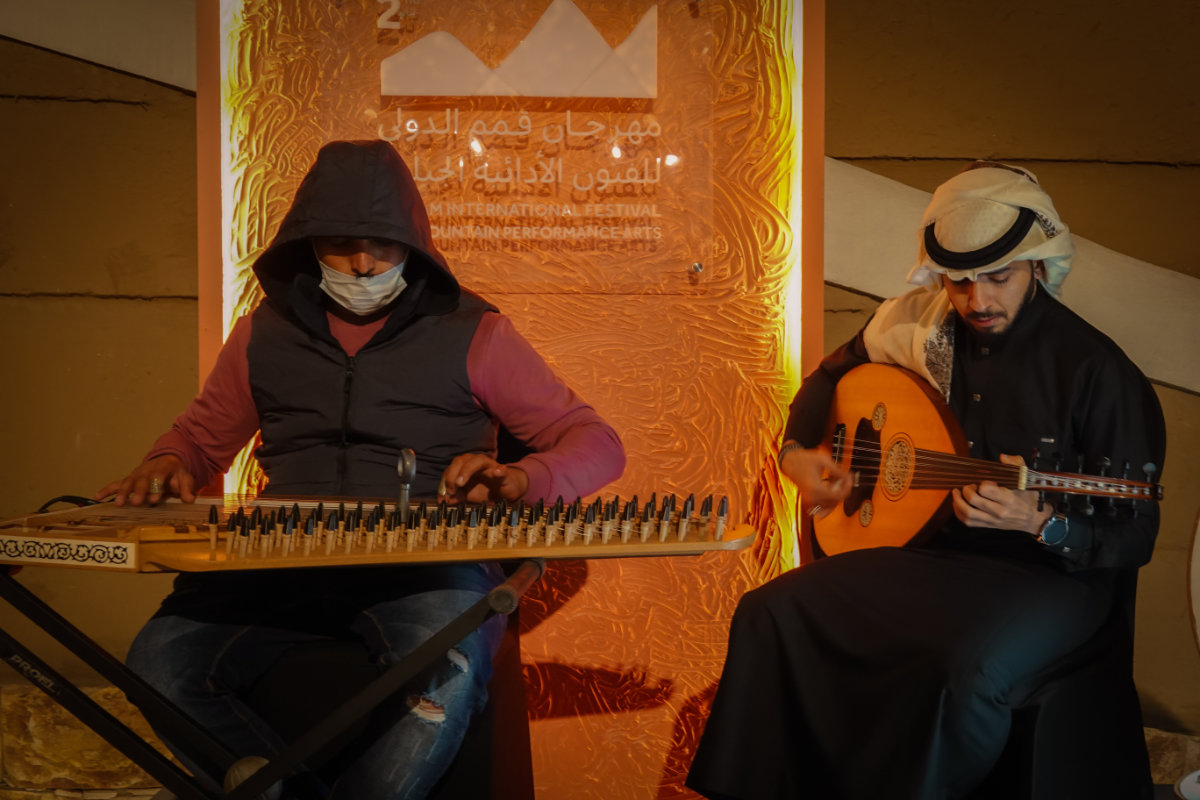
Musicians from various parts of the world take part in the Qemam International Festival in Abha. (Huda Bashatah/Arab News)
From the mountain city of Baysun, Uzbekistan, the song and dance ensemble Navbakhor brought the traditional Soul of Baysun dance to the peaks of Abha.
“It’s a special dance where they imitate some instruments, (wear special) hats, and each movement has an idea. It’s not just a dance, it’s a philosophy of the region of Uzbekistan,” Alibek Kabdurakhmanov, who heads the ensemble, told Arab News.
Under the Uzbekistan State Philharmonic, the group works to popularize the musical and choreographic arts of the country. Its members wear bright traditional clothing made from colorful shades and embroidered with gold thread.
According to Kabdurakhmanov, the group’s aim is to encapsulate the energy and universal message of peace embraced by the people of Baysun.
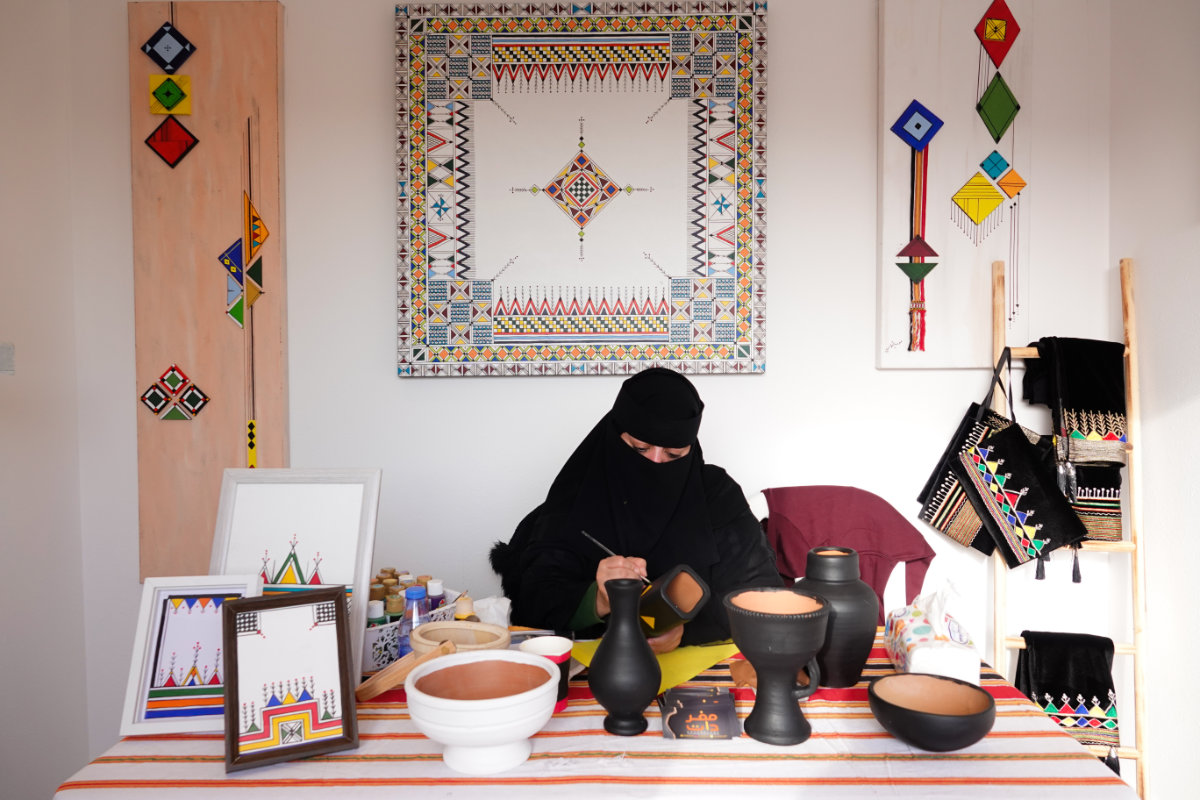
A Saudi artisan showcases her work as part of the festival in Abha. (Huda Bashatah/Arab News)
Kabdurakhmanov commended the Saudi Ministry of Culture for establishing the mountain performing arts festival and for prioritizing the preservation of cultural heritage.
“I think you will do very important things,” said Kabdurakhmanov. “When Uzbek nationals visit for the first time, they will see your history, your traditions, your culture, and take some part of you and bring it back to our country.
“I think it’s the most important part of development, and people in Saudi Arabia will see other cultures. It’s good for integration.”
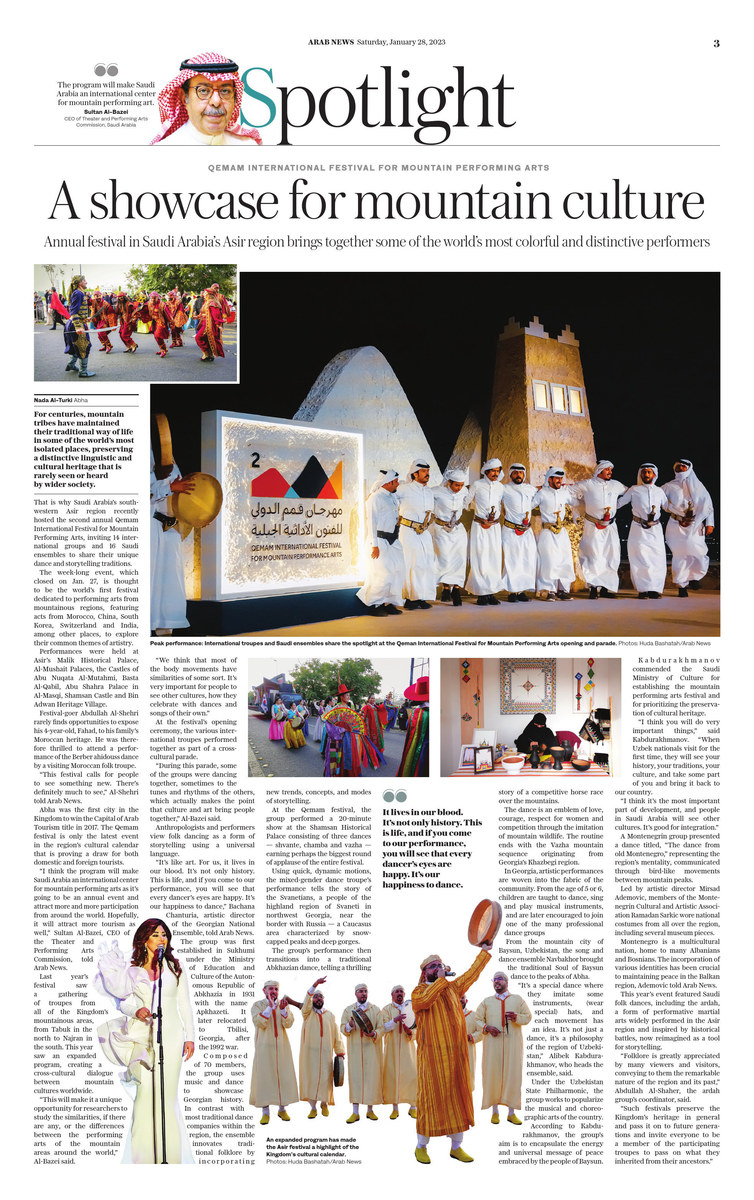
A Montenegrin group presented a dance titled, “The dance from old Montenegro,” representing the region’s mentality, communicated through bird-like movements between mountain peaks.
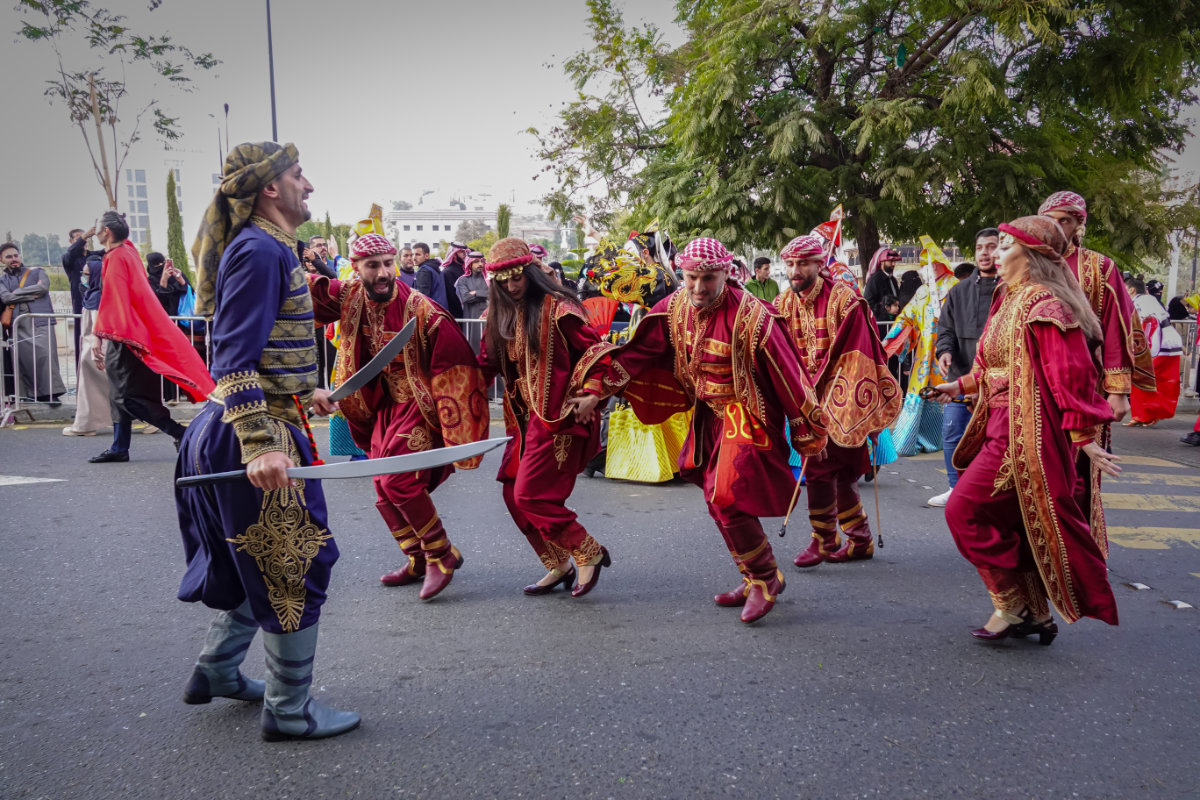
A Montenegrin troupe performs “The dance from old Montenegro.” (Huda Bashatah/Arab News)
Led by artistic director Mirsad Ademovic, members of the Montenegrin Cultural and Artistic Association Ramadan Sarkic wore national costumes from all over the region, including several museum pieces.
Montenegro itself is a multicultural nation, home to many Albanians and Bosnians. The incorporation of various identities has been crucial to maintaining peace in the Balkan region, Ademovic told Arab News.
He says the festival offered an opportunity for Montenegro and Saudi Arabia to connect through the art of storytelling.
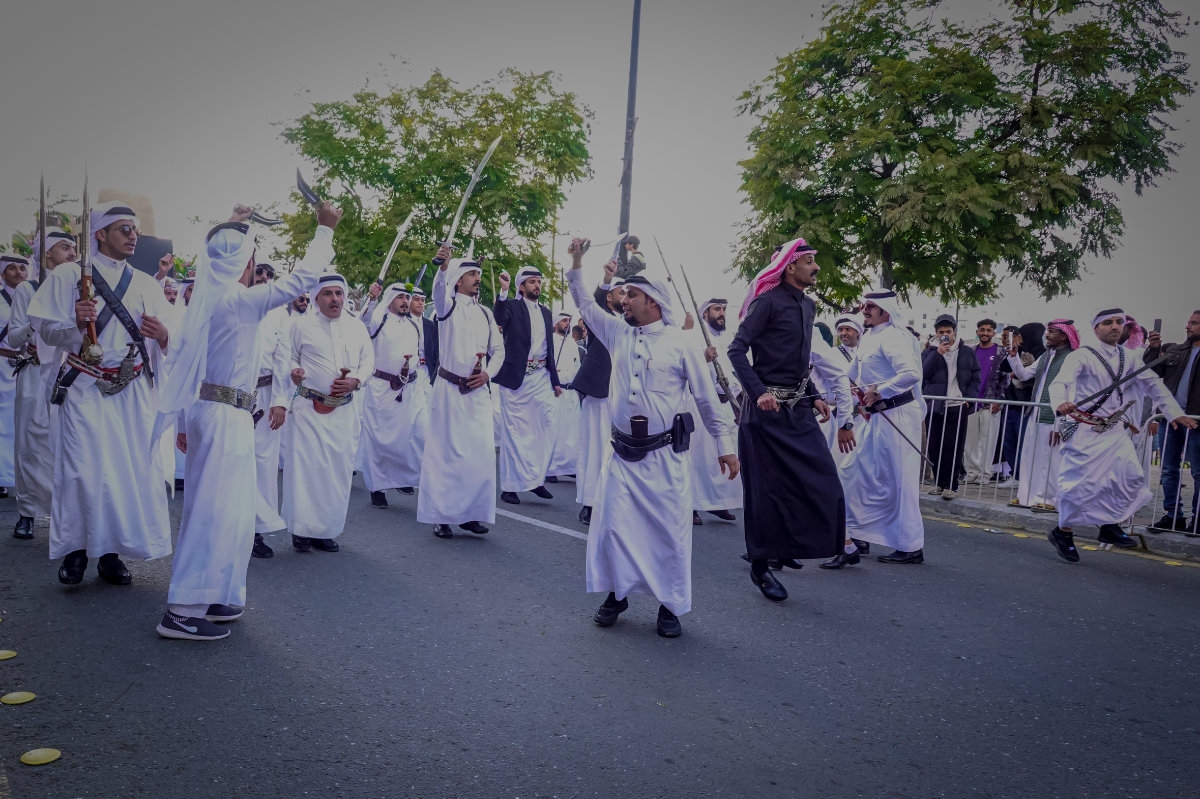
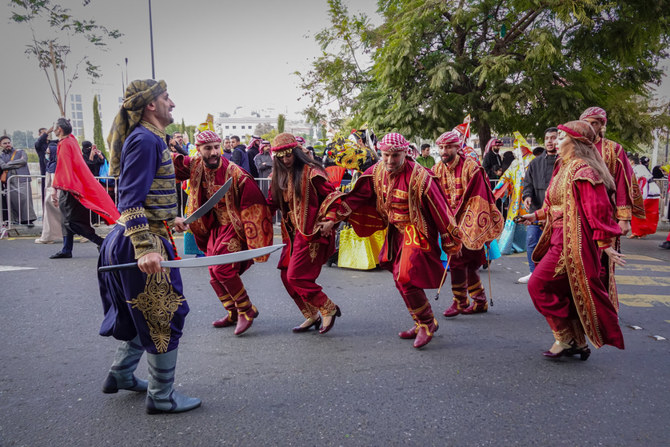
Saudi artists perform the traditional sword dance as they lead the parade during the opening day of the Qeman International Festival in Abha. (Huda Bashatah/Arab News)
This year’s event featured Saudi folk dances including the ardah, a form of performative martial arts widely performed in the Asir region and inspired by historical battles, now reimagined as a tool for storytelling.
“Folklore is greatly appreciated by many viewers and visitors, conveying to them the remarkable nature of the region and its past,” Abdullah Al-Shaher, the ardah group’s coordinator, told Arab News.
“Such festivals preserve the Kingdom’s heritage in general and pass it on to future generations and invite everyone to be a member of the participating troupes to pass on what they inherited from their ancestors.”