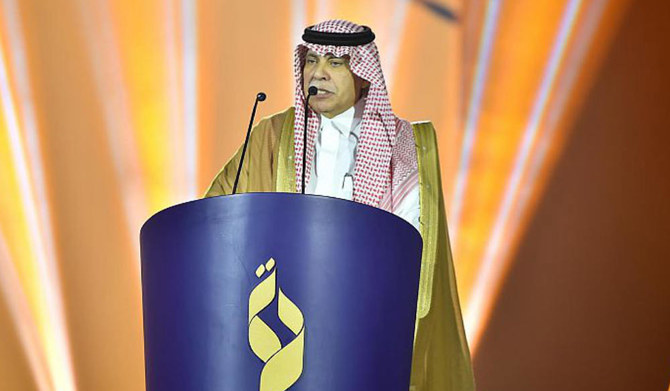

RIYADH: Around 1,500 media sector leaders from around the world will next month gather in Saudi Arabia for a major two-day industry conference.
The second Saudi Media Forum will take place in Riyadh on Feb. 20 and 21 and will focus on the latest and future developments in audiovisual, print, and digital media.
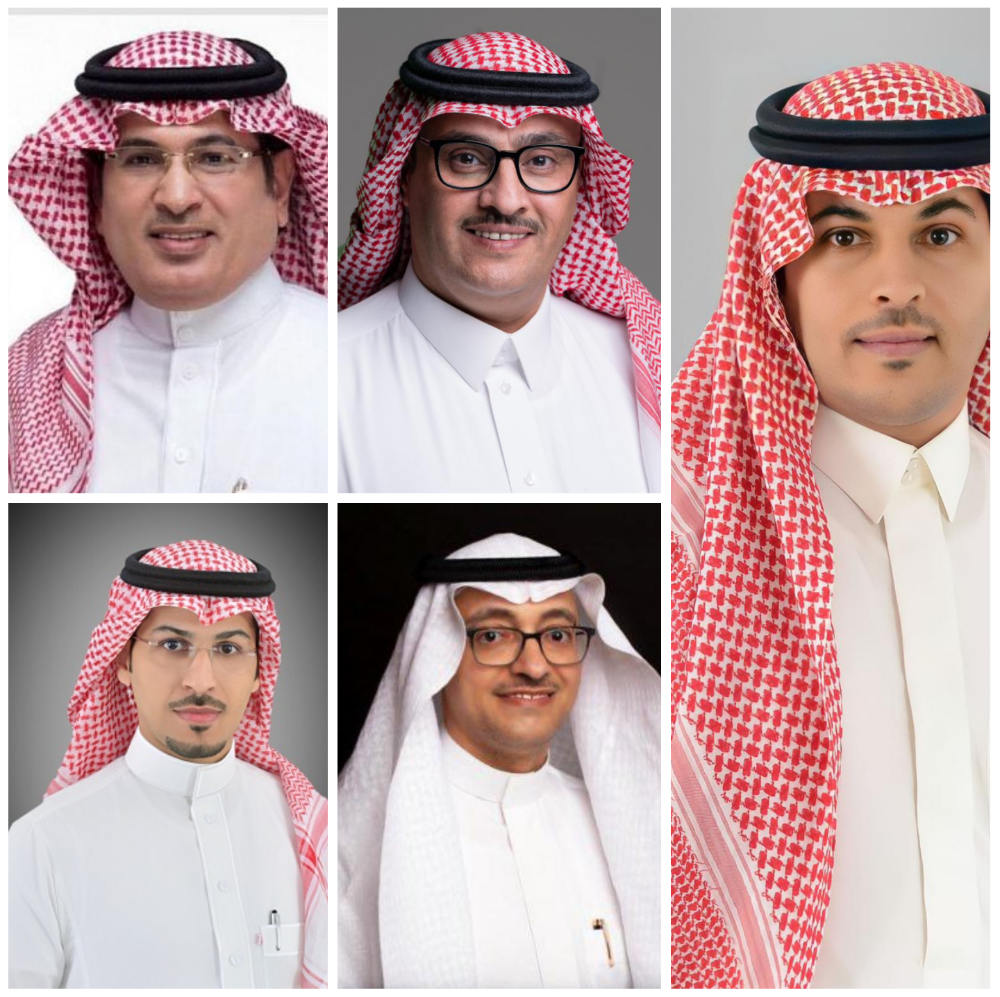
(Clock-wise) Mohammed Fahad Al-Harthi, Turki Al-Sahli, Abdullah Al-Humaidani, Mohammed Amer and Ahmed Al-Muyidi. (Supplied)
Being staged under the title “Media in a World Being Formed,” the forum will also cover the important role played by the industry in relation to social, political, and economic issues.
BACKGROUND
The first edition of the forum was held in Riyadh toward the end of 2019 under the umbrella of the Saudi Journalists Authority, with more than 1,000 regional and international delegates in attendance from 32 countries.
Mohammed Fahad Al-Harthi, chief executive officer of the Saudi Broadcasting Authority, said the meeting sought to create “a competitive environment in media work, to be a motivation for specialized institutions and professionals in delivering distinctive works worthy of celebration and honor.”
An awards ceremony will include categories such as best of print and electronic journalism, audiovisual production, Twitter content, media entrepreneurship, and personality of the year.
The first edition of the forum was held in Riyadh toward the end of 2019 under the umbrella of the Saudi Journalists Authority, with more than 1,000 regional and international delegates in attendance from 32 countries.
Al-Harthi, who also chairs the forum, noted that the event coincided with a boom time in the Saudi media sector.
Saudi journalist Turki Al-Sahli said the Kingdom’s media organizations needed “talented, qualified, and passionate” journalists to ensure levels of quality and ethical journalism were maintained, adding that a key challenge for the sector was meeting the demands of the digital age.
Mohammed Amer, deputy editor-in-chief of Al-Mowaten newspaper, pointed out that Saudi Arabia was under the global spotlight due to the transformations taking place in the country as part of Vision 2030, and said its media was well placed to influence changes taking place around the world.
Ahmed Al-Muyidi, assistant professor of media and communication at King Saud University, said the forum provided an important platform for media experts to brainstorm, share experiences, and discuss the latest technological developments in the industry.
He noted that the Saudi labor market would benefit from the implementation of media training programs and professional qualifications.
Digital media researcher Abdullah Al-Humaidani, said: “I think we will see an unprecedented surge in media attendance, especially digital content and its tools, and we still need to raise the pace of attendance in conjunction with the renaissance that the Kingdom is experiencing.”
He pointed out that there was still work to be done in the region in bringing traditional media models up to speed with new production and creative processes.
“Institutions should adopt and invest in modern creative models such as the design thinking model that is now applied in American journalism, which is flexible, codified, and creative, and helps to market and refine the material and get closer to the public,” he added.
While the Kingdom’s media sector was taking positive steps in the right direction, Al-Humaidani said: “It must be faster, especially with the recent sporting marketing movement … and highlighting the Kingdom’s success story of transformation in all areas.”