BASRA: It was almost the perfect tournament for Iraq, a dream on and off the pitch. Perhaps it was too good to be true.
On Thursday night, as the nation prepared for the Arabian Gulf Cup final against Oman in Basra — a game Iraq eventually won 3-2 in sensational circumstances — reality crashed the party.
A crush outside the stadium, hours before kickoff, led to at least two people being killed and dozens more injured. Tragedy cast a shadow over the joyous celebrations, and who was to blame has yet to be determined.
It is a shame. Because while such an event cannot be ignored — and is not — Basra had put on a welcoming, sporting and culturally wonderful tournament up to that point.
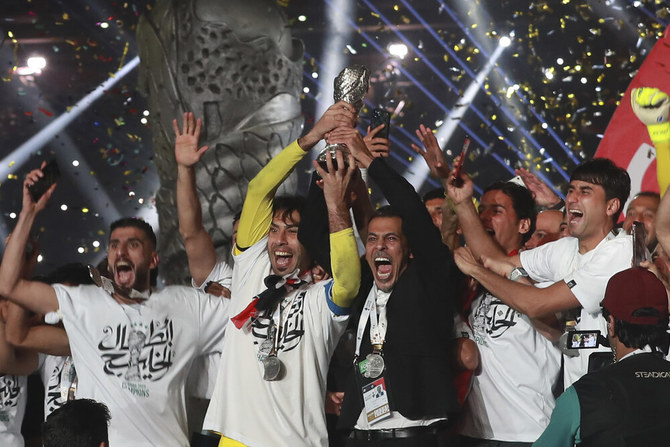
After months of preparation and two weeks of intense football the 25th Arabian Gulf Cup came to an end with Iraq crowned champions.
Not only has the Iraqi national football team finally tasted international glory for the first time in 16 years, but the bigger victory was the Lions of Mesopotamia succeeding on home territory after decades of isolation and restrictions.
Being one of the most displaced populations because of war and sanctions, Iraqis across the globe have been celebrating the feat in Basra, which many felt they might never see in their home country.
Iraqis have made their homes in all parts of the world, with families often divided. But the Arabian Gulf Cup gave them something to celebrate. Even London’s Trafalgar Square filled with Iraqis minutes after Iraq’s victory.
“Witnessing Iraq host and win a tournament has brought much excitement and hope for the future of Iraqi football and has allowed us Iraqi expatriates to feel great pride in our heritage,” said Basim Amin, a 30-year-old Iraqi accountant living in Dubai.
“After growing up seeing Iraq suffer with years of war, it was hard to imagine Iraq hosting any sport.”
While the opportunity to celebrate Iraq’s reemergence on the international scene was cherished, many Iraqis were also disappointed at not being able to attend the tournament.
“Having had the amazing opportunity to be living in Qatar while the FIFA World Cup games took place, it made it even more heartbreaking that I wasn’t able to be a part of the Arabian Gulf Cup in my home country,” said Yasmin Jawad, a 31-year-old marketing specialist.
“To see a victory for our nation is something we could have only ever dreamed of and it’s such a proud day for all Iraqis.”
That sentiment was echoed by Shams Albayati, an Iraqi living in Vancouver.
“My heart was filled with joy and pride the last few days. Seeing how Iraqis united to make a transformative impact is a powerful message,” she said.
“It is proof that Iraqis will always have each other’s back to create Mesopotamian magic.”
Hassanane Balal, who lives in England and hosts an Iraqi football podcast, said staging an international tournament was a special moment for Iraq.
“I’m delighted that people back home had the opportunity to see their national team. It’s something that a lot of people take for granted.
“In England people can go and see their national team play whenever they want. In Iraq they don’t have that luxury,” he said.
“Overall, football is a huge factor in bringing Iraqis together. To have so many people turn up to these games shows you just how much football means to us.”
But that passion led to thousands of fans without tickets trying to get inside the ground for the final. And having not learned from the chaos outside the stadium ahead of the opening ceremony, the organizers’ poor crowd management cost lives.
“We shouldn’t just point fingers at Iraq,” said Jaffar Saraj, a property developer from London.
“What about the chaos that happened when Wembley hosted the Euro 2020 final?”
Aws Haidari, an Iraqi television producer in California, said he hoped the tragedy would prompt change.
“I am definitely happy to see Iraq host its neighbors and reunite with people and countries that we were separated from for decades,” he said.
“But I can’t help feel sad and worried that this tournament has glossed over the failure of the government to truly serve Iraqis desperate for tangible change.”
It was clear Iraq was able to host a quality tournament, Haidari said, but he wondered “if locals are deserving of that same enthusiasm when it comes to fighting corruption and supporting the dysfunctional health and education systems.”
With the tournament over, Iraqis can look back with pride and hope that it leaves a legacy for a population that has been through so much trauma. It will allow the children of Iraq to once again dream of being successful footballers and athletes, and show the rest of the world that Iraq is open to visitors.
Congratulations to Iraq, not only for success in football but also for a cultural victory.

Final day tragedy shouldn’t dampen Iraqi pride after Gulf Cup victory
Short Url
https://arab.news/gvu3f
Final day tragedy shouldn’t dampen Iraqi pride after Gulf Cup victory
- Crush outside stadium cost two people their lives
- But sadness should not overshadow what until then had been a wonderful event
Aston Martin says its car risks giving drivers ‘nerve damage’ and can’t finish F1 season-opener
- Aston Martin has predicted it is unlikely to finish Formula 1’s season-opening Australian Grand Prix without its drivers risking suffering permanent nerve damage
MELBOURNE: Aston Martin has predicted it is unlikely to finish Formula 1’s season-opening Australian Grand Prix on Sunday without its drivers risking suffering permanent nerve damage.
Adrian Newey, the F1 car design great who’s heading into his first race as Aston Martin’s team principal, said Thursday the team’s Honda power unit causes vibrations which could damage the hands of drivers Fernando Alonso and Lance Stroll. Neither will likely be able to tolerate even half of the 58-lap race distance, Newey added.
Aston Martin had a poor preseason, often slower even than new team Cadillac and it logged the fewest laps of all 11 teams.
“That vibration (transmitted from Honda’s power unit) into the chassis is causing a few reliability problems,” said Newey.
“Mirrors falling off the air, tail lights falling off, that sort of thing, which we are having to address. But, the much more significant problem with that is that that vibration is transmitted ultimately into the driver’s fingers.
“So Fernando is of the feeling that he can’t do more than 25 laps consecutively before he will risk permanent nerve damage into his hands. Lance is of the opinion that he can’t do more than 15 laps before that threshold.
“We are going to have to be very heavily restricted on how many laps we do in the race until we get on top of the source of the vibration — and to improve the vibration at source.”
Despite the long list of issues, Newey says the AMR26 car has tremendous potential as F1 starts a new era of regulations.
He argued the chassis is F1’s fifth-best behind the expected top-teams Mercedes, Ferrari, McLaren and Red Bull and that, following an aggressive development program, has the potential to run at the front at some point in 2026.
Alonso, though, is keeping the faith until Friday practice in Melbourne, where he believes fixes on the car might provide a sunnier outlook.
“For us, it’s just vibrating everything,” the two-time F1 champion said.
“But it’s not only for us. The car is struggling a little bit, so that’s why we have some issues, some reliability problems that made our days slightly short.
“Since (pre-season testing in) Bahrain, there were a couple of tests done and some of the solutions are implemented on the car now, so (I’m) curious to see what (happens) tomorrow (and) if we can improve.”
Its disappointing performance has been variously attributed to a compressed design time due to late arrival; Honda’s need to rebuild its research and development capabilities after leaving Red Bull, the challenge of producing a new in-house gearbox, and the team running a so-far unproven fuels partner in Aramco.
But it’s the side effects that will likely sideline its cars early in Sunday’s race at Albert Park.
Adrian Newey, the F1 car design great who’s heading into his first race as Aston Martin’s team principal, said Thursday the team’s Honda power unit causes vibrations which could damage the hands of drivers Fernando Alonso and Lance Stroll. Neither will likely be able to tolerate even half of the 58-lap race distance, Newey added.
Aston Martin had a poor preseason, often slower even than new team Cadillac and it logged the fewest laps of all 11 teams.
“That vibration (transmitted from Honda’s power unit) into the chassis is causing a few reliability problems,” said Newey.
“Mirrors falling off the air, tail lights falling off, that sort of thing, which we are having to address. But, the much more significant problem with that is that that vibration is transmitted ultimately into the driver’s fingers.
“So Fernando is of the feeling that he can’t do more than 25 laps consecutively before he will risk permanent nerve damage into his hands. Lance is of the opinion that he can’t do more than 15 laps before that threshold.
“We are going to have to be very heavily restricted on how many laps we do in the race until we get on top of the source of the vibration — and to improve the vibration at source.”
Despite the long list of issues, Newey says the AMR26 car has tremendous potential as F1 starts a new era of regulations.
He argued the chassis is F1’s fifth-best behind the expected top-teams Mercedes, Ferrari, McLaren and Red Bull and that, following an aggressive development program, has the potential to run at the front at some point in 2026.
Alonso, though, is keeping the faith until Friday practice in Melbourne, where he believes fixes on the car might provide a sunnier outlook.
“For us, it’s just vibrating everything,” the two-time F1 champion said.
“But it’s not only for us. The car is struggling a little bit, so that’s why we have some issues, some reliability problems that made our days slightly short.
“Since (pre-season testing in) Bahrain, there were a couple of tests done and some of the solutions are implemented on the car now, so (I’m) curious to see what (happens) tomorrow (and) if we can improve.”
Its disappointing performance has been variously attributed to a compressed design time due to late arrival; Honda’s need to rebuild its research and development capabilities after leaving Red Bull, the challenge of producing a new in-house gearbox, and the team running a so-far unproven fuels partner in Aramco.
But it’s the side effects that will likely sideline its cars early in Sunday’s race at Albert Park.
© 2026 SAUDI RESEARCH & PUBLISHING COMPANY, All Rights Reserved And subject to Terms of Use Agreement.


