Pakistan says no official information from Britain after seizure of uranium-tainted cargo in London

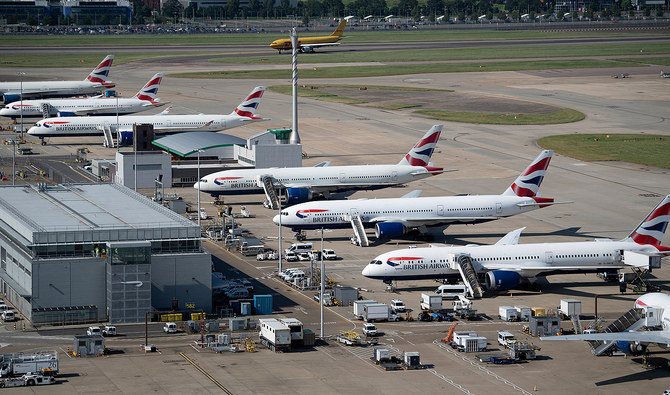
In this file photo taken on June 13, 2021, British Airways jets are seen at Heathrow Airport in west London. (Photo courtesy: AFP/File)
Short Url
Updated 11 January 2023
Follow

Pakistan says no official information from Britain after seizure of uranium-tainted cargo in London

  • Some media reports maintain the package originated in Pakistan before arriving at Heathrow on a flight from Oman
  • The foreign office says it has seen the reports in the international press but remain confident they are not factual

ISLAMABAD: The foreign office said on Wednesday the United Kingdom had not officially shared any information with it after media reports emerged the British police had seized a package containing uranium which originated in Pakistan before launching an investigation.

The information first appeared in a UK-based tabloid, The Sun, which said the package had been taken into possession at London’s Heathrow Airport where it was found by officials during a routine search. The publication also maintained it started its journey from Pakistan and reached London on a flight from Oman on December 29.

“We have seen the media reports,” foreign office spokesperson Mumtaz Zahra Baloch told Arab News. “No information to this effect has been shared with us officially. We are confident that the reports are not factual.”

According to the BBC, the uranium was found in a shipment of scrap metal and investigators were trying to determine if it was a case of “poor handling” in Pakistan.

A top police official, Richard Smith, issued a media statement, reassuring “the public that the amount of contaminated material was extremely small” which had been “assessed by experts as posing no threat to the public.”

“Although our investigation remains ongoing, from our inquiries so far, it does not appear to be linked to any direct threat,” he added.

With additional input from AFP

Anti-fuel smuggling drive boosts Pakistan revenues 82%, PM office says

Updated 19 December 2025
Follow

Anti-fuel smuggling drive boosts Pakistan revenues 82%, PM office says

  • Crackdown targets illegal petroleum trade using GPS tracking and pump registration
  • July–November gains cited as government intensifies tax, customs enforcement

ISLAMABAD: The Pakistani prime minister’s office said on Friday revenues from petroleum products rose 82% between July and November 2025 after a nationwide crackdown on fuel smuggling, as the government steps up enforcement to curb tax evasion and losses that have long strained public finances.

The increase was cited during a weekly performance review of the Federal Board of Revenue (FBR), where Prime Minister Shehbaz Sharif directed authorities to accelerate action against smuggling and tax evasion, according to a statement issued by the PM’s Office.

Fuel smuggling has been a persistent problem in Pakistan, where subsidised or untaxed petroleum products are often trafficked across borders or sold through unregistered pumps, depriving the state of revenue and distorting domestic energy markets. Successive governments have blamed the practice for billions of rupees in annual losses, while international lenders have repeatedly urged tighter enforcement as part of broader fiscal reforms.

“Every year the nation loses billions due to smuggling,” Sharif was quoted as saying in a statement, praising customs authorities for successful operations and noting that revenues from petroleum products increased by 82% from July to November 2025 compared with the same period last year.

The PM said stricter enforcement had brought several goods back into the formal economy, adding that there would be “no leniency” toward those involved in tax evasion or illegal trade.

Officials briefed the prime minister that Pakistan Customs has rolled out a nationwide enforcement framework, including GPS tracking of petroleum product transportation, registration of fuel stations through a digital monitoring system, and legal action against illegal machinery under updated petroleum laws.

The government has also instructed provincial administrations to cooperate fully with federal authorities in shutting down illegal petrol pumps, the statement said.

Sharif said enforcement efforts would continue until smuggling networks were dismantled and tax compliance improved, as the government seeks to strengthen revenues amid ongoing economic reforms.

Pakistan has struggled for years with weak tax collection and a narrow revenue base, forcing repeated bailouts from the International Monetary Fund. Smuggling of fuel, cigarettes, electronics and consumer goods has been identified by policymakers as a major obstacle to improving revenues and stabilising the economy.

Independent research shows that Pakistan loses an estimated Rs750 billion (about $2.7 billion) annually in tax revenue due to illicit trade and smuggling across sectors such as petroleum, tobacco and pharmaceuticals. Broader analyzes suggest total tax revenue losses linked to the informal economy and smuggling may reach as high as Rs3.4 trillion (around $12.1 billion) a year, roughly a quarter of the government’s annual tax targets.

Smuggled petroleum products alone are thought to cost the state about Rs270 billion (around $960 million) a year in lost revenue, underscoring why authorities have focused recent enforcement efforts on fuel tracking and pump registration.