- Saudi Crown Prince Mohammed bin Salman orders a study to increase kingdom's deposits with Pakistan's central bank to $5 billion
- Directives by Saudi crown prince follows new Pakistan army chief's recent visit to kingdom, where he met senior Saudi leadership
ISLAMABAD: Saudi Crown Prince Mohammed bin Salman bin Abdulaziz Al Saud has directed authorities to study “augmenting” the kingdom’s investments in Pakistan to $10 billion, the Saudi Press Agency (SPA) reported on Tuesday.
Saudi Arabia’s King Salman bin Abdulaziz Al Saud on August 25, 2022, directed the kingdom to invest $1 billion dollars in Pakistan. The directive came during a telephone call between Saudi Foreign Minister Prince Faisal bin Farhan and his Pakistani counterpart Bilawal Bhutto-Zardari last year. Saudi Arabia also extended its deposits to the reserves of Pakistan’s central bank in December 2021 for three years.
The announcement comes at a crucial time for Pakistan, as it actively looks to avoid a balance-of-payments crisis by seeking external financing. The South Asian country’s foreign reserves plummeted to $5.8 billion last year, the lowest in eight years, sparking fears Pakistan may default on its international payments.
The country, already reeling from skyrocketing inflation and a depreciating currency, is desperately trying to revive a loan program with the International Monetary Fund (IMF) to repose confidence in investors and international financial institutions that remain skeptical of Pakistan’s ability to honor its financial commitments.
“His Royal Highness Prince Mohammed bin Salman bin Abdulaziz Al Saud, Crown Prince and Prime Minister, has directed to study augmenting the Kingdom of Saudi Arabia’s investments in the sisterly Islamic Republic of Pakistan which have previously been announced on August 25, 2022, to reach $10 billion,” the SPA said.
As per the SPA, the crown prince also directed the Saudi Development Fund to study increasing the amount of the deposit provided by the kingdom in favor of Pakistan’s central bank, to $5 billion. “This came within the framework of the existing communication between HRH the Crown Prince and Muhammad Shehbaz Sharif, Prime Minister of Pakistan,” it added.
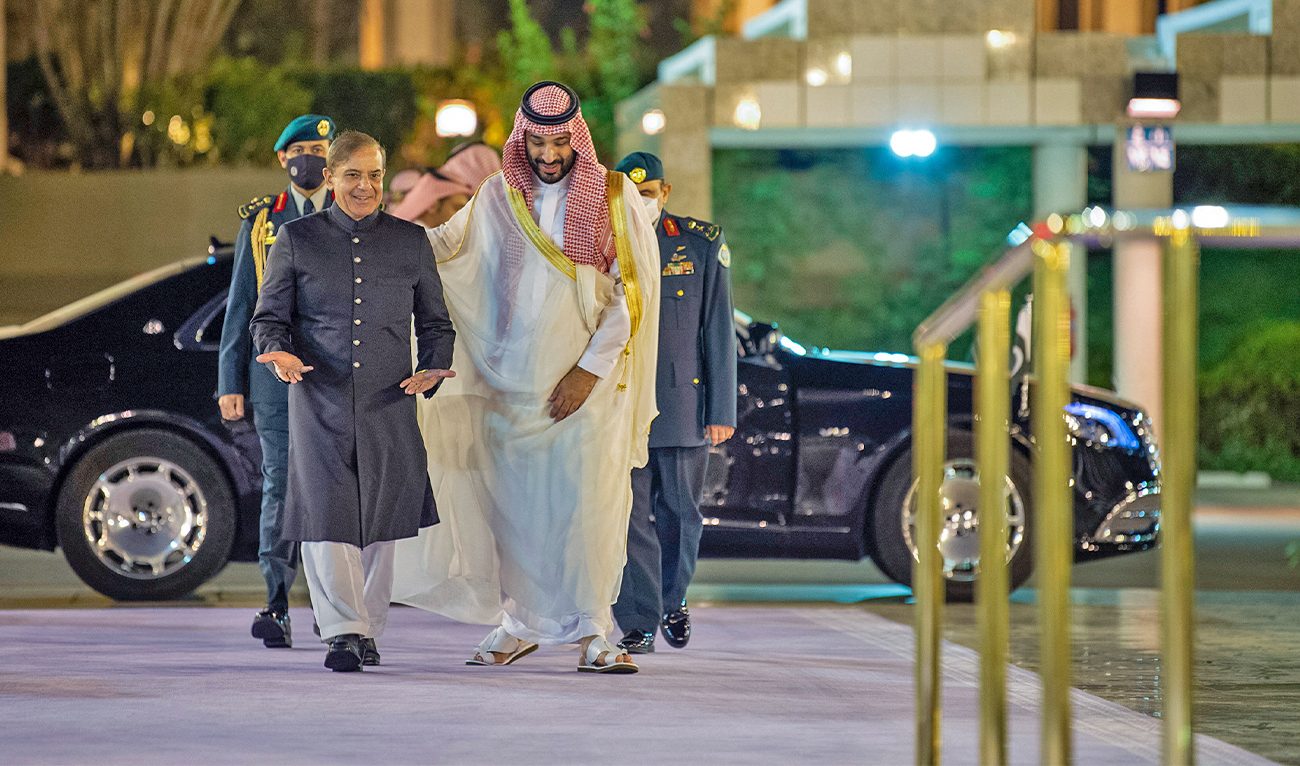
The announcement by the crown prince closely follows the recent visit of Pakistan's new army chief, General Syed Asim Munir, to Saudi Arabia where he met the crown prince and senior Saudi civil and military leaders.
Pakistan has always maintained close diplomatic and defense relations with Saudi Arabia. According to official statistics, the Pakistani diaspora in Saudi Arabia remitted $6.67 billion in 2022, which makes the kingdom an important economic and investment partner for the South Asian country.
Saudi Arabia has come to Pakistan’s aid whenever the South Asian country faces tough financial circumstances by offering it deferred oil payment facilities and sending substantial amounts of money to shore up its forex reserves.
The two countries also reached an understanding to set up a $12 billion oil refinery in Pakistan during the Saudi crown prince's official visit to Pakistan in February 2019. Pakistan has said it has done much of the work to implement the project.