

Interim Chief Selector Shahid Afridi can take ‘bold’ decisions — PCB chief

Pakistan Cricket Board Chairman Najam Sethi speaks to Arab News Pakistan in an exclusive interview in Lahore, Pakistan on January 1, 2023. (AN photo)
Short Url
Updated 03 January 2023
Follow

Interim Chief Selector Shahid Afridi can take ‘bold’ decisions — PCB chief

  • Former Pakistan captain Shahid Afridi was appointed interim chief selector last week
  • PCB boss Najam Sethi says Mickey Arthur 'number one priority' for head coach role

LAHORE: Najam Sethi, chairman of the Pakistan Cricket Board's (PCB) managing committee, said on Sunday that former star all-rounder Shahid Afridi has been appointed interim chief selector to take some "bold decisions" pertaining to the Pakistan squad selection.  

Afridi, a swashbuckling all-rounder known primarily for his aggressive batting style in his cricketing days, was appointed by Sethi as the chairman of the PCB's interim selection committee last week. The committee was formed after former PCB chairman Ramiz Raja and ex-chief selector Mohammad Waseem were sacked in a change of guard at the PCB.

In an exclusive interview with Arab News, Sethi justified Afridi's appointment as the interim chief selector, saying he used to be a "bold and beautiful player." 

"First of all, you're right. Afridi is a mercurial player but he's a bold and beautiful player, there's no doubt about... He's also very popular, he's the sort of person we want in the selection committee who can take bold decisions," Sethi said.  

"[Someone] to experiment with new talent, to realize where old is still gold and I think that was missing in this team which is why we had four defeats in a row in Test matches." 

Sethi said he thought Afridi would be the "right man" to give Pakistan a green pitch, where the public would at least get to see results.  

"Afridi was on board, he wanted to make some changes and he wanted to play bold and exciting cricket," the new PCB boss said.  

"We are not going to play to win or to lose, but we are now going to play the game in the true spirit of the game." 

Asked if Babar Azam's replacement as skipper was on the cards in any of the three formats, Sethi said "that's something we haven't considered." 

"There is a lot of talk about it [appointing different captains for different formats], there is some public pressure also that is critical of some decisions that have been taken on the field," he acknowledged. 
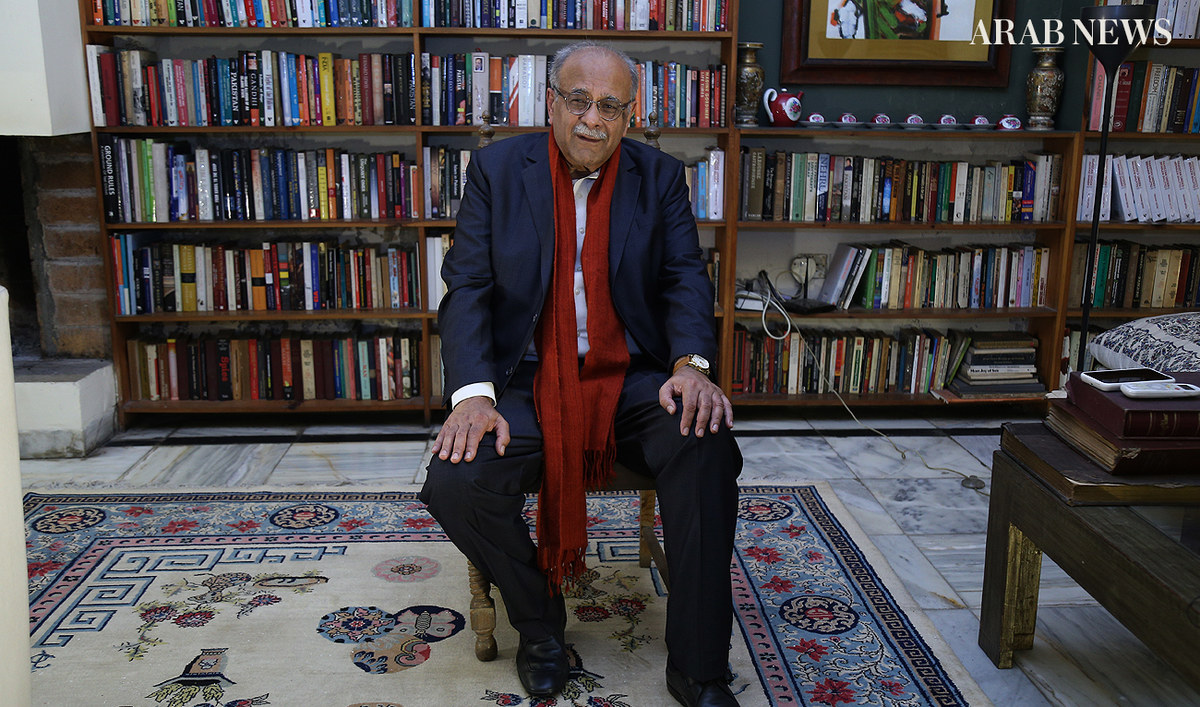


Pakistan Cricket Board Chairman Najam Sethi poses for a photo during an exclusive interview with Arab News Pakistan in Lahore, Pakistan on January 1, 2023. (AN photo)

Sethi, however, said he was currently focusing on the New Zealand series and busy ensuring it ends "safely, peacefully and with some good results and some good cricket." 

"Then we will take this issue up at that stage," he added.  

Sethi, who has twice headed the PCB in 2013-14 and then in 2017, has always spoken highly of foreign coaches as opposed to local trainers. In 2016, he appointed South African Mickey Arthur as the coach of the Pakistan cricket team.  
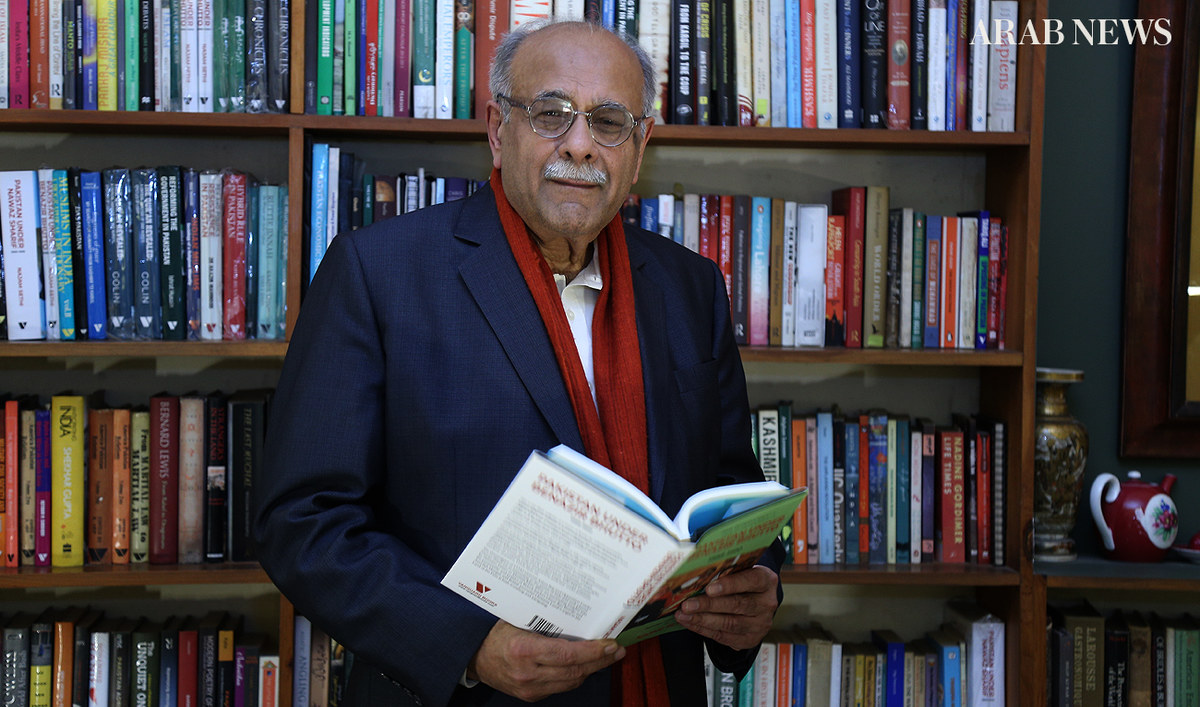


Pakistan Cricket Board Chairman Najam Sethi holds a book during an exclusive interview with Arab News Pakistan in Lahore, Pakistan on January 1, 2023. (AN photo)

Sethi has repeatedly rejected the idea of what he calls appointing "ex-cricketing stars" as coaches and has said foreign coaches are more qualified than their Pakistani counterparts. 

He told Arab News the PCB was "in communication" with Arthur to take up the head coach assignment.  

"He is our number one priority [for head coach]," Sethi said. "We have mooted this idea before our board and everybody is on the same page." 

Sethi said the board wanted Arthur on board as it wanted someone who knew the players, their strengths and weaknesses individually. 


Tens of thousands flee northwest Pakistan over fears of military operation

Updated 28 January 2026
Follow

Tens of thousands flee northwest Pakistan over fears of military operation

  • More than 70,000 people, mostly women and children, have fled remote Tirah region bordering Afghanistan 
  • Government says no military operation underway or planned in Tirah, a town in Khyber Pakhtunkhwa province

BARA, Pakistan: More than 70,000 people, mostly women and children, have fled a remote region in northwestern Pakistan bordering Afghanistan over uncertainty of a military operation against the Pakistani Taliban, residents and officials said Tuesday.

Pakistan’s Defense Minister Khawaja Mohammad Asif has denied the claim by residents and provincial authorities. He said no military operation was underway or planned in Tirah, a town in Khyber Pakhtunkhwa province.

Speaking at a news conference in Islamabad, he said harsh weather, rather than military action, was driving the migration. His comments came weeks after residents started fleeing Tirah over fears of a possible army operation.

The exodus began a month after mosque loudspeakers urged residents to leave Tirah by Jan. 23 to avoid potential fighting. Last August, Pakistan launched a military operation against Pakistani Taliban in the Bajau r district in the northwest, displacing hundreds of thousands of people.

Shafi Jan, a spokesman for the provincial government in Khyber Pakhtunkhwa, posted on X that he held the federal government responsible for the ordeal of the displaced people, saying authorities in Islamabad were retracting their earlier position about the military operation.

Khyber Pakhtunkhwa Chief Minister Suhail Afridi, whose party is led by imprisoned former Prime Minister Imran Khan, has criticized the military and said his government will not allow troops to launch a full-scale operation in Tirah.

The military says it will continue intelligence-based operations against Pakistani Taliban, who are known as Tehrik-e-Taliban Pakistan, or TTP. Though a separate group, it has been emboldened since the Afghan

Taliban returned to power in 2021. Authorities say many TTP leaders and fighters have found sanctuary in Afghanistan and that hundreds of them have crossed into Tirah, often using residents as human shields when militant hideouts are raided.

Caught in the middle are the residents of Tirah, who continued arriving in Bara.

So far, local authorities have registered roughly 10,000 families — about 70,000 people — from Tirah, which has a population of around 150,000, said Talha Rafiq Alam, a local government administrator overseeing the relief effort. He said the registration deadline, originally set for Jan. 23, has been extended to Feb. 5.

He said the displaced would be able to return once the law-and-order situation improves.

Among those arriving in Bara and nearby towns was 35-year-old Zar Badshah, who said he left with his wife and four children after the authorities ordered an evacuation. He said mortar shells had exploded in villages in recent weeks, killing a woman and wounding four children in his village. “Community elders told us to leave. They instructed us to evacuate to safer places,” he said.

At a government school in Bara, hundreds of displaced lined up outside registration centers, waiting to be enrolled to receive government assistance. Many complained the process was slow.

Narendra Singh, 27, said members of the minority Sikh community also fled Tirah after food shortages worsened, exacerbated by heavy snowfall and uncertain security.

“There was a severe shortage of food items in Tirah, and that forced us to leave,” he said.

Tirah gained national attention in September, after an explosion at a compound allegedly used to store bomb-making materials killed at least 24 people. Authorities said most of the dead were militants linked to the TTP, though local leaders disputed that account, saying civilians, including women and children, were among the dead.