



LAHORE: Najam Sethi, chairman of the Pakistan Cricket Board's (PCB) managing committee, said on Sunday that former star all-rounder Shahid Afridi has been appointed interim chief selector to take some "bold decisions" pertaining to the Pakistan squad selection.
Afridi, a swashbuckling all-rounder known primarily for his aggressive batting style in his cricketing days, was appointed by Sethi as the chairman of the PCB's interim selection committee last week. The committee was formed after former PCB chairman Ramiz Raja and ex-chief selector Mohammad Waseem were sacked in a change of guard at the PCB.
In an exclusive interview with Arab News, Sethi justified Afridi's appointment as the interim chief selector, saying he used to be a "bold and beautiful player."
"First of all, you're right. Afridi is a mercurial player but he's a bold and beautiful player, there's no doubt about... He's also very popular, he's the sort of person we want in the selection committee who can take bold decisions," Sethi said.
"[Someone] to experiment with new talent, to realize where old is still gold and I think that was missing in this team which is why we had four defeats in a row in Test matches."
Sethi said he thought Afridi would be the "right man" to give Pakistan a green pitch, where the public would at least get to see results.
"Afridi was on board, he wanted to make some changes and he wanted to play bold and exciting cricket," the new PCB boss said.
"We are not going to play to win or to lose, but we are now going to play the game in the true spirit of the game."
Asked if Babar Azam's replacement as skipper was on the cards in any of the three formats, Sethi said "that's something we haven't considered."
"There is a lot of talk about it [appointing different captains for different formats], there is some public pressure also that is critical of some decisions that have been taken on the field," he acknowledged.
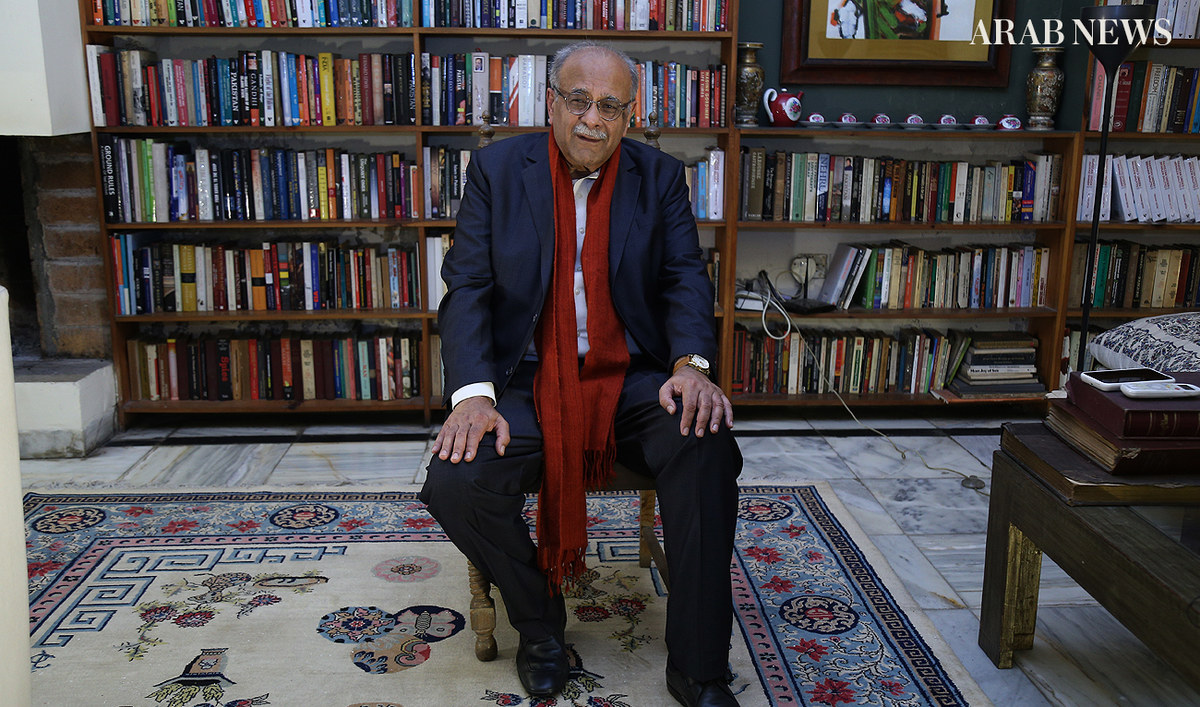
Pakistan Cricket Board Chairman Najam Sethi poses for a photo during an exclusive interview with Arab News Pakistan in Lahore, Pakistan on January 1, 2023. (AN photo)
Sethi, however, said he was currently focusing on the New Zealand series and busy ensuring it ends "safely, peacefully and with some good results and some good cricket."
"Then we will take this issue up at that stage," he added.
Sethi, who has twice headed the PCB in 2013-14 and then in 2017, has always spoken highly of foreign coaches as opposed to local trainers. In 2016, he appointed South African Mickey Arthur as the coach of the Pakistan cricket team.
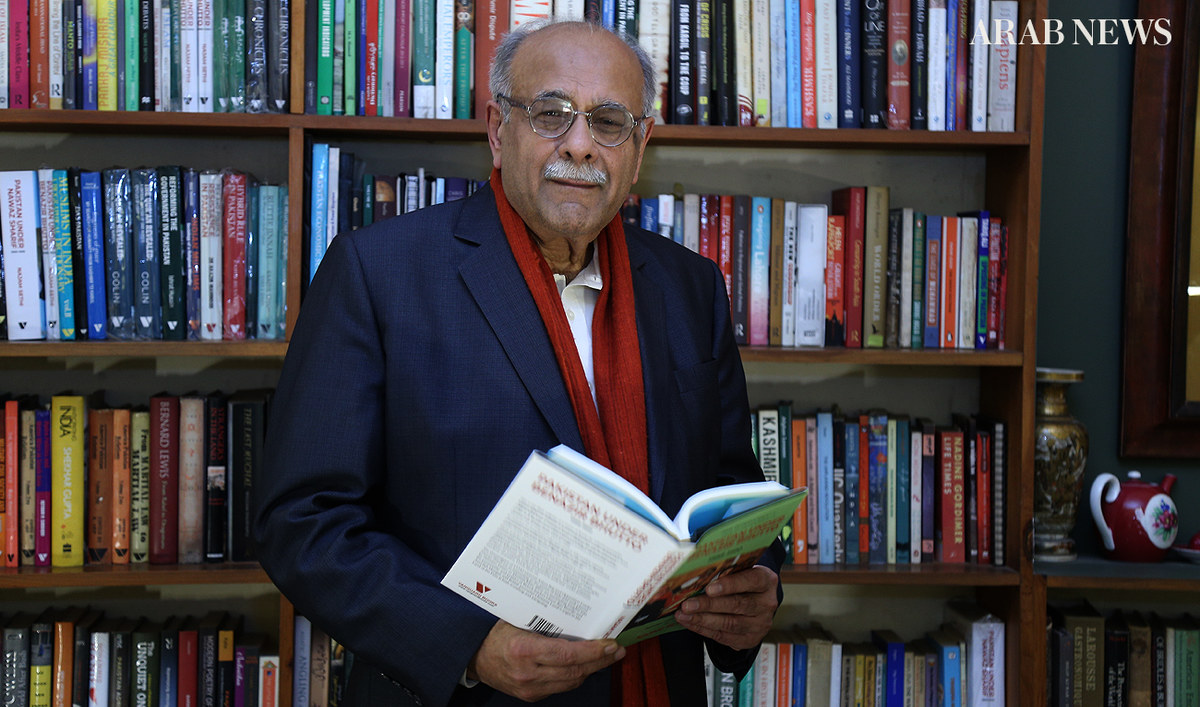
Pakistan Cricket Board Chairman Najam Sethi holds a book during an exclusive interview with Arab News Pakistan in Lahore, Pakistan on January 1, 2023. (AN photo)
Sethi has repeatedly rejected the idea of what he calls appointing "ex-cricketing stars" as coaches and has said foreign coaches are more qualified than their Pakistani counterparts.
He told Arab News the PCB was "in communication" with Arthur to take up the head coach assignment.
"He is our number one priority [for head coach]," Sethi said. "We have mooted this idea before our board and everybody is on the same page."
Sethi said the board wanted Arthur on board as it wanted someone who knew the players, their strengths and weaknesses individually.


