
DUBAI: Iran’s military launched a drone to warn off a reconnaissance plane trying to approach Iranian war games on the Gulf coast, the semi-official Fars news agency said on Saturday.
The report did not specify the nationality of the reconnaissance aircraft, but Iranian forces have had repeated similar confrontations with US forces in the Gulf.
There was no immediate US reaction available.
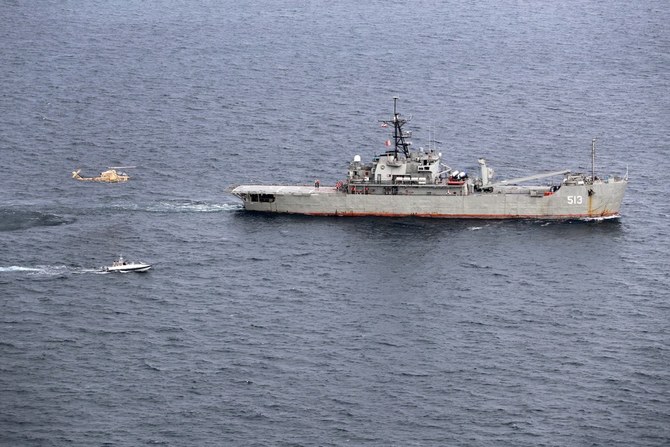
Iran launched annual joint naval, air, and ground exercises in the Gulf on Friday near the strategic Strait of Hormuz waterway.
“During the exercises, a P-8 manned intelligence aircraft belonging to extra-regional forces, which had tried to reduce altitude to collect more accurate information from the exercise area, was forced to leave the area by the firing of a Karrar drone by (Iran’s) air defense,” Fars said.
The US Departments of Defense and State did not immediately respond to requests for comment.
Meanwhile, antigovernment protests underway for over three months continued. Videos on social media showed protests in Tehran’s grand bazaar and several cities and towns including in the Kurdish area. Part of Tehran’s bazaar closed in the wake of the protests which authorities cracked down on.
Iran’s military tested new attack drones in the coastal area of the Gulf of Oman and near the strategic Strait of Hormuz Saturday as part of its ongoing annual drill, state TV reported.
State TV said the Ababil-5 attack drone was used during wargames for the first time and successfully hit its target with a bomb after traveling 400 kilometers (250 miles). Iran has tested many other military drones over the past decade.
The military drones have been a point of contention between Iran and the United States and its allies, which claim Tehran is supplying Moscow with drones that have been used in attacks in West-backed Ukraine.
In November, Iran acknowledged it has supplied Russia with drones, adding that the supply came before Moscow’s war in Ukraine. Iran says it is committed to stopping the conflict.
The Strait of Hormuz is located at the mouth of the Arabian Gulf and is crucial to global energy supplies, with about a fifth of all oil traded at sea passing through it.
Commandos and airborne infantry participated in the wargames, dubbed “Zolfaghar-1401,” along with fighter jets, helicopters, military transport aircraft and submarines. Iran’s military will fire missiles and air defense systems as well. Iran regularly holds such drills to improve its defensive power and test weapons.
Since mid-September, Iran has been shaken by antigovernment protests which were ignited by the death of a woman who was detained by the country’s morality police. The demonstrations rapidly escalated into calls for an end to more than four decades of the country’s clerical rule.
More than 500 protesters have been killed and over 18,500 people have been arrested, according to Human Rights Activists in Iran, a group that has closely monitored the unrest. Iranian authorities have not released figures for those killed or arrested.