

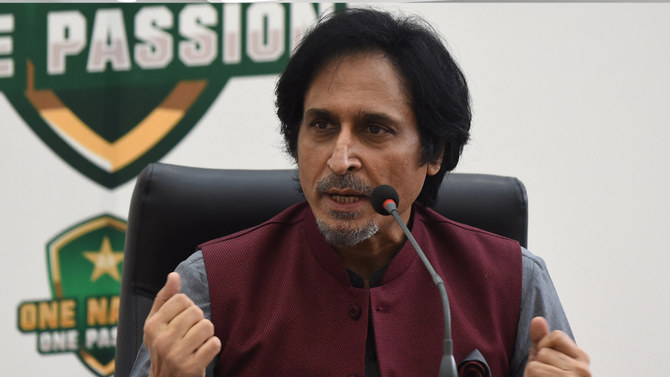

ISLAMABAD: Ramiz Raja has called the government’s move to remove him as Pakistan Cricket Board chair after just one year into a three-year term “political interference,” saying the way cricket was being treated was a “joke,” ESPNcricinfo reported on Tuesday.
Raja was last week removed as chairman of the PCB by the government and Najam Sethi reappointed. Sethi now heads a new 14-member management committee that has been given 120 days by the government to restore department teams in the domestic setup and form a new board of governors. Sethi is widely believed to be close to the Shehbaz Sharif federal government.
The government also repealed the PCB constitution and restored it to the 2014 position, aiming to bring back department teams. The current constitution, formed in 2019, did not recognize department teams.
“I would say it’s political interference because you want to recruit someone politically,” Raja said on his YouTube channel.
“It will not help cricket and it won’t help with the [lack of] continuity. It leads to pressure on the cricket board, the system, the national team and the captain. The constitution has to be robust. It happens only in Pakistan. I will continue to raise the subject on international platforms. It has become a joke.”
Raja said politics should not be mixed up in cricket: “Some people come from outside the circle, and to adjust one person [Sethi], they had to change the entire constitution. I have not seen this anywhere in the world.”
Under Sethi, in under a week, the PCB has terminated the contract of chief selector Mohammad Wasim and disbanded all committees formed under the now-defunct 2019 constitution. This was the first decision the new board took after formally taking charge last Thursday, while also naming Shahid Afridi as interim chief selector for the ongoing New Zealand series. The committee is also expected to bring in foreign coaches in both men’s and women’s teams.
The Test squad picked for the New Zealand series was also reviewed and three players were later added to the original Test squad, while Sarfaraz Ahmed was elevated from the bench to replace Mohammad Rizwan in the playing XI.
“There is etiquette to do things and it has been done in the middle of the season when teams are visiting Pakistan,” Raja said. “Then you have changed the chief selector [Mohammad Wasim] regardless of him doing good or bad. He has played Test cricket for Pakistan, and you should make them leave with respect.”
Referring to a late-night tweet by Sethi announcing the end of Raja’s tenure as PCB chief, Raja said “it hurts.”
“It has been made out as if a messiah [Sethi] has come, who will take the game to new heights. We know what are the motives behind it. They love the entitlement and want the limelight otherwise they have nothing to do with cricket, and they have never lifted a bat.”
Sethi served as chairman from 2013-18. During his tenure, international teams gradually returned to Pakistan after the Sri Lanka bus was attacked in 2009. Sethi also started the Pakistan Super League which attracted foreign cricketers.


