



PESHAWAR: Like a precocious student unaware of his own maturity, Shah Khan name-checked some of his inspirations: Leonardo da Vinci, Pablo Picaso, Ismail Gulgee and Sadequain Naqvi.
At fourteen years old, the ninth grader from Pakistan’s northwestern Mardan city, popularly known as “little artist” on social media, has already produced hundreds of portraits, many of which have the same theme: the “grief of the oppressed,” as he described it in an interview to Arab News this month.
Khan, who mostly makes charcoal drawings, has never been formally trained but has received widespread praise for the maturity of his artistic expression and the painful subjects of his work, particularly women’s rights and child abuse.
It was an online video about a man who killed his wife over a minor dispute that inspired Khan to start focusing on such subjects.
“I work mainly on the oppressed people and violence in our society, such as the women violence, child abuse, rape cases and other domestic violence, such as the lack of the rights of education for girls,” Khan said.
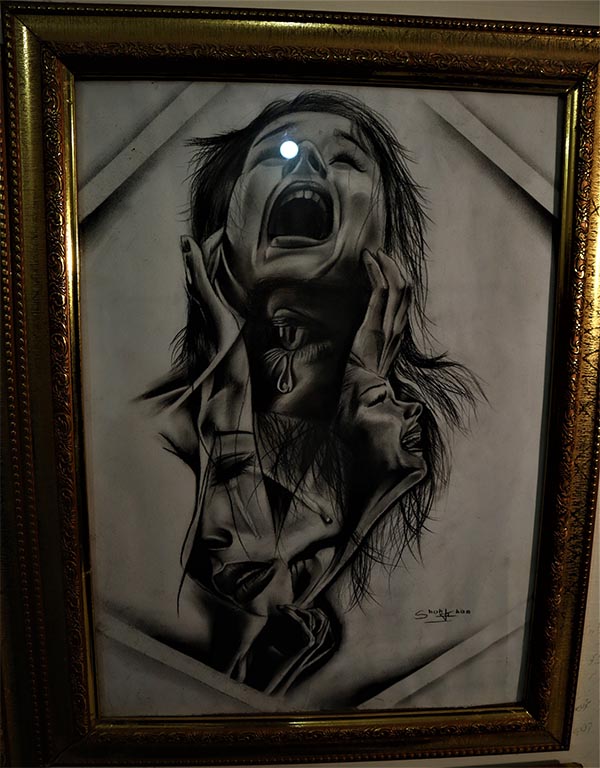
A multi-pose portrait in which the grief of women is described by artist Shah Khan in Mardan's Kati Gari, December 24, 2022. (AN Photo)
“My art pieces mainly revolve around such issues because I think about the grief of oppressed individuals like children, women and people of [conflict zones like] Waziristan, Afghanistan, Palestine, Kashmir and other parts of the world.”
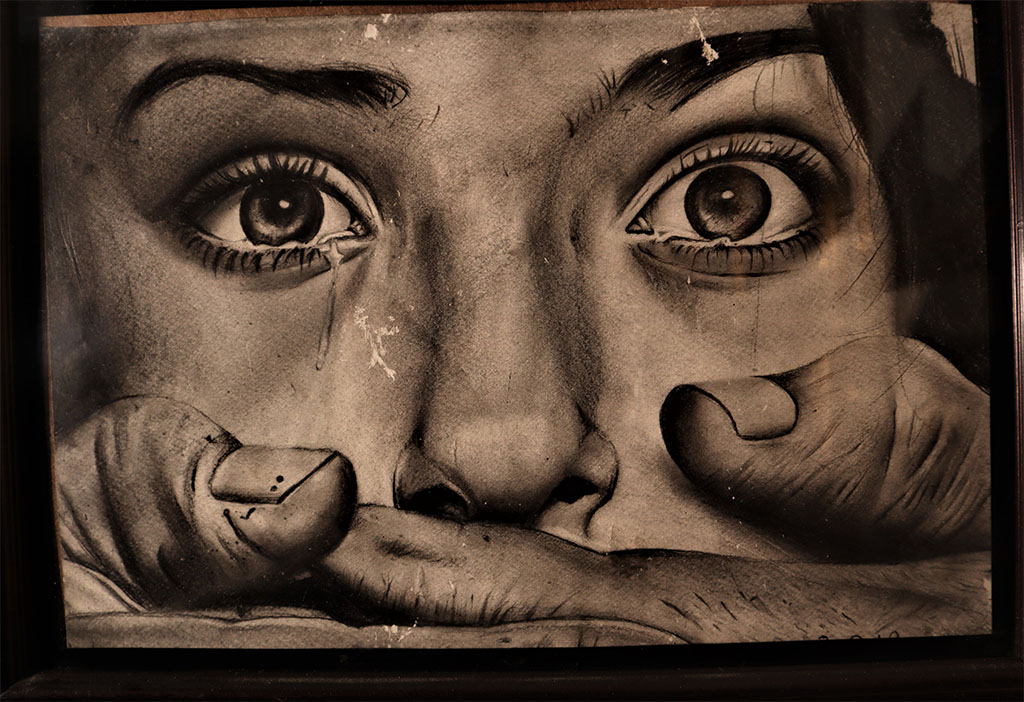
This picture taken on December 24, 2022 shows an art piece, by Shah Khan, voicing against child abuse and silence on the issue. (AN Photo)
As he sharpened his charcoal pencil, he pointed to a portrait of a woman whose face was tied up with strings, which Khan said symbolized the social norms and rules that deprive women of basic rights.
“If you focus on these strings, you can see that they have been created by people who have enslaved women and kept them from getting education and other rights in our society,” the artist said.
Khan started sketching when he was six years old, he said, and his first portrait was of the twentieth century Urdu poet and philosopher Muhammad Iqbal, whose vision of a cultural and political ideal for the Muslims of British-ruled India laid the foundations of Pakistan as a separate homeland.
“I sketched Allama Muhammad Iqbal for the first time when I saw his picture in my book,” Khan said, as he scribbled rapidly with charcoal. “It was with a regular pencil and on a notepad paper.”
Over the years as Khan practiced more, he said, he was initially discouraged by his teachers who believed his artistic pursuits would distract him from his studies.
“There was no discouragement from my family,” he said. “But my teachers stopped me earlier, saying if I focused on worthless activities like art and poetry, I would lose my focus and fail to get good grades in school.”
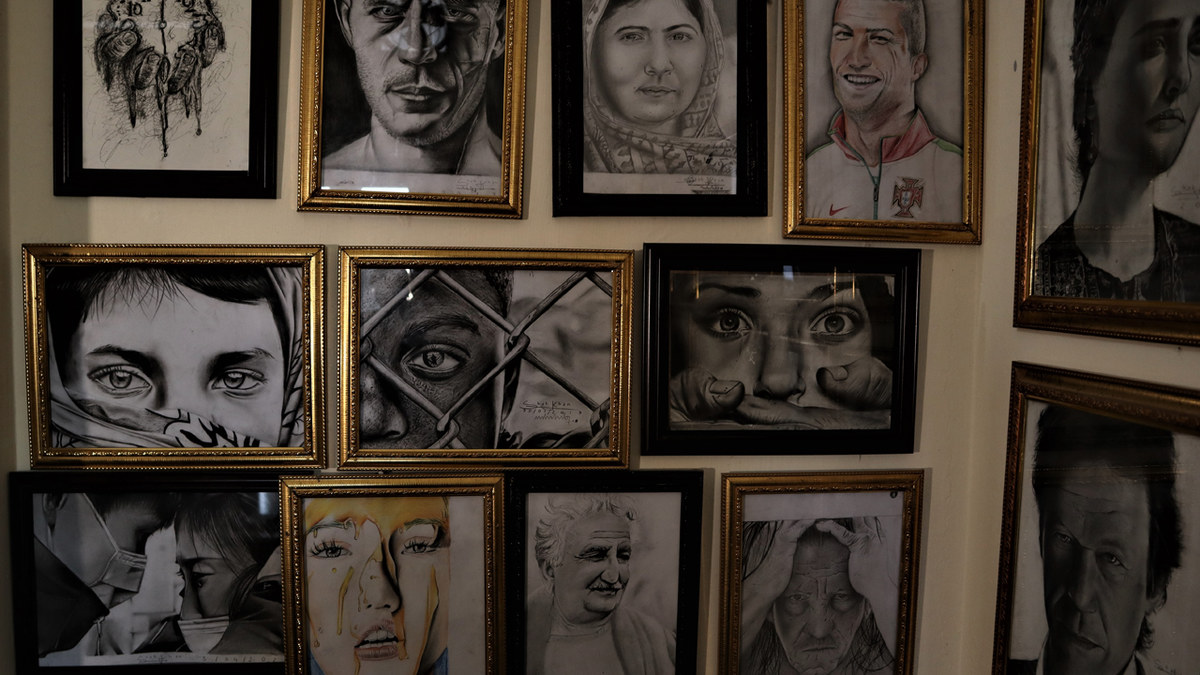
Portraits display on a wall in Shah Khan's room in Mardan on December 24, 2022. (AN Photo)
But Khan said he “could not live without painting” and continued to read about art over the Internet and kept practicing his craft.
In the future, the artist hopes he can travel abroad for formal art studies and earn a degree.
“I want to represent my country in international art exhibitions and want to see my portraits in different art museums internationally,” he said. “I am waiting for the opportunity from the government side to support me and send me to any expo.”
For now, among other works, Khan has drawn over 400 portraits, among which those of Saudi Crown Prince Mohammed bin Salman and West Indian cricketer Darren Sammy are his favorite.
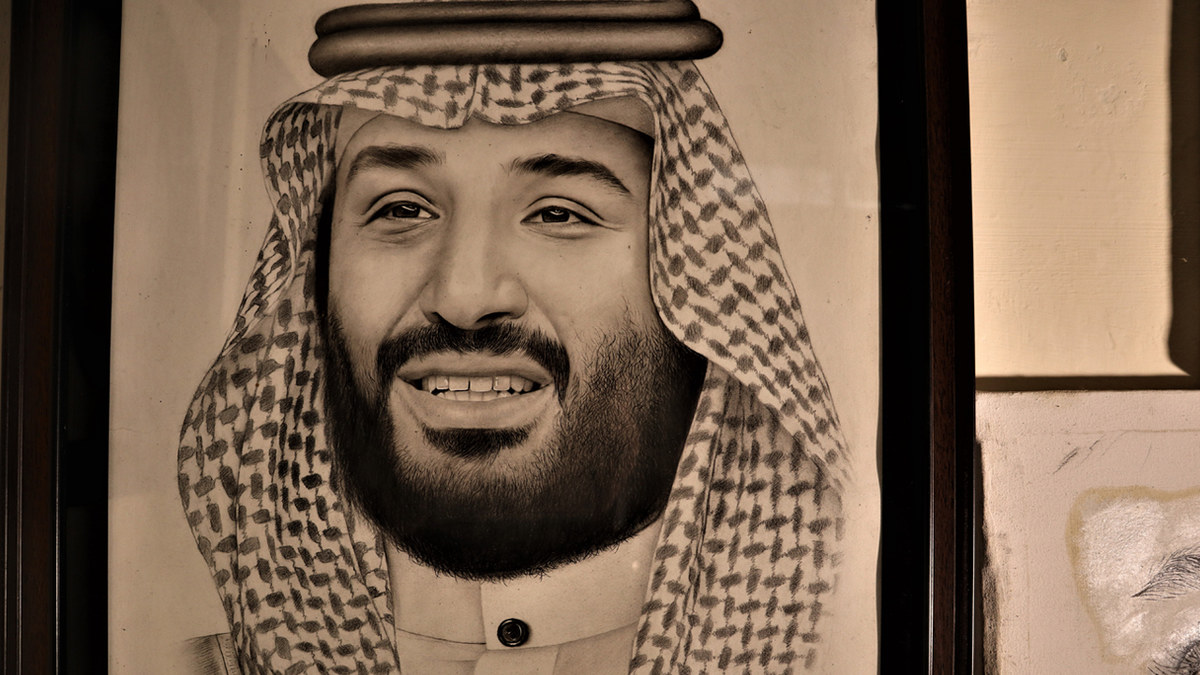
This picture taken on December 24, 2022 shows the portrait of Saudi Crown Prince Shaikh Muhammad Bin Salman by artist Shah Khan. (AN Photo)
“As an artist, there are a lot of portraits which are my best but one of the best which I like because of the story behind it, it was a portrait of Darren Sammy,” Khan said.
“So, when I met him at the Serena Hotel Islamabad, at a glimpse when he saw me, he gave me a hug and he also gave me the gift, his official shirt as a gift, and signed my name on it. So, that’s why I like the portrait of Darren Sammy the most.”


