



KARACHI: Pakistani actors and musicians know how to produce art that manages to impress audiences worldwide. In this regard, 2022 proved to be a special year for the likes of acting powerhouses Humayun Saeed, Fawad Khan, Sajal Aly and Mehwish Hayat while singers Arooj Aftab, Shae Gill and Ali Sethi also received nods from around the world for their stellar musical numbers.
Here are some Pakistani celebrities whose work was widely admired beyond borders in the outgoing year.
Sajal Aly

Sajal Aly attends the "What's Love Got To Do With It?" Premiere during the 2022 Toronto International Film Festival at Roy Thomson Hall on September 10, 2022 in Toronto, Ontario. (AFP)
Aly made her debut this year at the Toronto International Film Festival (TIFF) in September 2022 after her film “What’s Love got to do with it” had its world premiere there. Speaking to Arab News, Aly said she was “humbled” for getting the opportunity to “represent Pakistan on the world stage.”
The film was penned by Jemima Goldsmith and directed by Shekhar Kapur.
“I feel honored to share the screen with such great actors,” she said. “Jemima [Goldsmith] is one of the coolest producers I’ve worked with. She’s a sweetheart! I feel extremely lucky and grateful at the same time.”
Aly also attended the Red Sea Film Festival in Jeddah, Saudi Arabia, last month. Her co-stars from the film were also present at the event.
In November this year, Aly won big at the Filmfare Middle East Achievers Night when she bagged the “Most Popular Face of Pakistani Cinema” award.
Humayun Saeed

Humayun Saeed poses for the shutterbugs at the premiere of Season 5 of "The Crown" in London, UK, on November 8, 2022. (Photo courtesy: @saeedhumayun/instagram)
Humayun Saeed has won praise from around the world since international viewers got to see his stellar acting talent in Netflix’s “The Crown” series on November 9, 2022. The series follows the lives of the British Royal Family and its newest season is set in the 1990s and focuses on Prince Charles and Princess Diana’s failing marriage.
Saeed played the role of Dr. Hasnat Ahmed Khan, a British-Pakistani lung and heart surgeon, who got romantically involved with the princess between 1995 and 1997.
Saeed attended the premiere of the newest season of the series in London on November 8, 2022, with his co-stars and the show’s crew.
“Feel privileged and honored to be a part of The Crown’s team,” the Pakistani actor said in an Instagram post.
Saeed also picked up the “Trendsetter of Pakistani Cinema” award at the Filmfare Middle East Achievers Night last month.
Arooj Aftab

Arooj Aftab raises the winning trophy for Best Global Music Performance for her track "Mohabbat" at the 64th Grammy Awards in Las Vegas, US, on April 4, 2022. (Photo courtesy: @aroojaftab/instagram)
Pakistani singer Arooj Aftab earned an impressive second nomination for Best Global Music Performance for the Grammy Awards 2023 after winning the title for her critically acclaimed track “Mohabbat” from her third album Vulture Prince in 2022.
Born in Saudi Arabia, Aftab is the first Pakistani artist to win a Grammy Award and be a three-time Grammy nominee.
“I think I’m [going to] faint. Wow, thank you so much. I feel like this category in itself has been so insane like Burna Boy, Wizkid, Femi Kuti, Angélique Kidjo... should this be called the yacht party category,” Aftab said onstage after receiving the award at the 64th Grammy Awards earlier this year.
“Mohabbat” – or “Love” in English – has been a game-changer for Aftab for which she also got a nomination for the Best New Artist award at the 64th Grammy Awards. The eight-minute-long song made it to former US President Barack Obama’s 2021 summer playlist that he shared on Twitter.
Mehwish Hayat
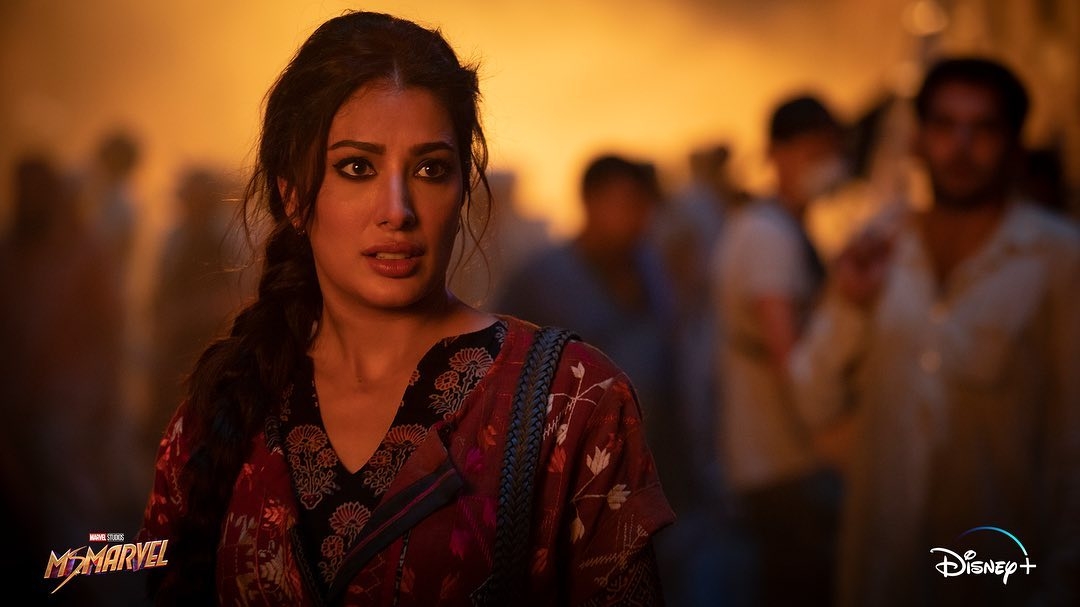
Mehwish Hayat as Kamala Khan's great-grandmother Aisha in a still from episode 5 of the Disney series, "Ms Marvel." (Photo courtesy: @msmarvelofficial/Instagram)
One of Pakistan’s most bankable film actors, Mehwish Hayat, made her Marvel Cinematic Universe (MCU) debut with the Disney series “Ms. Marvel” this year. Hayat, who depicted the fictional character of Aisha, won a legion of fans worldwide after her appearance in the show’s fifth episode.
In the six-episode series, she stars as the great-grandmother of the titular character, Kamala Khan, the first Pakistani to essay a Marvel superhero in the MCU.
“I still cannot believe that I was a part of ‘Ms. Marvel’ and the love people all around the world have given to Aisha,” Hayat told Arab News.
“More important for me though was being part of a mainstream project that finally represented Pakistan and Pakistani culture as we truly are,” she added.
“It means a lot to my niece to finally have a superhero who looks like her and she can relate to,” Hayat added. “Oh yes, I am the first Pakistani actress to have a Funko-Pop action figure which is so cool.”
Ms. Marvel had a special screening in cinemas across Pakistan, with a combination of two episodes that released every two weeks.
Fawad Khan
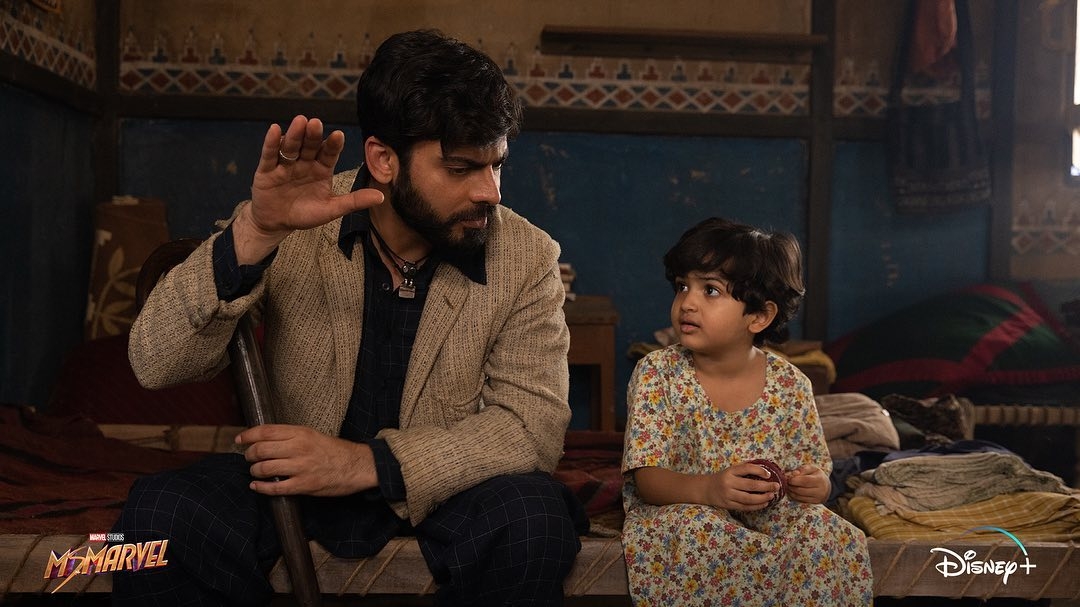
Fawad Khan as Kamala Khan's great grandfather Hasan in a still from episode 5 of the Disney Series "Ms Marvel." (Photo courtesy: @msmarvelofficial/instagram)
Fawad Khan fans, both in Pakistan and India, were overjoyed with the actor’s appearance in episode five of Ms. Marvel earlier this year. He played the central character Kamala Khan’s great-grandfather, Hasan, and appears in the flashback montage in the Disney series.
Khan has had a huge fan following beyond Pakistan, especially in India, since he made his Bollywood debut with the Sonam Kapoor-starrer “Khoobsurat” in 2014. With his recently released reboot of the 1979 cult classic at home, “The Legend of Maula Jatt,” Khan has penetrated screens all over the world.
The film was released in cinemas across the globe on October 13, 2022, and has crossed the record-breaking figure of Rs200 crores ($8.8 million) worldwide.
Shae Gill

Shae Gill performs ‘Pasoori’ at the first Coke Studio Live Concert at the Coca Cola Arena in Dubai, UAE, on October 14, 2022. (Photo courtesy: Coke Studio)
Shae Gill’s Coke Studio Season 14 hit “Pasoori” became the most streamed Pakistani song of 2022 on Spotify. The song tops the Google 2022 search trend, ranking at number one in the Hum-To-Search category. It has reached up to 470 million views on YouTube to date.
“When ‘Pasoori’ was in the works, I knew I was a part of something exceptional, but watching the end product had me staring in disbelief,” Gill posted on her Instagram after the song was released in February 2022.
Gill performed “Pasoori” at the first Coke Studio Live Concert on October 14, 2022, at the Coca-Cola Arena in Dubai where it received a massive response and attracted a lot of engagement from attendees. Earlier in 2022, Gill also performed the song at the FIFA Trophy Tour in June.
Ali Sethi
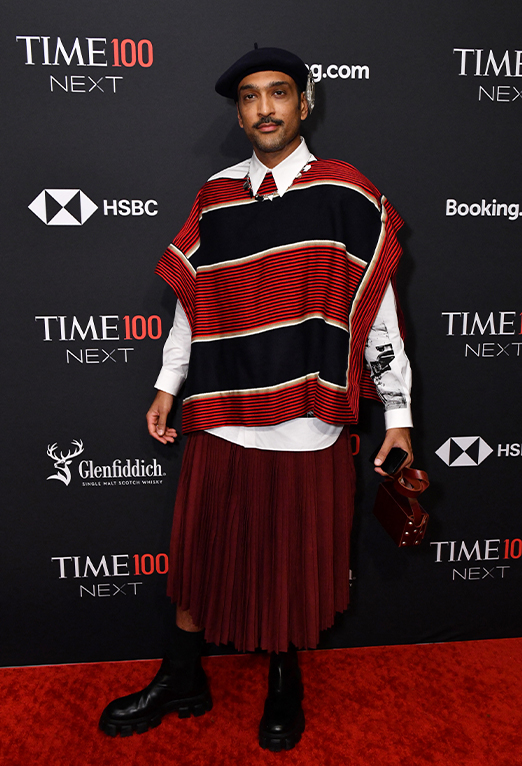
Ali Sethi attends TIME100 Next Gala at SECOND Floor in New York City, US, on October 25, 2022. (AFP)
Making waves with “Pasoori” all over the world, Ali Sethi made it to TIME’s 2022 TIME100 Next, which recognizes 100 rising stars from around the world.
“Proud to be included in the 2022 TIME100 Next list — that too with a write-up from guru Amitav Ghosh,” Sethi posted on his Instagram on September 28, 2022.
“Though written in Punjabi by a Pakistani artist, Ali Sethi’s song ‘Pasoori’ has become a global sensation with close to 400 million views on YouTube (by September 28, 2022),” award-winning writer Ghosh said.
“Even more remarkable, the song has found a huge following in neighboring India despite the escalating tensions between the two countries,” he added.
Sethi took Dubai by storm performing ‘Pasoori’ at the first Coke Studio Live Concert on October 14, 2022. The internationally acclaimed artist is all set for a North American Music Tour in 2023.


