Pakistan praises ‘very brave’ Iranian women protesting for rights

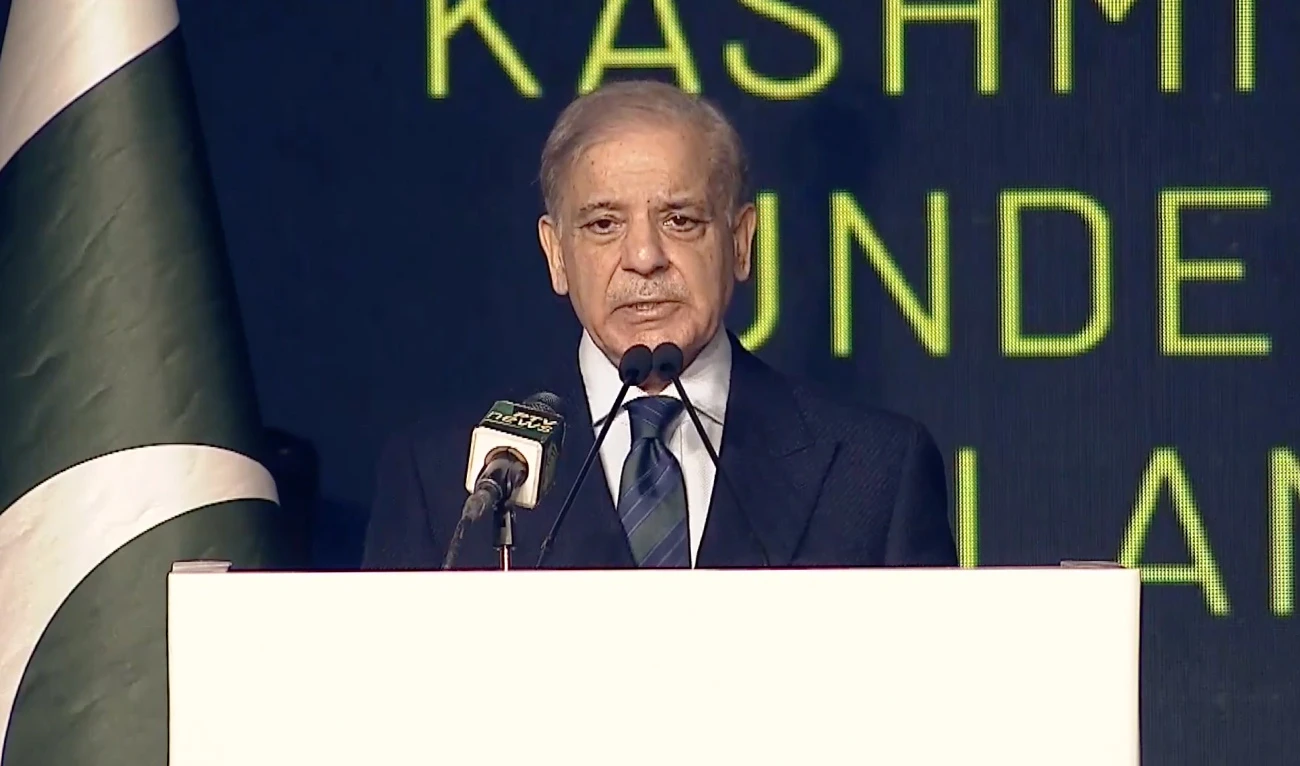
Pakistan's Foreign Minister Bilawal Bhutto-Zardari briefs media at UN headquarters in New York, US, on December 15, 2022. (UN)
Short Url
Updated 16 December 2022
Follow

Pakistan praises ‘very brave’ Iranian women protesting for rights

  • Foreign Minister Bhutto-Zardari says Iranian women being encouraged not only in Pakistan but also in Iran
  • Minister says progress on women’s rights in Afghanistan not possible with its money frozen, banking channels closed

ISLAMABAD: Pakistan’s Foreign Minister Bilawal Bhutto-Zardari on Thursday praised Iranian women protesting for their rights in the country, referring to them as “very brave” for pursuing peaceful means to achieve their objectives. 

Iran has been gripped by nearly three months of widespread protests — which officials describe as “riots” — since the death of Mahsa Amini, a 22-year-old Iranian of Kurdish origin. Amini died in police custody on September 16, three days after her arrest in Tehran by the country’s morality police for allegedly breaching the Islamic dress code for women. 

Amini’s death under mysterious circumstances prompted allegations that she had been tortured by Iranian police, a charge authorities vehemently deny. Angry protests sparked by defiant young women, many of whom took off their headscarves and burned them in public, went viral on social media. The protests are being seen as the biggest challenge to Iran’s clergy since the past couple of decades. 

The foreign minister, in a press briefing after hosting the Ministerial Conference of G-77 and China in New York, said that while Pakistan does not support rioting or violence, it supported Iranian women’s peaceful protests. 

“The Iranian women protesting in their country are very brave. And they are not only being encouraged by us but also within Iran,” Bhutto-Zardari said. 

“[If we look at] Iran’s history, we have seen that time and time again, Iranians have been very brave in their political activities, their activism, and their protesting.” 

He added that as a result of the protests staged by Iranian women, “we are hearing about potential reforms within Iran and I believe that it will be an achievement for the brave women of Iran.” 

The foreign minister also shed light on women’s issues in Afghanistan, saying that Pakistan cannot give up on engaging with Afghanistan as the country’s issues, especially those related to women, will not resolve on their own if the world turns its back on it. 

“I know of horrific stories [from Afghanistan]. There are child marriages and they are not marrying off their young girls out of choice or because they want to. It’s because they physically can’t afford to feed their children,” the minister said. 

“They think it’s better to have a little girl married off so that someone could take care of them”. 

Bhutto-Zardari said he wanted to champion women’s rights more than anyone and believed that it was Islam, before many other religions, that granted women their due rights. 

“It is my country that produced the first female Muslim prime minister, so we will not compromise on women’s rights,” he said. “But I want to be practical about how we can achieve [that in Afghanistan]. I don’t believe we can starve the Afghans to force them to follow women’s empowerment.”

He added that there was not only a need for humanitarian assistance in Afghanistan but a conducive economic environment to allow those who do want to deliver. 

“I think history has demonstrated that in the autocratic or theocratic regime, when the economic times are tough, then rights are contracted rather than expanded,” he said. 

“I don’t believe that with the Afghan money frozen and with their banking channels shut, we will see progress on women’s and other issues,” he said. 

Curfew extended in Gilgit-Baltistan, probe ordered after deadly Khamenei protests

Updated 03 March 2026
Follow

Curfew extended in Gilgit-Baltistan, probe ordered after deadly Khamenei protests

  • At least 15 people were killed in clashes with law enforcement agencies over the weekend in Gilgit-Baltistan
  • Government also announces a de-weaponization campaign, crackdown on hate speech and cybercrime in region

ISLAMABAD: The government in Pakistan’s Gilgit-Baltistan (GB) region on Tuesday extended a curfew in Gilgit district and ordered a judicial probe into violent protests over the killing of Iranian Supreme Leader Ali Khamenei in US-Israeli strikes last week, an official said.

At least 15 people were killed in clashes with law enforcement agencies over the weekend in GB, where protesters torched and vandalized several buildings, including United Nations regional offices, an army-run school, software technology park and a local charity building.

The violence prompted regional authorities to impose curfew in Gilgit and Skardu districts on March 2-4 as officials urged people to stay indoors and cooperate with law enforcers, amid widespread anger in Pakistan, particularly among members of the Shiite minority, over Khamenei’s killing.

On Tuesday, the GB government convened to review the situation and announced the extension of curfew in Gilgit among a number of security measures as well as ordered the establishment of a judicial commission to investigate the weekend violence in the region.

“The government has made it clear that the law will strictly take its course against elements involved in vandalism at government institutions, private properties and incidents of vandalism in Gilgit and Skardu and no kind of mischief will be tolerated,” Shabbir Mir, a GB government spokesperson, said in a statement.

“In view of the security situation, curfew will remain in force in Gilgit, while the decision to extend the curfew in Skardu will be taken keeping the ground realities and the changing situation in view.”

The statement did not specify how long the curfew will remain in place in Gilgit.

Besides the formation of the judicial commission to investigate the violent clashes, the government also decided to launch a large-scale de-weaponization campaign in the entire Gilgit district, for which relevant institutions have been directed to immediately complete all necessary arrangements, according to Mir.

In addition, a crackdown has been ordered on hate speech, spread of fake news and cybercrime.

“The aim of these decisions is to ensure the rule of law, protect the lives and property of citizens and crack down on miscreants,” he said. “Approval has also been given to immediately survey the affected infrastructure and start their restoration work on priority basis.”

Demonstrators in Pakistan’s southern port city of Karachi also stormed the US Consulate on Sunday, smashing windows and attempting to burn the building. Police responded with batons, tear gas, and gunfire, leaving 10 people dead and more than 50 injured.

Pakistani authorities have since beefed up security at US diplomatic missions across the country, including around the US consulate building in Peshawar, to avoid any further violence.