Review: Sound healing meditation at Saudi Arabia’s Khaybar Volcano Camp

Visitors can also meet the self-proclaimed Chamuel of Light, a yoga teacher, who offers guidance in healing sound meditation as part of a “journey of peace.” 
Short Url
Updated 16 December 2022
Follow

Review: Sound healing meditation at Saudi Arabia’s Khaybar Volcano Camp

After a three-hour car ride from AlUla, Khaybar Volcano Camp, tucked away in the vast desert, felt like a beacon of light.

The camp, surrounded by ancient rock formations and the remnants of volcanic activity from long ago, is a new spot for glamping. With 10 luxury pods and a chef on standby, guests can enjoy the high life while being disconnected.

Visitors can also meet the self-proclaimed Chamuel of Light, a yoga teacher, who offers guidance in healing sound meditation as part of a “journey of peace.” 

In a semi-open tent, visitors are invited to lie flat, cover up with warm blankets and close their eyes.

“With my voice, I take you on a journey with the intention of self-love, self-validation and self-acceptance,” Chamuel of Light softly whispered to us.

“Sound has been used for healing and therapy. In fact, the universe communicates through sound.”

At first, it felt strange. I heard muffled giggles from people around me and a soft snore, the cold wind whipping us as it brushed by.

Different sound bowls were used — it felt like the vibrations interrupted any intrusive thoughts or my recitation of endless to-do-lists.

Chamuel of Light spoke in a comforting tone and instructed us to enter a garden, imagine a door, and to “dig deep into our heart of hearts and into the golden light.”

I felt a sudden pain in my stomach, which went up and down like a paint roller on a wall. Later, I found out that this showed I was someone who was deeply emotional but with a strong personality.

The following day, we did another session. This time, anticipating pain in my stomach, I placed my hands on my abdomen when we started.

However, to my surprise, the pain was in my forehead. I was told that this was the site of my “third eye,” and since the pain was traveling upwards, it was now ready to depart my body. I was slightly skeptical, but definitely felt the healing begin.

Every guest at Khaybar Volcano Camp can enjoy a group session or customized one-on-one sessions as part of their stay. Sessions vary from 30 minutes to one hour.

To book, visit ExperienceAlUla.com


Chef serves up a taste of Spain at Ithra Cultural Days in Saudi Arabia 

Updated 20 January 2026
Follow

Chef serves up a taste of Spain at Ithra Cultural Days in Saudi Arabia 

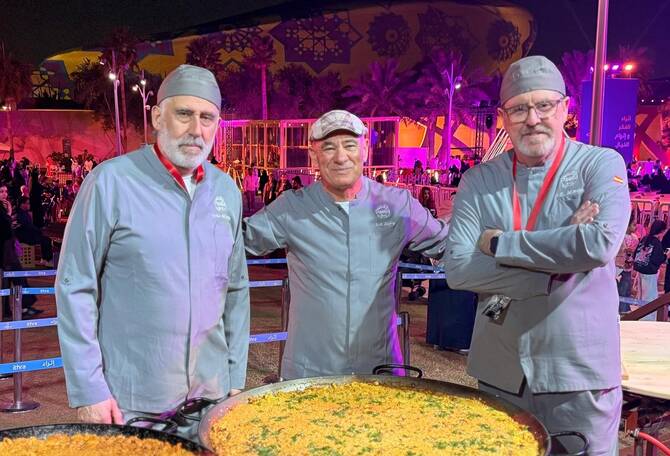
DHAHRAN: Among the attractions of the Ithra Cultural Days: Spain at the King Abdulaziz Center for World Culture (Ithra), visitors can try a tantalizing selection of Spanish foods — none more renowned than its famous paella. 

Arab News spoke with chef Jose Zafra at the event, which runs until Jan. 31, who flew in from Spain to offer a taste of his homeland to the people of Saudi Arabia. 

A “master rice cook, paella researcher and promoter,” according to his business card, his logo is even designed around the recognizable cooking pan and the phrase “Pasion por la paella,” or “Passion for paella.”

“That's why the pan is round because people get around and eat all together — to share culture and passion and life,” Zafra told Arab News as foodies lined up behind him, eager to try a plateful.

Arab News spoke with chef Jose Zafra at the event, which runs until Jan. 31. (Supplied)

“It’s not just a food. It’s a link, a connection. Paella is the symbol of unity and sharing. And people now are going to try it — authentic Spanish paella in Saudi Arabia.”

The word “paella” comes from the Latin “patella,” meaning pan.

In Spanish, it refers both to the rice dish itself and the pan in which it is cooked.

Paella was introduced to Spain during Moorish rule. It originated in Valencia, on the country’s eastern coast, as a rural peasant dish that was cooked by farm workers over open fires using local ingredients. Over time, the dish’s popularity spread and other versions evolved, for example featuring seafood and meat.

It is different to Saudi Arabia’s kabsa, a communal dish which similarly uses rice and meat. Kabsa is cooked in a deep pot to ensure the rice stays soft and aromatic from the meaty broth, whereas paella uses a wide, shallow pan to fully absorb flavors evenly, often creating a prized crispy layer at the bottom. 

Visitors to Ithra’s Culture Days can enjoy the flavors of Spain made with a sprinkling of local love — true to the origins of the dish.

Find the scoops of Spanish joy near the food truck area and try chicken paella, seafood paella —or both! You will see the signs offering a plate, at SR35 ($9) for chicken and SR40 for seafood, or let your nose lead you there.

Zafra concluded: “The chicken is from here, the seafood is from here — and the passion, well, that is from Spain.”